Sharing yam: from agoun to amala, from foutou to asaro
Boiled, pounded, fried or simmered yam: explore agoun, iyan, foutou, amala, ampesi and asaro through the site’s recipes, sauces and cooking techniques.
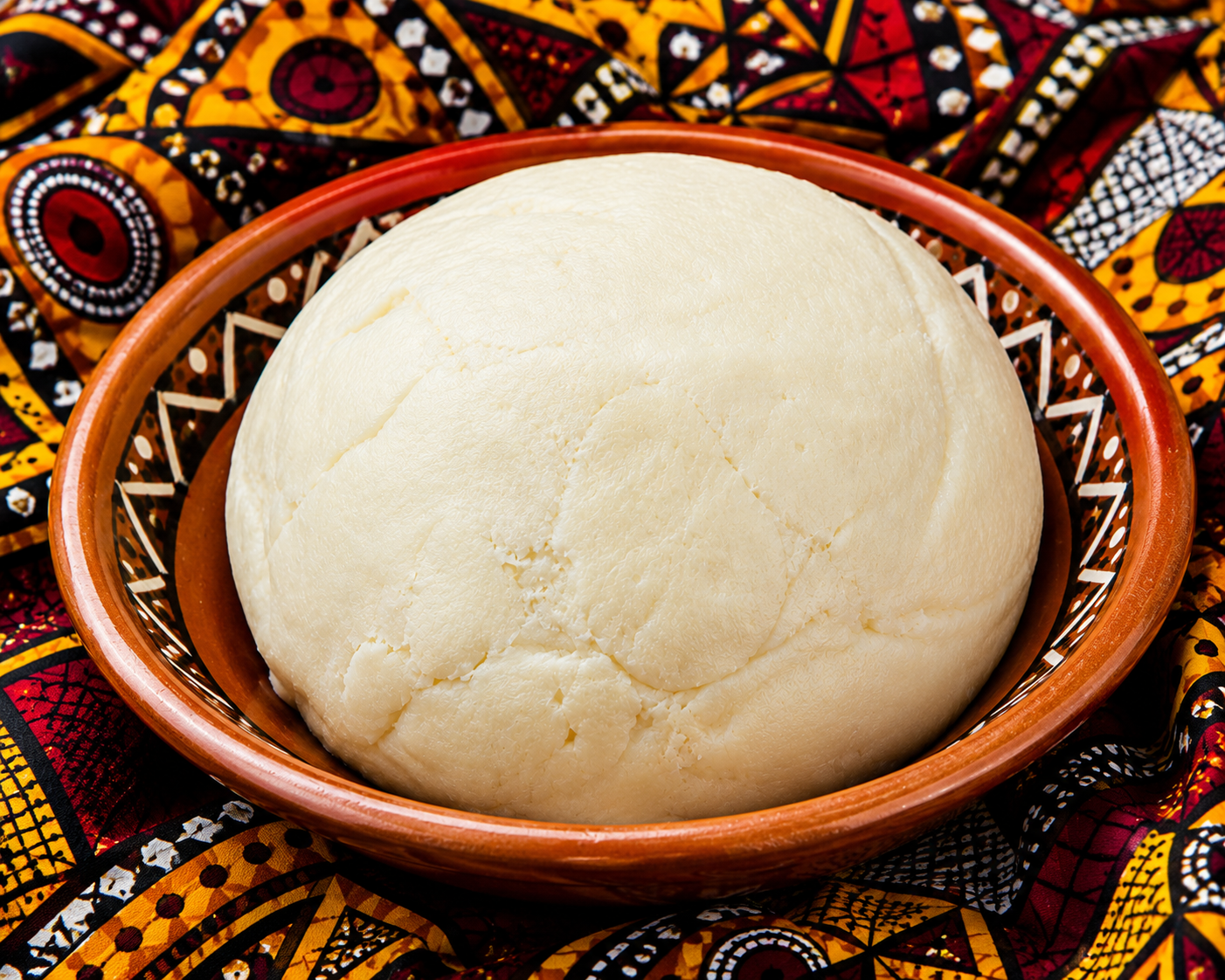
A piece of yam yields to a fork. Elsewhere, a pestle works a warm dough; in another kitchen, cubes simmer until they give body to a sauce. One family of tubers creates meals with different textures and ways of sharing.
Yam deserves a name beyond “starchy side”. Boiling, steaming, pounding, drying into flour, frying and stewing call for particular choices. This journey follows RecettesAfricaines.com recipes, chiefly from West and Central Africa, with further examples from other cuisines.
Behind “yam”: different plants and textures
Yams belong to Dioscorea, a genus with many wild and cultivated species. IITA distinguishes white Guinea yam, D. rotundata, and yellow yam, D. cayenensis, native to West Africa, from water yam, D. alata, which originated in Asia. [1]
There is no single origin for all yams, and not every tuber produces the same cooking result. Variety, maturity and storage affect texture. A yam suited to pounding may behave differently in a stew.
Tell the seller what you intend to cook. Colour and size alone cannot replace reliable identification.
Yam, sweet potato, taro and cassava: use the right name
Yam is neither sweet potato, taro nor cassava. Some English-language shops also label sweet potatoes “yams”, so check the actual product.
Water, timing, firmness and final texture cannot simply be transferred between these ingredients.
Preparation requirements also differ. Instructions for an edible yam cannot replace the precautions specific to cassava or taro leaves. Our cassava article explains that particular case. Substitutions should be named and the recipe adjusted.
Choose an identified food yam and prepare it carefully
Buy yam sold for food, reliably identified and appropriate to the dish. This article is neither a wild-species identification guide nor a method for making an unknown tuber edible.
Reject rotten or badly deteriorated tubers and follow the supplier’s directions. Commercial flour has different instructions from a whole yam.
Stabilise the tuber on a board before peeling. Rinse the pieces and follow the recipe. Do not taste raw flesh to decide whether an unidentified yam is safe.
Boiling or steaming: simple cooking needs attention
Ivorian boiled yam, Beninese boiled yam and Liberian boiled yam leave the tuber visible, with sauce around it or served separately.
Similarly sized pieces cook more evenly. Check the centre for tenderness while preserving chunks if that is the aim. Drain well before adding garnishes.
Steamed yam from Congo-Brazzaville offers another method. Boiling and steaming are different processes: piece size, equipment and the particular product determine the time needed.
Ghana: ampesi and its conversation with greens
Our yam ampesi combines boiled yam with sauce and options such as fish or eggs. The piece’s texture helps build the mouthful.
Boiled yam with palava sauce brings the tuber together with greens, ground seeds and smoked fish in our version. Kontomire and a spinach adaptation are not the same plant.
Use food-grade taro leaves with their appropriate preparation and thorough cooking, rather than treating them as salad leaves. Substituted spinach has its own properties. Comparison is more useful when those differences remain clear.
Illustration from the corresponding recipe, already available on RecettesAfricaines.com.
Côte d’Ivoire: akpessi, foutou and sauces
Yam akpessi presents chunks with red palm oil or a lighter sauce in our recipe. Tomato, onion, fish and chilli can complete the garnish.
Yam foutou with sauce graine moves from pieces to dough. Palm pulp supplies the sauce; yam carries the mouthful.
Foutou with light sauce and foufou with gnangnan sauce offer yam with plantain as an ingredient option, or a different cassava base. They are not automatically pure-yam dishes. Read the selected version before comparing texture.
Illustration from the corresponding recipe, already available on RecettesAfricaines.com.
Benin and Togo: agoun and yam fufu
Beninese pounded yam or agoun centres the pounding process. Beninese yam fufu and Togolese yam fufu extend this family of doughs worked while hot.
Pounding does more than crush. It seeks a smooth mass without resistant pieces, supple enough for serving. Adjust water gradually; too much at once is hard to correct.
Temperature, rhythm and folding are skills learned through observation. At home, respect equipment capacity rather than overloading a motor.
Nigeria: iyan, pounded yam and its soups
Our pounded yam or iyan starts with cooked white yam worked into a smooth dough. Variety and proper cooking matter; an instant powder may require a different method.
Accompanying soups can use greens, okra, egusi seeds or ogbono. These ingredients produce different textures rather than one interchangeable thick sauce.
Have soup and dough ready together to preserve warmth and suppleness. Serve by hand or with utensils according to guests’ comfort and the temperature.
Amala and amala dudu: another way to cook yam
Our amala and amala dudu use dried-yam flour, or elubo. Their colour and behaviour are different from fresh yam put in a blender.
Choose food-grade flour intended for this use. Follow the method, work out lumps and take care with hot splashes. Thickening is not a substitute for completing the necessary cooking.
Not every preparation called amala uses the same base. Here we mean the yam versions. Amala flour, extracted starch and instant white-dough mixes are not automatically interchangeable.
Illustration from the corresponding recipe, already available on RecettesAfricaines.com.
Asaro and mpotompoto: when the tuber thickens the pot
Nigerian asaro lets some yam soften into the liquid and give it body. Our version includes red palm oil, smoked fish, crayfish and greens.
Ghanaian mpotompoto offers another yam pot with smoked fish, tomato and aromatics. Related simmering techniques do not make them one dish with two names.
As the liquid thickens, watch the bottom. Excessive stirring breaks every piece; no stirring may let it catch. Adjust with hot water when needed and taste salt after smoked or dried ingredients.
Illustration from the corresponding recipe, already available on RecettesAfricaines.com.
Fried or grilled: creating contrast
Beninese fried yam and Ivorian fried yams seek a golden exterior and cooked centre. Methods can differ: some use precooking, others organise frying directly.
Colour alone does not prove the centre is tender. Follow the chosen recipe’s size and method. Drain and dry precooked pieces before putting them into oil to reduce splashing.
Beninese grilled yam offers another finish. Grilling is not merely frying with less oil: heat reaches the pieces differently. Use a suitable fat and avoid burning the surface.
Illustration from the corresponding recipe, already available on RecettesAfricaines.com.
Yam in family meals beyond dough
Togolese yam with eggs builds a plate around tuber, tomato sauce and eggs. A large meat dish is not required for a satisfying composition.
Burkinabè yam stew includes tomato, onion and soumbala in our version. Burundian goat with beans and yams involves longer preparation: respect the separate cooking needs of meat, beans and yam.
Cameroonian boiled yam, Central African boiled yam and Chadian boiled yam complete the route. Each recipe presents one version, not an entire country’s cooking.
Five sauces around the same dough
Beninese yam-fufu recipes offer a clear comparison: groundnut sauce, palm-fruit sauce, tomato sauce, okra sauce and leaf sauce.
A related dough can carry different richness, acidity and thickening. Groundnut, palm pulp and okra do not play identical roles.
Check for fish, shellfish and groundnut even if the title does not list them. A plant-based adaptation must also consider stock and powdered seasonings.
The misleading familiarity of “fufu”
Our Ghanaian fufu with light soup contains yam and plantain. It is a mixture that should be described as such, rather than pure yam.
Other fufu recipes may use cassava, maize or plantain without yam. A white dough in an illustration cannot identify its ingredients.
Compare the starchy base, technique and sauce separately. This preserves culinary differences and makes adaptations honest. Our maize and plantain articles explore related paths.
Texture and organising service
Decide first whether you want intact chunks, smooth dough or a partly thickened stew. Cooking for pounding differs from cooking a garnish that must hold its shape.
Prepare sauces and vegetables alongside. Match quantities to your equipment and guests, and leave room to adjust liquid. A recipe’s proportions relate to a particular product, rather than every yam variety.
Offer strong chilli separately and avoid burying the yam under so many garnishes that its own texture disappears.
Buying, storing and using leftovers
Ask for storage guidance for the tuber you buy. Whole, cut, cooked, dried into flour and instant products do not keep in the same way. Protect flour from moisture and follow package instructions.
Refrigerate cooked food within two hours and keep the coldest part of the fridge between 0 and 4°C. [2] Divide large quantities into suitable containers to cool promptly.
Reuse cooked pieces only when storage conditions and duration have been respected. Reheating, frying or adding chilli cannot rescue food that has been stored improperly.
Three meals to understand yam
Begin with boiled yam, tomato sauce, vegetables and eggs or fish. Another day, choose agoun or iyan with sauce. Then compare asaro or mpotompoto, where yam helps build the pot’s body.
You will have tasted three relationships with liquid: the accompanied piece, dough that gathers sauce and tuber that thickens it.
Sharing yam means passing on those choices along with dish names and respect for the people who keep the techniques alive.
Sources and further reading
This article describes versions on RecettesAfricaines.com, not every local or family practice. Linked recipes contain ingredients and methods; illustrations come from the site.
- IITA — Yam, Dioscorea species: diversity and origins of the principal species mentioned.
- French Ministry of Agriculture — Kitchen hygiene.
Read also: Markets, yams and pounding traditions, groundnut paste, palm fruit, okra and edible leaves.