Okra: a thousand ways to bring flavours together
From soupou kandia to kopè sauces, okro soups to daraba, bamia to delele: explore African kitchens where fresh, pounded or dried okra gives meals body and brings tables together.
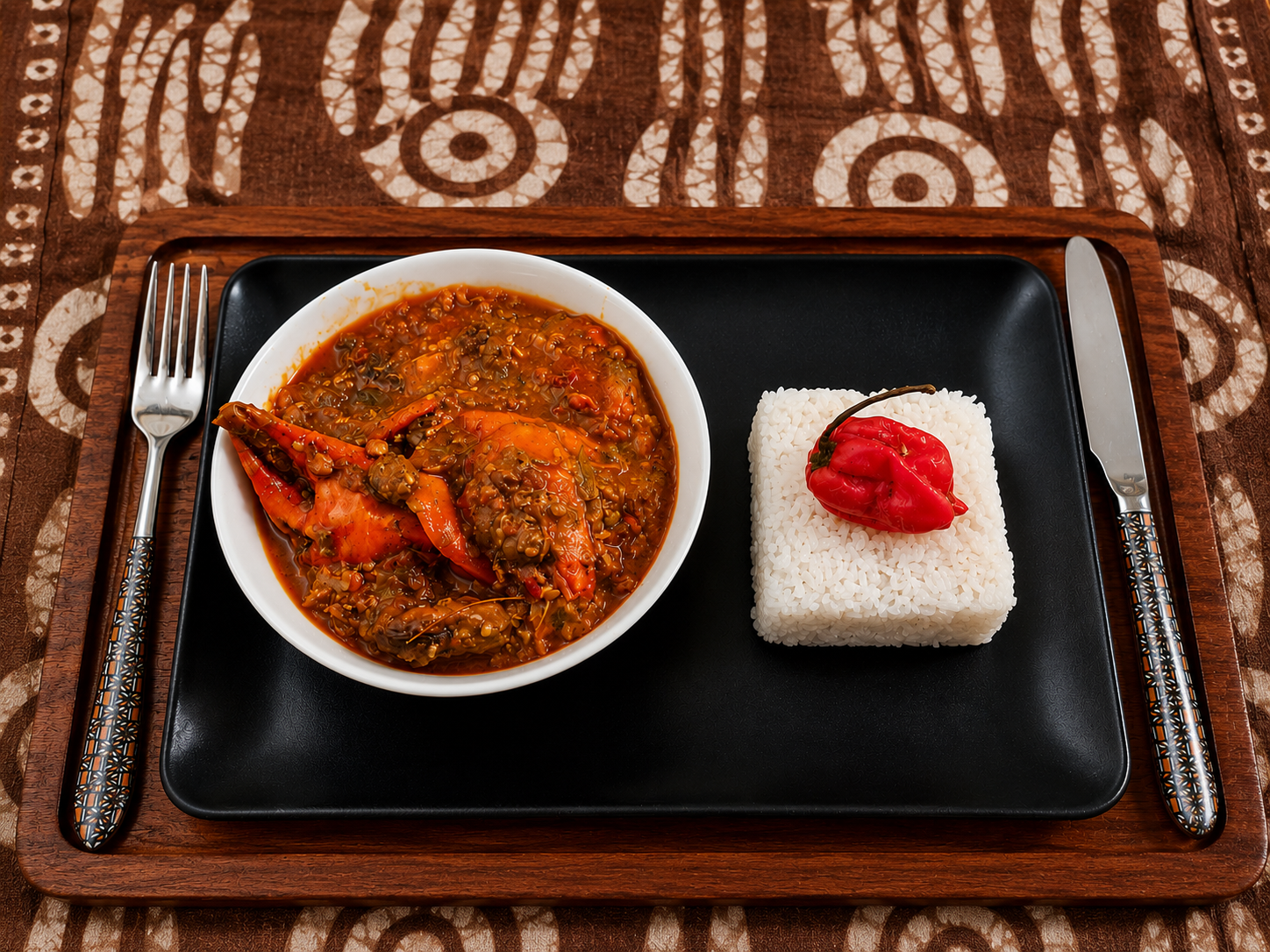
The ladle rises and a thread of sauce follows. Beside it, a firm dough waits; elsewhere, rice receives okra and fish sauce. In another pot, recognisable pods sit beside lamb and tomato. Okra can bind, coat, give body or remain a vegetable in distinct pieces.
This Shared Kitchens article follows recipes across the website, from West and Central Africa to the Nile basin and southern Africa. The connecting thread is an ingredient rather than a universal recipe. Links describe particular choices of oil, fish, meat, seeds and accompaniments.
One vegetable, several names and textures
Okra, also called okro, gombo, quiabo or bamia in different languages and uses, is cooked as a vegetable. Names may identify the ingredient or form part of a dish’s name; they do not reveal every component.
Its characteristic texture involves mucilaginous substances. Research on okra pectins describes structuring and emulsifying properties in laboratory extracts, rather than a universal sauce recipe. [1]
Water, cutting and preparation affect the culinary result. A stringy sauce is not failed okra, while distinct pieces are another valid goal. Choose the texture rather than assuming every dish should eliminate the ingredient’s character.
Fresh, frozen, dried or powdered
Choose tender fresh pods in good condition. Large pods are not automatically poor, although some can be fibrous. Examine them and remove unsuitable parts before cutting.
Frozen okra may be whole or cut and has its own directions. Dried okra and powder behave differently again.
Do not replace fresh okra with the same weight of powder. Drying removes water, while concentration and milling affect the amount needed. Follow a suitable recipe and add gradually.
Soupou kandia: a Senegalese table
Our Senegalese soupou kandia combines okra, fish and aromatics with several optional additions. Sauce and accompanying rice build the meal together.
Cutting contributes to the sauce’s body. Fresh fish needs care to preserve its pieces; smoked fish brings another aroma and may already add salt. Several seafood ingredients still require their own cooking times.
The name accommodates different household practices. Use the recipe to explore texture, broth depth and the chosen oil rather than impose one mandatory version.
Kopè, fétri dessi and Beninese sauces
Ivorian kopè sauce and placali with kopè show sauce conceived alongside its accompaniment. Cassava dough receives liquid differently from separate rice grains.
Togolese fétri dessi and Beninese akassa with okra sauce extend these relationships. Our akassa uses previously fermented food-grade maize dough; it is not another name for placali.
Beninese vegetarian, crab and shrimp versions reveal different roles for proteins and vegetables. Each changes broth, cooking and the allergens to declare.
Illustration from the corresponding recipe already on RecettesAfricaines.com.
Ghana and Nigeria: the okro soup family
Ghanaian banku with okro soup, our Ghanaian okro soup and its crab version offer different arrangements around okra.
Nigeria’s okro soup and ila alasepo combine meat, fish and aromatics in other ways. “Soup” does not require a thin European-style broth: a thick preparation may be intended for dough.
Cook ingredients needing more time first, then organise okra and delicate additions according to the method. Tough meat and shrimp do not cook at the same pace.
Gambia, Guinea, Liberia and Sierra Leone
Gambian okra stew and Gambian fouti or futti compare okra in sauce with okra worked alongside vegetables. Chere mbuum pairs okra and leaf sauce with millet couscous.
Guinean rice with okra sauce, Liberian okra soup and Sierra Leonean okra stew extend the journey. Palm oil, smoked fish and dried shrimp are not compulsory in every okra cuisine.
Compare complete meals: rice, dough and couscous distribute the same sauce differently in the mouth.
Central Africa: dongo-dongo, seafood and chicken
Gabonese dongo-dongo builds around okra and smoked or dried ingredients. Keep to the product forms and amounts specified; fresh pods, powder and smoked fish cannot be dosed at random.
Cameroonian okra with crab and shrimp and Congo-Brazzaville’s okra with shrimp foreground shellfish. Control their cooking and declare their presence to guests.
Central African chicken with okra sauce has another progression. A thickened sauce does not prove that the chicken has reached proper cooking.
Illustration from the corresponding recipe already on RecettesAfricaines.com.
Equatorial Guinea and São Tomé: quiabo with fish
Our Equatorial Guinean betatamu or bitetam combines okra, smoked fish and salted fish. Desalting and tasting the cooked sauce before adding salt help establish the balance.
Bioko calelú with chicken and okra offers another version. Do not infer that every dish called calelú has the same composition.
São Toméan peixe com quiabo places fish beside okra. Delicate fish pieces need gentler handling than stewing meat: stir carefully or move the pan rather than crushing everything.
Daraba: several sources of texture
Our Chadian fish daraba, meat daraba and vegetarian daraba show different combinations of okra, leaves, vegetables and sometimes groundnuts.
Groundnut daraba and the sesame version explore seeds’ roles. More paste is not always better: excessive thickening can obscure other ingredients.
Boule with daraba and kisra with okra sauce then change how sauce is lifted. Firm dough and thin bread create different mouthfuls.
Illustration from the corresponding recipe already on RecettesAfricaines.com.
Egypt, Sudan and South Sudan: bamia pathways
Our Egyptian bamia pairs lamb, tomato, garlic and okra. Recognisable pieces form part of this way of presenting the vegetable.
Sudanese mullah bamya and mullah bamya mafrooka with pounded okra change the texture work. The family name does not require everything to remain whole or become purée.
South Sudanese kisra with bamia shows the flatbread’s role. The dishes can be compared without inventing one origin or a composition shared by every region.
Illustration from the corresponding recipe already on RecettesAfricaines.com.
Dried okra: concentration and careful amounts
Our Malian chicken with dried okra uses powder or finely pounded dried okra. Sudanese mullah tagalia with kisra works another dried-okra and meat preparation.
South Sudanese kajaik with okra brings dried fish and fresh or dried okra together depending on the version. Rehydration and liquid depend on the actual product.
Dilute or incorporate as directed to avoid clumps. Store dry ingredients dry; abnormal smells and mould are not flavours to disguise.
Delele and derere: beside southern African doughs
Zambian delele, Botswanan delele and Zimbabwean derere ne sadza place okra in meals built around cereal dough.
Our derere ne dovi adds groundnut paste. Zambian dried delele with groundnuts and Zimbabwean dried derere with dovi continue with a milled product.
These are not simply renamed bamia. Consistency, okra preparation and dough create their own balances. Where a recipe uses a food-grade alkaline ingredient, do not improvise either product or quantity; it is not necessary in every sauce.
Illustration from the corresponding recipe already on RecettesAfricaines.com.
Coconut, groundnuts and cowpeas: paths crossing
Tanzanian bamia za nazi pairs okra and coconut milk. Our vegetarian Guinea-Bissau caldo de mancarra with okra combines groundnuts, vegetables and cooked beans.
Guinean fonio with okra-groundnut sauce and Malian fonio with okra sauce change the starch. Senegalese okra and cowpea salad presents another arrangement after the specified components are cooked.
Continue with groundnuts, beans and millet, sorghum and fonio. Understand each ingredient’s role rather than accumulating every thickener in one pot.
Choose texture rather than endure it
Fine cutting or pounding may suit a thick sauce. For distinct pieces, handle gently and avoid unnecessary prolonged cooking. Pod quality and maturity also matter.
Wash fresh pods before cutting and dry them when surface water would interfere with the chosen method. Okra simmered in liquid and okra being sautéed have different goals.
Acidity, liquid and other ingredients can change the result. Lemon does not guarantee removal of all viscosity and replaces no cooking step. Try one specific preparation before changing several variables together.
Manage the pot and keep the meal
Loosen an overly thick sauce with small amounts of hot liquid. Reduce a thin sauce only if fish and other ingredients allow it. A large late addition of powder can clump and unbalance the dish.
Consider dried fish, smoked ingredients, stock and reduction before salting. Serve strong chilli separately when appropriate and declare actual groundnuts, sesame, fish and shellfish.
Cool cooked food promptly in suitable portions and refrigerate within two hours, with the coldest zone at 0–4°C. [2] Thickness, chilli and lemon do not make a sauce safe overnight at room temperature.
Three ways to share okra
Explore soupou kandia with rice, bamia with distinct pieces, then delele or another sauce for dough. Spread these across several meals if preferred.
Watch how the ladle rises, how sauce clings to its accompaniment and whether okra remains visible or blends into the dish. Texture becomes part of the pleasure beside broth and aromatics.
Shared Kitchens connects tables while keeping their names, skills and ways of eating.
Sources and further reading
Links describe versions on RecettesAfricaines.com rather than every regional or family practice. Illustrations come from corresponding recipes. The pectin reference explains an ingredient property; it does not demonstrate a therapeutic benefit of okra sauce.