Plantain: from alloco to the family cooking pot
Alloco, kelewele, dodo, bole, foutou, lituma and kondrè: a journey through African kitchens where plantain is fried, roasted, pounded and simmered, with an introduction to matooke and other cooking bananas.
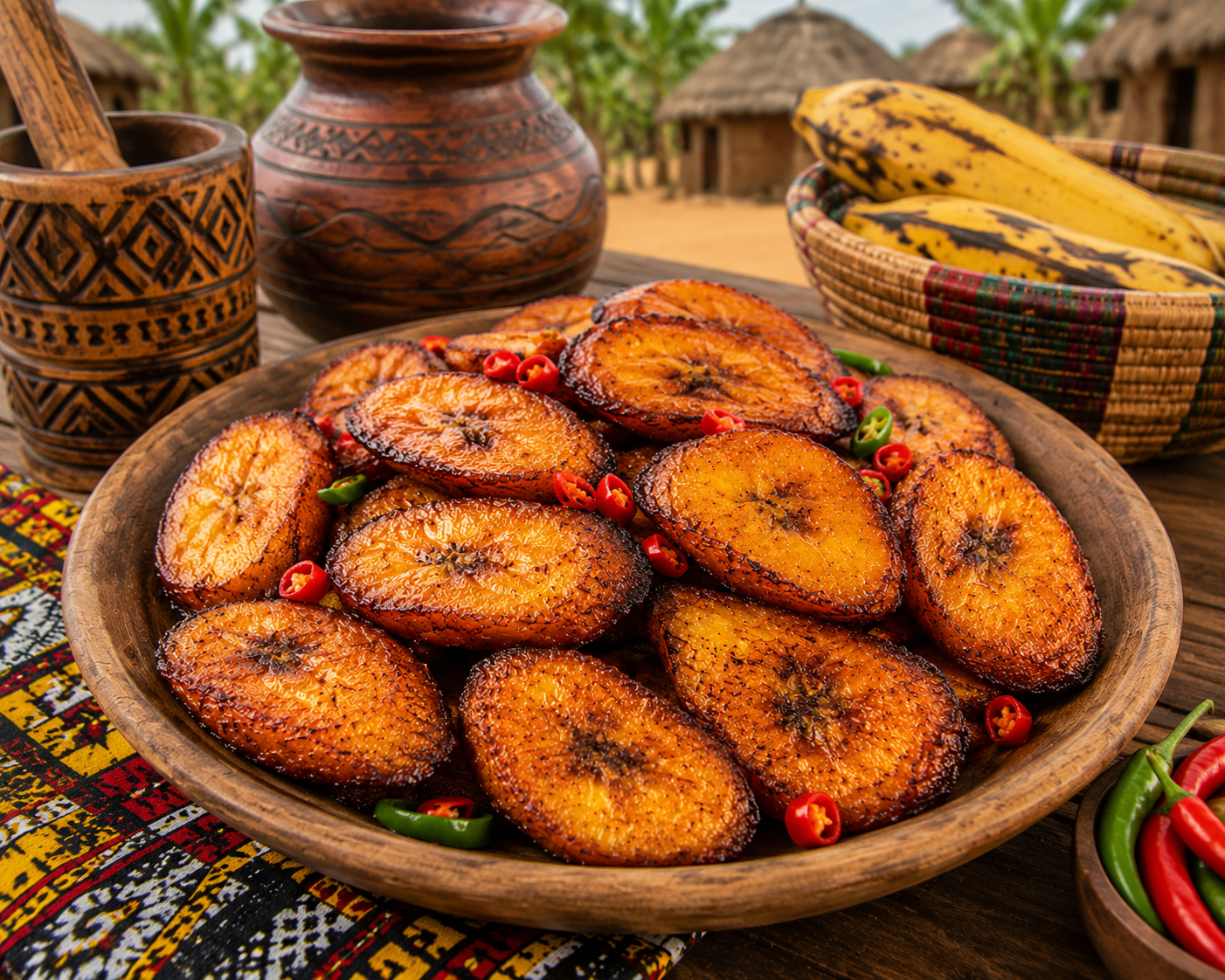
The first piece leaves the pan, its edges golden and its centre tender, with sauce waiting beside it. At another table, this family of fruits appears as a pounded dough. Elsewhere, thick chunks simmer with meat and spices. Plantain can be a snack, a starch, an accompaniment or the heart of a cooking pot.
After groundnuts and cassava, this journey invites us to compare textures as well as flavours. Links lead to specific versions on RecettesAfricaines.com. They offer ways to explore without reducing any country to a single recipe.
Plantain and cooking bananas: look closely
Plantains belong to the diversity of cultivated Musa bananas. Kew describes the hybrid origins of many cultivars and plantain’s importance as a staple in Africa and the Americas. [1] The banana plant is a large herb rather than a tree.
“Cooking banana” is broader than “plantain”. East Africa’s matooke belongs to the highland cooking bananas, which IITA distinguishes from the plantains common in West and Central Africa. [2] Culinary comparison is useful; treating them as one identical ingredient is misleading.
An ordinary dessert banana cannot automatically replace green plantain in dough or chips. Check the ingredient, ripeness and intended texture rather than relying on an approximate commercial name.
Green, yellow or very ripe: choose for the dish
Firm green plantain suits many preparations that need shape and a starchy character. Yellow plantain that is ripe but still firm gives another balance. Greater ripeness brings softer flesh and a sweeter taste.
These are cooking choices rather than a quality ranking. FAO describes uses for both green and ripe fruit. [4] The best fruit for thin chips may be quite different from the best fruit for soft alloco.
Interpret skin colour alongside the variety and condition. Very dark skin does not automatically mean ruined flesh, but mould, abnormal smells or damaged flesh cannot be rescued with spices.
Alloco: the pleasure of a golden piece
Ivorian alloco offers an immediate introduction: ripe plantain is cut and fried, with sauce joining the experience. Aim for golden surfaces, tender centres and pieces that retain their shape.
Our alloco with fish, with egg and with chicken show how the accompaniment changes the meal. Plantain keeps its sweetness while the other ingredients add their own character.
Even cutting makes cooking easier. Very thin and very thick pieces in the same batch can brown unevenly. Serve promptly while the texture is at its best.
Aloko, aloco and dodo: related tables
Beninese aloko, Togolese aloco, Guinean fried bananas and Liberian fried plantain extend this family. Thickness, seasoning and the surrounding meal vary.
In Nigeria, dodo here means fried plantain; IITA documents this preparation in research on consumer preferences. [3] Read the ingredients nevertheless: elsewhere, including Great Lakes recipes, dodo can mean an amaranth-leaf dish.
A similar name does not guarantee the same ingredient, and frying does not erase cooks’ choices. Naming the place, version and serving style makes comparison more precise.
Kelewele: spices around the fruit
Ghanaian kelewele moves the focus towards seasoning. Our recipe combines ginger with chilli, onion and ground spices. The spices are part of the pieces’ character, rather than simply a hot sauce added afterwards.
The University of Ghana describes seasoned ripe plantain pieces and their place among street foods. [5] Spice combinations vary; the important relationship is between fruit and coating.
Avoid a watery seasoning mixture that makes frying difficult and increases splashing. Coat without soaking and cook in small batches. If groundnuts accompany the dish, declare that allergen clearly.
Illustration from the corresponding recipe already on RecettesAfricaines.com.
Red red: plantain meets beans
Ghanaian red red brings plantain and beans together. Our recipe cooks the beans with tomato and red palm oil, serving ripe fried plantain alongside. The meal is more than either component alone.
Each retains a role: tender beans, sauce, plantain and their contrasting textures. Different proportions make each mouthful slightly different.
It is also a useful model for a plant-based meal: build the relationship between legumes, starch, sauce and accompanying vegetables from the start.
Bole and grilled plantain: another kind of heat
Our Nigerian bole and fish pairs roasted plantain with mackerel and chilli sauce. Dry heat and contact with a tray or grill create a different surface from immersion in oil.
Cameroonian grilled plantain and mackerel, Cameroonian grilled plantains and Central African grilled plantains extend this approach. Grilling means cooking the flesh with controlled browning, rather than charring it indiscriminately.
Fish and fruit may need different cooking times. Cook separately if helpful and bring them together at the table. A black exterior with a firm centre calls for better heat management.
Illustration from the corresponding recipe already on RecettesAfricaines.com.
Boiled or steamed: a quieter preparation
Liberian boiled plantain and boiled plantains from Congo-Brazzaville remind us that frying is only one option. Cooked flesh can carry tomato sauce, fish, vegetables or cooking juices without a browned crust.
Our Ivorian plantain akpessi combines the fruit with tomato, onion and optional smoked fish. Ripeness affects sweetness and how well the pieces hold.
Check tenderness rather than following a timer alone. Variety, ripeness and piece size all matter. Drain gently when whole chunks are the aim.
Foutou and plantain fufu: texture takes the lead
Ivorian banana foutou moves from pieces to dough. Our version uses unripe plantain; other practices can combine ingredients. Check the particular recipe before transferring proportions.
Banana foutou with groundnut sauce shows dough and sauce working together. A worked, firm dough lifts sauce differently from fried slices.
Our Nigerian plantain fufu uses another method: blending green plantain and then cooking it. Pounding and cooking a blended mixture do not automatically produce the same texture. In either case, cook the fruit properly; a smooth rounded shape is not the only sign to assess.
Lituma and pounded plantain with beans
Lituma from Kivu in DR Congo highlights cooked, pounded plantain, with firmness and pliability at the centre. The accompaniment and finishing choices complete the dish.
Cameroonian pounded plantain with beans incorporates already cooked beans into the preparation itself. The legume is no longer necessarily a separate sauce.
Ghanaian eto or etɔ offers another comparison: our recipe allows yam or ripe plantain, with eggs, groundnuts and palm oil. Say which base you choose when presenting it; the name alone does not identify it.
Illustration from the corresponding recipe already on RecettesAfricaines.com.
Kondrè: plantain joins the cooking pot
Cameroonian kondrè makes green plantain part of a stew. Our version brings it together with beef, aromatics, spices and red palm oil, letting the chunks cook in a flavourful liquid.
It is more than a garnish added at the end. The fruit contributes to the pot’s texture while the meat and seasonings need their own cooking progression.
Do not replace green plantain with very ripe flesh without adjustment: it may fall apart and change the dish’s sweetness. Add liquid as needed to finish the meat without scorching the bottom.
Illustration from the corresponding recipe already on RecettesAfricaines.com.
Groundnuts and plantain: paths that cross
Our Cameroonian bananes malaxées brings together green cooking bananas, groundnuts, tomato and red palm oil. Malawian futali wa nthochi builds another dish around firm cooking bananas or plantains and groundnuts.
Equatorial Guinean plantains with groundnut sauce offers another arrangement. Groundnuts bind and flavour without needing to erase the fruit’s texture. Thin the paste as directed and watch the bottom of the pot.
These dishes continue the journey in our groundnut-paste article: shared ingredients connect kitchens while different combinations retain their identity.
Matooke: other cooking bananas
Ugandan matoke takes us beyond common plantains. Matooke belongs to East Africa’s highland cooking bananas, distinguished by IITA. [2] If a recipe offers plantain as a substitute, describe that as an adaptation.
Versions with groundnut sauce, beef stew and beans show varied accompaniments. Flesh texture, steaming and how sauce is added matter as much as the green colour.
Rwandan igitoki and Burundian matoke extend this culinary neighbourhood. Ask the seller what cooking banana is available and adapt to the actual product.
Illustration from the corresponding recipe already on RecettesAfricaines.com.
Chips and balls: change the shape
Nigerian green plantain chips, DR Congo’s chips and Togolese chips seek thinness and crispness rather than alloco’s softness. Even slicing and controlled frying become essential.
Gabonese plantain and cassava balls combine two ingredients from this series. Use suitable, correctly processed and cooked food-grade cassava with reliable directions. A final pan-fry does not replace its proper processing. Our cassava article explains the distinctions.
Fritters simply labelled “banana” may use dessert bananas. Do not automatically class them as plantain recipes: the ingredients remain the best guide.
Small actions that change the result
For green plantain, slit the skin lengthways without cutting deeply into the flesh, then ease it away in sections on a stable board. Ripe flesh releases more easily. Keep the knife controlled and avoid forcing it towards your hand.
Before frying, avoid free water on the surface and lower pieces carefully. Choose suitable oil, follow its label and do not let it smoke; AFSSA guidance stresses good frying practices. [6]
Overcrowding complicates browning and encourages sticking; excessive heat browns the outside too quickly. Adjust batch size, turn gently and drain. Oven cooking has its own texture and does not exactly reproduce frying.
Build the plate and store it well
Plantain supplies a starchy component; preparation and accompaniments shape the meal. Consider vegetables, legumes, fish, eggs or meat as appropriate, together with added oil and salt. A plant-based plate deserves the same attention to composition as any other.
Very ripe fruit can suit an appropriate preparation if its flesh remains sound. Once food is cooked, ripeness and storage are different questions. Cool promptly in suitable portions and refrigerate within two hours, keeping the coldest zone at 0–4°C. [7]
For guests, declare groundnuts and any other allergens actually present. Different versions may contain butter, eggs, dried fish or groundnuts.
Three textures for a shared table
Choose three directions rather than three fried dishes: a small serving of kelewele, lituma with sauce, then kondrè or cooking bananas with beans. Spread them over several meals if that works better.
Compare crispness, softness, elasticity, spices and sauce. Ask which action created each texture and how it contributes to the meal.
That is the spirit of shared kitchens: recognise relationships, keep the names and let every table tell its own culinary story.
Sources and further reading
Links describe versions on the website rather than every regional or family practice. Illustrations come from the corresponding recipes. The references below support the distinctions between ingredients, selected uses and storage advice.
- Royal Botanic Gardens, Kew — Plantain
- IITA — Cooking banana and plantain variety differentiation
- IITA — Plantain consumer preferences
- FAO — Bananas and plantains: post-harvest technology
- University of Ghana — Ghanaian Foods, Kelewele
- ANSES / AFSSA — Bonnes pratiques des huiles de friture
- Ministère de l’Agriculture — Hygiène en cuisine