The leaves that nourish Africa
Ndolé, eru, fumbwa, pondu, isombe, matapa, ravitoto, moringa and molokhia: explore African kitchens where leaves become the heart of the meal, with their flavours, skills and essential preparation.
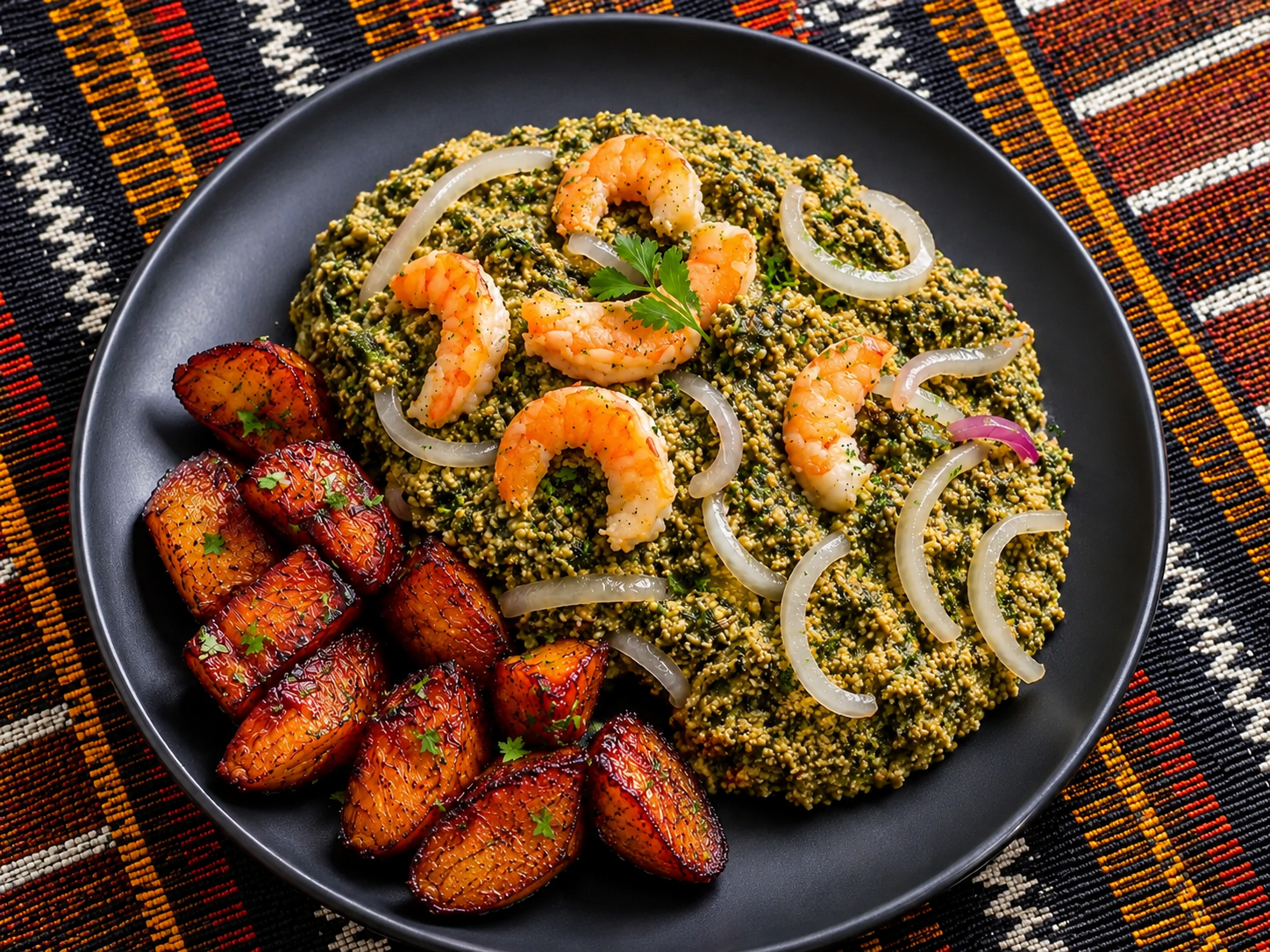
A basin is full of leaves. They are sorted, trimmed and washed, then the actions diverge: fine slicing here, patient pounding there, gentle cooking with onion and tomato elsewhere. In another kitchen, leaves become broth or sauce for a firm dough. Green is not a recipe; it is the beginning of a vast repertoire.
This Shared Kitchens article connects dishes without confusing plants, countries or methods. Leaves can bring bitterness, acidity, tenderness, a binding texture or aroma. They deserve more than a decorative place on the plate.
First identify the leaf
“Greens”, “brèdes”, “morogo” and “leaf sauce” may refer to groups of preparations rather than one species. Local name, place and the seller’s knowledge matter. Colour in a photograph cannot reliably identify a plant.
Buy clearly identified leaves sold for food. Garden or wild leaves are not edible merely because they resemble a recipe illustration. An edible root or fruit does not prove every part of the plant can be cooked.
Fresh, dried, frozen, pounded, precooked and ready to eat are different states. Establish what has already been done and what preparation remains.
Ndolé and bitter leaves: working with flavour
Cameroonian ndolé combines leaves prepared to manage bitterness with a groundnut base, an association described by Cameroon’s tourism ministry. [1] Both parts contribute to the dish’s identity.
The shrimp and beef versions change broth and finishing. Simply adding leaves to groundnut sauce does not reproduce the entire process.
Nigerian ofe onugbu or bitter leaf soup builds another dish around bitter leaves, its thickener and other ingredients. Bitterness is not always a flaw to remove completely. Replacing the specified leaf with spinach should be described as an adaptation.
Eru, okok, fumbwa and koko: the importance of cutting
Our Cameroonian eru and water fufu and eru combine eru leaves with tender greens. Their roles in texture and moisture differ.
Cameroonian okok, DR Congo’s fumbwa, Central African koko and Gabonese nkumu with groundnuts explore Gnetum leaves in the selected recipes. Names and seasonings are not interchangeable.
Thin strips and the preparation of dried leaves affect the whole pot. Groundnuts, palm oil and smoked fish complement the leaf rather than disguise an inadequately prepared, tough ingredient.
Illustration from the corresponding recipe already on RecettesAfricaines.com.
Cassava leaves: pondu, saka-saka and isombe
DR Congo’s pondu or saka-saka, Congo-Brazzaville’s pondu with smoked fish, Rwandan isombe and Burundian isombe n’ubunyobwa build meals around prepared cassava leaves. Guinean cassava leaves extend that repertoire westward.
Cassava leaves contain cyanogenic compounds and require appropriate processing. Ordinary cooking alone is not a universal guarantee; “frozen” or “pounded” does not necessarily mean safe and ready to eat. [2]
Choose correctly processed food-grade leaves with reliable instructions. This article is not a home detoxification protocol. Do not treat them as quickly wilted spinach or invent one cooking time for every product.
Matapa and ravitoto: Indian Ocean perspectives
Our Mozambican matapa brings prepared cassava leaves together with groundnuts, coconut milk and seafood. Each ingredient contributes differently to flavour and creaminess.
Madagascar’s henakisoa sy ravitoto pairs pounded leaves with pork; our fish ravitoto offers another version. Shared pounding does not make these dishes copies of pondu.
Respect the leaves’ required treatment and the appropriate cooking of fish or meat. Sauce can look ready before the whole meal is cooked. Rice and other accompaniments then organise the plate.
Illustration from the corresponding recipe already on RecettesAfricaines.com.
Sweet-potato leaves are not ordinary potato leaves
Guinean sweet-potato-leaf sauce, Sierra Leonean potato leaves with rice and Central African ndoundou use sweet-potato leaves in the indicated versions. “Potato leaf” can mislead outside its culinary context.
Ordinary potato leaves are not a substitute. The potato plant can contain toxic substances including solanine, a risk described by MedlinePlus. [3] Similar names do not identify the same food.
With the right edible leaves, trimming stems, cutting and cooking establish texture. Smoked fish or meat can contribute without obscuring the greens.
Illustration from the corresponding recipe already on RecettesAfricaines.com.
Pumpkin leaves: chibwabwa and muboora
Zambian chibwabwa with groundnuts and Zimbabwean muboora centre young pumpkin leaves. Preparing fibrous stems and firmer parts matters as much as seasoning.
Muboora une dovi shows the groundnut combination. The binder adds body without turning the leaf into a mere carrier for peanut butter.
Spinach gives an accessible adaptation with another texture. Name the change when passing on the recipe rather than erasing its defining ingredient.
Illustration from the corresponding recipe already on RecettesAfricaines.com.
Amaranth, mchicha and dodo: names need attention
Our Rwandan dodo uses edible amaranth. It is different from the fried-plantain dodo in our earlier article: one word can name very different foods in different places.
Burundian mchicha and Tanzanian ugali na mchicha offer leafy-vegetable versions with stated choices or substitutions. Read the ingredients rather than assume one species everywhere.
Burkinabè babenda with amaranth places leaves alongside cereals and pulses. They help construct the dish rather than decorate it at the end.
Leafy brassicas, morogo and gomen
Kenyan sukuma wiki with ugali and Ethiopian gomen work leafy brassicas or the specified alternatives. Trimming, the cooking base and aromatics shape their expression.
Our Botswanan morogo allows several leaves; the selected Zimbabwean muriwo une dovi uses collard greens and groundnuts. Dish and family names do not provide botanical identification on their own.
Tenderness need not mean purée. Some bite can be welcome when the ingredient is appropriately chosen and prepared.
Cowpeas also offer leaves
Kenyan kunde uses young cowpea leaves sold as food. Our Zimbabwean dried cowpea leaves with dovi works dried leaves and groundnuts.
Cowpea seeds, leaves and powder are not interchangeable at the same weight. Rehydrating a dried product is different from cooking fresh leaves.
Read our bean and cowpea article alongside this one. A plant can open several kitchens without all its parts needing the same preparation.
Moringa and brèdes: couscous or broth
Nigerien moringa dambou brings cereal and leaves together. Seychellois bouyon bred mouroum gives leaves a different place in broth.
“Brèdes” does not identify one species. Seychellois bouyon bred belongs to a leafy repertoire whose actual ingredients must be identified before cooking.
Moringa is food in these recipes. Supplement powder, fresh leaves and concentrated extracts are not equivalent; this article makes no therapeutic promise for them.
Sour leaves and baobab: acidity and binding
Burkinabè babenda with sour leaves and Chadian karkandji sauce explore leafy acidity. Use the correctly identified plant intended for the recipe.
Malian tô with baobab-leaf sauce puts another leaf to work. Fresh leaves and dried, pounded leaves differ in concentration and behaviour.
Do not confuse hibiscus leaves for sauce with calyces for bissap. Different plant parts and commercial products do not automatically replace each other.
Jute and corète: ewedu, krain krain and molokhia
Nigerian ewedu, Sierra Leonean krain krain and Togolese adémè dessi with akoumé explore jute or corète leaves in the selected versions. A binding, stringy texture can be intentional.
Our Egyptian molokhia uses fresh or frozen leaves, while Tunisian mloukhia uses corète powder. Weights and cooking times cannot simply transfer between them.
Product form, broth, oil and method give the dishes their character. Continue with our okra article: binding texture can be central to enjoyment rather than a fault.
Illustration from the corresponding recipe already on RecettesAfricaines.com.
Mixed sauces: calulu, palaver and leaf soups
Angolan fish calulu and São Toméan calulu bring leaves, fish and vegetables together in our versions. The common name does not make them one fixed formula.
Ghanaian fish palaver sauce and Nigerian edikaikong show several leaves within a dish. In the latter recipe, ugu and waterleaf play distinct roles.
An alternatives list does not mean every mixture will taste alike. Choose a coherent version and adjust water for its leaves, fish and other ingredients.
Eaten leaves and cooking wrappers
Ugandan chicken luwombo uses leaves as a cooking wrapper, a different role from leaves incorporated into sauce.
Egyptian stuffed grape leaves provide an edible wrapper in their recipe. In both cases use the specified, clean food-grade product suited to the method.
A leaf that perfumes a parcel is not automatically intended to be eaten. Not every dish cooked in leaves is therefore a leafy-vegetable dish.
Skills that respect the differences
Sort before washing, remove unwanted parts and use potable water. Drain as directed: retained water changes the pot’s liquid.
Prepare firm stems separately if required. Cutting, pounding, blanching, prolonged cooking and sautéing are not universal steps to combine in every recipe. Do not derive cassava processing from amaranth preparation.
Alkaline additions should not become automatic. Do not use unknown ash or unidentified products to soften leaves; follow reliable directions with identified food ingredients. Green colour alone proves neither safety nor cooking.
Compose, store and serve
Leaves bring flavour and texture to a meal whose balance also depends on oil, groundnuts, salt, meat and fish. Green sauce is not automatically light, nor does it need excessive fat.
Cool cooked food promptly in suitable portions and refrigerate within two hours, with the coldest zone at 0–4°C. [4] Broth, pounded sauce and leaves with meat remain perishable.
For guests, name the leaves and declare allergens. Choose an appropriate cereal or dough, allowing people to taste the leaf before adding numerous sauces and condiments.
One green table, several stories
Explore finely sliced leaves, a pounded sauce and a preparation with clearly distinct leaves. Spread the dishes across several meals rather than serve numerous rich sauces together.
Notice bitterness, acidity, bite, binding and aroma. Leaves become a technique’s starting point rather than interchangeable green colour.
Continue with groundnuts, cassava and cereals. Sharing begins with accurate names, appropriate preparation and respect for each kitchen’s skills.
Sources and further reading
Links describe versions on RecettesAfricaines.com rather than every family or regional practice. Illustrations come from corresponding recipes. The safety references support the specified precautions; this is not a guide to preparing unidentified wild plants.