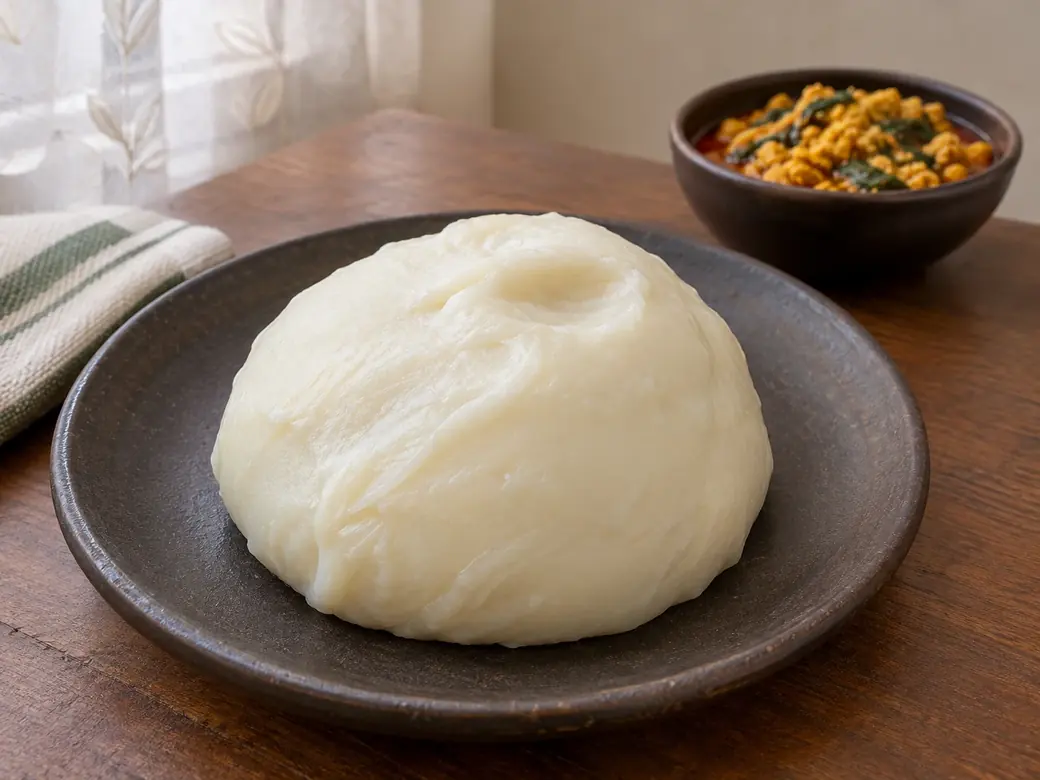
Pounded yam / Iyan — smooth pounded yam paste
🍠 Iyan, cooked yam pounded into a smooth, soft, and elastic white paste, perfect with egusi, efo riro, ogbono, or okra soup.
Ingredients
- 🍠 1.5 kg fresh white yam, peeled and cut into large pieces
- 💧 1.5 to 2 liters of water, then 150 to 250 ml of hot cooking water
- 🧂 1 pinch of salt, optional
- 🫗 1 teaspoon neutral oil for hands, optional
- 🥣 Egusi, efo riro, ogbono soup, okra soup or other Nigerian soup to serve
Preparation
1️⃣ Peel the yam, removing all skin, rinse it, and cut it into regular pieces. Do not taste raw yam.
2️⃣ Cover the pieces with water in a pot, add a pinch of salt, and cook for 25 to 35 minutes, until a knife passes through them without resistance.
3️⃣ Drain, reserving the hot water. Mash the still steaming yam with a pestle or potato masher, removing any tough fibers.
4️⃣ Add the hot water gradually and pound vigorously until you get a shiny, homogeneous, lump-free, and fairly elastic paste.
5️⃣ Divide into six portions, shape into balls with lightly oiled hands or a wet spoon, then cover to keep them soft.
6️⃣ Serve immediately with plenty of soup. Form a small hollow in the ball to collect the sauce. 🇳🇬
Introduction
🍠 Introduction: the art of transforming a tuber. Pounded yam, called iyan in Yorùbá, is a white yam paste pounded until it becomes smooth, light, and elastic. It's not an ordinary mash: the yam is cooked, then worked with strength and patience to release its starch and create a texture that holds its shape on the plate while being easily detached with the fingers. A ball of iyan is usually eaten with a generous soup. You take a piece, shape it, then dip it into egusi, efo riro, ogbono, or okra soup. The pleasure comes from the contrast between the yam's gentle neutrality and the depth of the sauce. 🤲
Yam is a major crop in tropical agriculture and an important staple food in many regions of Nigeria. The tubers can be harvested in season, stored in a dry place, and processed as needed. Before modern appliances, pounding with a mortar required real collective effort: one person pounded, another turned the paste or added a little water, and the younger ones observed the rhythm. Today, food processors and yam pounders make the task easier, but the rule remains the same: don't add too much liquid and work the yam while it's still hot. 🌾
📜 History, territory, and identity. Iyan is particularly associated with the Yorùbá cuisines of southwestern Nigeria, but the practice of eating a starchy paste with soup exists in several regions of the country in different forms. The names, yam varieties, fineness of pounding, and soups served vary according to cities and families. This diversity means that no single recipe can be designated as the only authentic one. The word iyan evokes a technique, a texture, and a way of eating; it also recalls the value placed on yam in agricultural societies. New yam festivals, in particular, highlight the relationship between harvest, gratitude, community, and cuisine. 🎉
🕊️ Cultural and social context. The new yam can be presented in cultural celebrations where thanks are given to the earth, ancestors, farmers, and the community. This does not mean that every plate of iyan is a religious dish, nor that all families follow the same ritual. Christian, Muslim, traditional, and secular practices coexist in Nigeria. A family might serve iyan on Sunday, during a festival, after a ceremony, to a visitor, or simply for dinner. Respect involves asking for preferences, announcing the ingredients of the soup, and providing sauces without meat, fish, or peanuts when necessary. The yam itself is neutral, but its accompaniment may contain allergens or products subject to prohibitions. 🙏
👩🏾🍳 Chef's technique: achieving a truly smooth paste. Choose a firm yam, heavy for its size, without soft spots or a fermented smell. The skin should be removed generously, as some parts near the skin are fibrous or bitter. Cut pieces of the same thickness so they cook evenly. When a knife easily pierces them, drain immediately; yam left in too much water becomes watery. Pounding should begin when very hot, with short breaks to protect hands and shoulders. Add water one spoon at a time. Too much water results in a sticky paste that doesn't hold its shape; not enough water leaves dry grains and strings. A successful paste is white or cream, satiny, soft, and firm enough to be shaped. 🔥
The mortar and pestle remain the benchmark for the gesture and texture, but a sturdy potato masher, a food mill, or a food processor with pulse function can work. The food processor should not run for too long, as heat and overworking make the paste gummy. For a large quantity, work in two batches. Keep the yam water hot, not cold: it mixes better with the starch and prevents the preparation from cooling down abruptly. Cover the paste with a clean cloth or lid during serving. If it hardens, incorporate a spoon of hot water and rework briefly. If it's too soft, let it rest for a few minutes then add a little mashed cooked yam rather than flour. 🥣
🗺️ Regional and family variations. In some homes, iyan is very white and almost plain; elsewhere, a denser texture or a slightly creamier hue is appreciated depending on the variety. Some cooks mix yam with cassava, plantain, or sweet potato, but this preparation should be named as a variation and not as classic iyan. The chosen soup completely transforms the experience. Egusi brings melon seeds and richness; efo riro highlights green leaves, bell pepper, and oil; ogbono gives a stringy texture; okra soup is also viscous and fragrant. A vegetarian version can accompany iyan with vegetables, mushrooms, or beans. People allergic to peanuts or seeds should check the soup's composition. 🌿
🍽️ Serving, sharing, and drinks. Shape individual balls with a wet spoon and place them on warm plates. Serve the soup alongside or in a hollow, so everyone can portion the sauce. In a shared meal, use a serving spoon and remember the family rule regarding hands; wash them thoroughly and offer cutlery to those who prefer it. A cucumber, tomato, and onion salad, lightly lemon-dressed green vegetables, or a little plantain can add freshness, but avoid overloading an already substantial plate. Fresh water, ginger juice, bissap, tamarind, lime, or coconut water balance strong sauces. 🥤
💪 Nutrition, safety, and conclusion. A portion of iyan primarily provides complex carbohydrates and energy, with approximately 330 kcal, 5 g protein, 75 g carbohydrates, 1 g fat, 6 g fiber, 35 mg sodium, and 0.1 g salt before the soup. Yam provides potassium, vitamin C, vitamin B6, manganese, and fiber; the soup adds protein, leaves, iron, magnesium, and fats. Final calories depend mainly on the oil, seeds, meat, or fish in the accompaniment. Store iyan covered in the refrigerator for a maximum of two days, reheat it with a little hot water, and do not leave it at room temperature for long. To conclude, say Ẹ jẹun dáadáa! — bon appétit in Yorùbá — and remember that the beauty of iyan comes as much from the transmitted gesture as from the sauce that accompanies it. 🌍🙌
Cultural context
🇳🇬 Iyan is associated with Yorùbá cuisines and yam cultures; new yam festivals sometimes give this tuber a communal dimension, without making every meal automatically ritualistic.
Tips
🔥 Pound the yam very hot for a more elastic paste.
💧 Add water one spoon at a time.
🧤 Protect hands and take short breaks.
🥣 Use the reserved hot water instead of cold water.
🍲 Serve immediately to preserve the satiny texture.
Variations
🌿 Adapt the yam variety and density. Mixtures with cassava, plantain, or sweet potato are variations that should be clearly named.
Accompaniments
🥣 Egusi, efo riro, ogbono, okra soup, vegetable, fish, or meat sauces. 🥤 Bissap, ginger, tamarind, coconut water, or lime.
Nutrition notes
💪 Yam provides carbohydrates, potassium, fiber, vitamin C, B6, and manganese. Soups complement with protein, iron, magnesium, leaves, and fats.
Conclusion
Serve after checking the centre is fully cooked and the texture is homogeneous.
Enjoy your meal
Enjoy your meal!