From sauce graine to moambé: sharing the fruit of the oil palm
Sauce graine, abɛnkwan, banga soup, nyembwe and moambé: discover African palm-fruit dishes, their different ingredients, techniques and accompaniments.
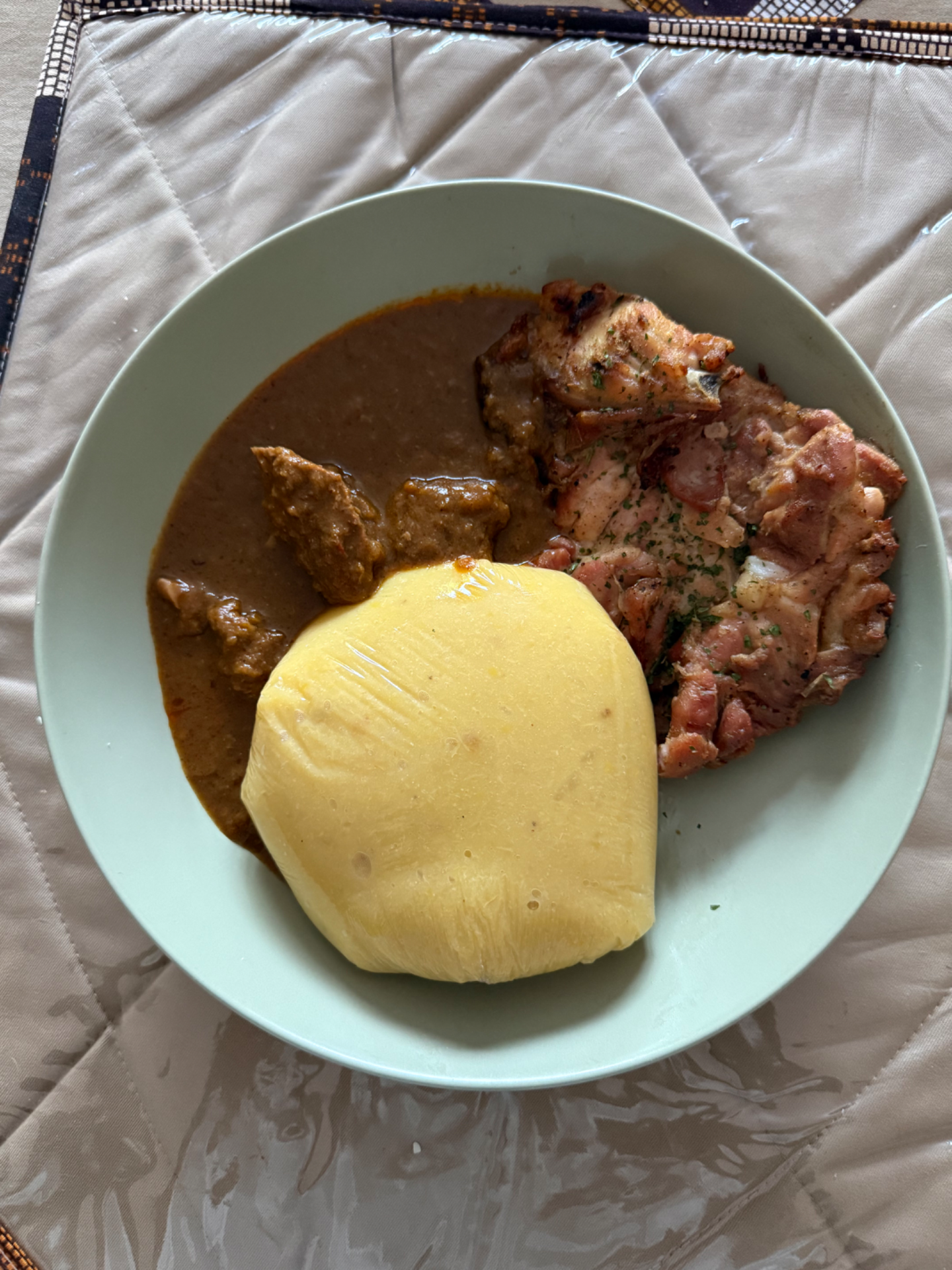
An orange-red sauce reaches the table. In Côte d’Ivoire, it accompanies placali or foutou; in Ghana, palm nut soup meets fufu; in Gabon, nyembwe envelops chicken; in the Congos, moambé invites rice or chikwangue into the meal.
These dishes are related, yet each keeps its own voice. Thickness, smoked fish, herbs, chillies and accompaniments make different meals. This journey follows the versions on RecettesAfricaines.com, paying attention to the products behind the names.
One African fruit, several paths to the pot
The African oil palm, Elaeis guineensis, originates in tropical Africa. Its fruits grow in bunches. Fibrous pulp surrounds a hard nut and contains palm oil; the kernel inside the nut provides a different oil, palm kernel oil. FAO describes these distinct parts. [1]
In cooking, “palm nuts” often means the fruit used to make a sauce base. It does not mean crushing hard shells into the pot. The useful pulp must be separated from shells and coarse fibres.
A tin of palm-fruit pulp, a bottle of red palm oil and palm kernel oil are therefore different ingredients.
Pulp, red oil and kernel oil: choosing correctly
Palm-fruit pulp or cream supplies plant material, fat and body. Diluted and simmered, it forms many palm-fruit sauces. A thick concentrate and a thinner cream do not necessarily need the same amount of water.
Red palm oil is fat extracted from the pulp. Carotenoid pigments contribute its colour. [1] It seasons rice, carries aromatics and accompanies greens or beans, but it cannot alone provide all the body of pulp.
Palm kernel oil comes from the kernel and has a different composition. [1] Do not automatically substitute it for palm-fruit cream. Labels and local names can be ambiguous: check ingredients.
“Palm butter” in the Liberian dishes below means a palm-pulp sauce base, rather than dairy butter.
Processing, straining and flavour
Preparing the fruit generally involves cooking, working the pulp with water and separating unwanted solids. Food-grade strained pulp ready for cooking makes an accessible starting point at home.
Straining keeps shell fragments and coarse fibres out of each mouthful. Stir canned pulp and follow its manufacturer's instructions; concentration varies.
Simmer gently to build the sauce. Oil may rise as it reduces, but this neither proves that every other ingredient is safely cooked nor requires leaving a thick layer of fat on top.
Côte d’Ivoire: sauce graine and its accompaniments
Our sauce graine combines palm pulp with meat, fish or seafood according to the version. No single household recipe defines every other one.
Placali sauce graine pairs fermented cassava dough with the sauce’s richness. Yam foutou with sauce graine offers a firmer mouthful, while white rice with sauce graine spreads the sauce among separate grains.
Compare smoked-fish sauce graine, fish in sauce graine and chicken in sauce graine. Smoked fish changes both aroma and potentially the salt balance of the whole pot.
Benin and Togo: doughs in conversation with sauce
Benin’s piron with sauce graine and fufu with sauce graine invite attention to the accompaniment. Similar dough names do not guarantee identical ingredients across countries.
The Beninese versions with fish and with chicken offer two approachable preparations.
In Togo, dékoudessi also puts palm pulp at the centre. Akoumé with dékoudessi pairs maize dough with it. Choose the firmness of the dough and fluidity of the sauce together.
Ghana: abɛnkwan, fufu and fragrant soup
Our abenkwan or palm nut soup brings palm cream together with meat, smoked fish and aromatics. Tomatoes, chillies, garden eggs and herbs contribute according to the chosen version.
Fufu with palm nut soup introduces the full meal: the dough’s texture and serving style help shape the experience.
By contrast, fante fante cooks fish with red palm oil. Comparing these recipes shows the difference between a pulp-based soup and a preparation in which oil is the aromatic cooking fat.
Illustration from the corresponding recipe, already available on RecettesAfricaines.com.
Nigeria: discovering banga soup and ofe akwu
Our banga soup, presented within Delta and south-south cooking, combines palm pulp, fish and regional seasonings. Meat, smoked fish or crayfish may join them in different households.
The site’s Igbo ofe akwu arranges aromatics differently and is readily served with rice. Identify the fragrant leaves and spice blend rather than replacing them at random.
These recipes offer comparisons, not rigid borders between every Nigerian practice. Broth, consistency and accompaniment matter. When substituting an unavailable seasoning, describe the result as an adaptation.
Illustration from the corresponding recipe, already available on RecettesAfricaines.com.
Cameroon: mbanga soup has its own voice
Cameroonian mbanga soup offers another meeting of palm pulp, smoked fish, meat and aromatics. Similar names invite comparison without making one cuisine a translation of another.
In our version, dried shrimp, chilli and spices add depth. Taste before adding salt, since dried seasonings can change the whole broth.
The sauce behaves differently around a piece of fish, a dough or a spoonful of rice. Follow the chosen recipe’s serving suggestions and notice those differences.
Guinea, Liberia and Sierra Leone: fruit and the sea
Guinea’s seafood sauce graine combines fish, shrimp and crab in our version. Build the sauce before adding fragile ingredients at the appropriate stage; they do not all need the same cooking time.
Liberian palm butter appears with fish, chicken and smoked meat. Related pulp bases carry very different broths.
Sierra Leone’s palm nut soup extends the journey. Protein choices, aromatics and serving customs deserve more attention than the broad description “red sauce”.
Gabon: nyembwe beyond chicken
Chicken nyembwe is a familiar introduction to this palm-pulp sauce. Its aromatics support the fruit and the pieces it coats.
Smoked chicken nyembwe brings another layer of aroma; pork nyembwe and smoked-fish nyembwe show the range of possible main ingredients.
With fatty meat and a rich palm base, consider the fat already in the pot before adding oil. Seek a sauce that works pleasantly with its accompaniment.
Illustration from the corresponding recipe, already available on RecettesAfricaines.com.
The Congos: moambé, mosaka and different meals
Our Congo-Brazzaville moussaka or sauce graine is a palm-pulp sauce, distinct from the aubergine bake familiar under a similar name.
In DR Congo, mossaka or mosaka chicken and chicken moambé continue the exploration. The latter recipe also contains groundnut, which matters for both flavour and allergies.
Compare meals with rice, chikwangue and plantains. Each changes the mouthful, and plantain ripeness changes its balance again.
Illustration from the corresponding recipe, already available on RecettesAfricaines.com.
Angola: muamba de galinha, red oil and ginguba
Our muamba de galinha uses red palm oil with chicken, okra and vegetables. It should be described accordingly, rather than presented as a pulp sauce identical to nyembwe.
The site’s versions with funge and in the Luanda style also allow groundnut. Reading the ingredient list is more useful than relying on similar names.
Moamba de ginguba puts groundnut prominently in the picture. Ginguba and palm pulp are not synonyms, although recipes may bring them together. Continue with our groundnut-paste article.
Illustration from the corresponding recipe, already available on RecettesAfricaines.com.
When red oil leads: rice, yam and beans
Nigeria’s native rice or palm oil rice uses red oil to season rice, with smoked fish and aromatics in our version. Gambian palm oil rice offers another comparison.
Asaro draws body from cooked yam. Ewa riro and feijão de óleo de palma pair the oil with beans; Ghanaian gobe adds gari.
Here the rice, yam or beans provide structure. More oil cannot replace the starch of a tuber or the body of tender beans.
Greens and okra: partners with different textures
Pondu with palm oil, Liberian potato greens and Sierra Leonean plasas show further uses. Liberian palm oil okra soup offers another type of thickening.
Leaves, okra mucilage and palm pulp produce different textures. Ogbono and Ghanaian egusi use their own seeds; their names do not mean palm.
For cassava leaves, use reliably processed food products and follow appropriate preparation instructions. Pounded or frozen does not itself mean ready to eat. Our cassava article explains these precautions.
Getting the sauce right: concentration, heat and salt
Identify the product before adding water. Dilute concentrates gradually, leaving room to adjust during simmering. Reduce an overly thin sauce gently before adding delicate fish.
Stir the bottom without breaking up garnishes. Remove already-tender pieces while adjusting the sauce if necessary. There is no need to heat red palm oil until it smokes.
Taste after adding smoked fish, crayfish and salty seasonings; reduction concentrates salt. Offer strong chilli separately for mixed preferences. Even a whole chilli can split and release its heat.
Buying, storing and sharing thoughtfully
Choose food-grade products with a readable manufacturer, ingredients and storage instructions. Seek traceable information about origin and production rather than inferring it from colour or the word “traditional”.
Follow storage directions after opening. A moist sauce does not keep like pure oil. Refrigerate prepared dishes within two hours and keep the coldest part of the fridge between 0 and 4°C. [2] Divide large quantities into suitable containers for faster cooling.
Check for groundnut, fish and shellfish even when they are absent from the title. A vegetarian version must also exclude fish stock and shrimp powder.
Three meals to explore the differences
Begin with sauce graine and rice or placali. Another day, try chicken nyembwe with a cassava accompaniment. Then cook a dish in which red oil plays its own role, such as rice or beans.
Compare fluidity, smoky aromas, herbs and the way the accompaniment carries the sauce. There is no need to turn dinner into a competition.
Palm fruit connects many African cuisines through distinctive names, ingredients and skills worth recognising and passing on.
Sources and further reading
This journey describes the versions published on RecettesAfricaines.com, not every local or family practice. Linked recipes provide ingredients and steps. Illustrations come from the site’s recipes.
- FAO — Small-scale palm oil processing in Africa: Oil palm: fruit structure, origin and the distinction between palm and palm kernel oil.
- French Ministry of Agriculture — Kitchen hygiene.
Continue with groundnut paste, cassava, okra and edible leaves.