Sharing coconut: from Indian Ocean sauces to Africa’s sweet treats
Coconut rice, kuku paka, matapa, curries, Comorian breads, vitumbua and sweets: explore African cooking through coconut milk, cream and flesh.
In a pot of rice, coconut perfumes the grains. Around fish it becomes sauce; with greens and groundnut it joins a matapa; in cake batter it meets rice and cardamom. It moves between savoury and sweet as much more than a grated decoration.
The Swahili coast, Comoros, Madagascar, Seychelles and Mozambique offer many starting points. The journey continues through Atlantic islands and West African tables. We follow the site’s versions without treating neighbouring dishes as identical or one recipe as an entire country’s practice.
One coconut, several products to identify
Coconut water is the liquid naturally inside the fruit. Coconut milk and cream are preparations extracted from the flesh, with different concentrations and richness. Tetra Pak’s technical handbook describes these products and their manufacture. [1]
Fresh flesh, dried grated coconut and coconut oil are other ingredients. Water cannot give a sauce the same texture as milk; oil cannot replace everything in cream.
Commercial names can be confusing. A diluted drinking beverage and canned cooking milk may have very different concentrations. Read ingredients and intended use.
Milk, cream and grated flesh: choose for the recipe
Our savoury recipes generally use unsweetened coconut milk. A sweetened cocktail product changes the balance and cannot simply be corrected with extra salt or chilli.
Cream is more concentrated and may need dilution. Grated flesh retains particles and texture instead of behaving like a strained liquid.
The Seychellois homemade coconut milk recipe shows extraction with water followed by straining. Water and working the flesh affect the result. Use clean equipment, safe water and sound ingredients; homemade milk is a fresh preparation.
Wali wa nazi: rice becomes fragrant
Tanzanian wali wa nazi and Kenyan wali wa nazi show milk supplying cooking liquid, aroma and richness. It should not automatically be added on top of a full water-only cooking allowance.
Wali wa nazi na samaki builds a fish meal. Malagasy coconut rice and Mauritian coconut rice offer further balances.
Rice variety, rinsing, the lid and milk concentration change absorption. Follow the selected recipe instead of multiplying liquids arbitrarily.
Illustration from the corresponding recipe, already available on RecettesAfricaines.com.
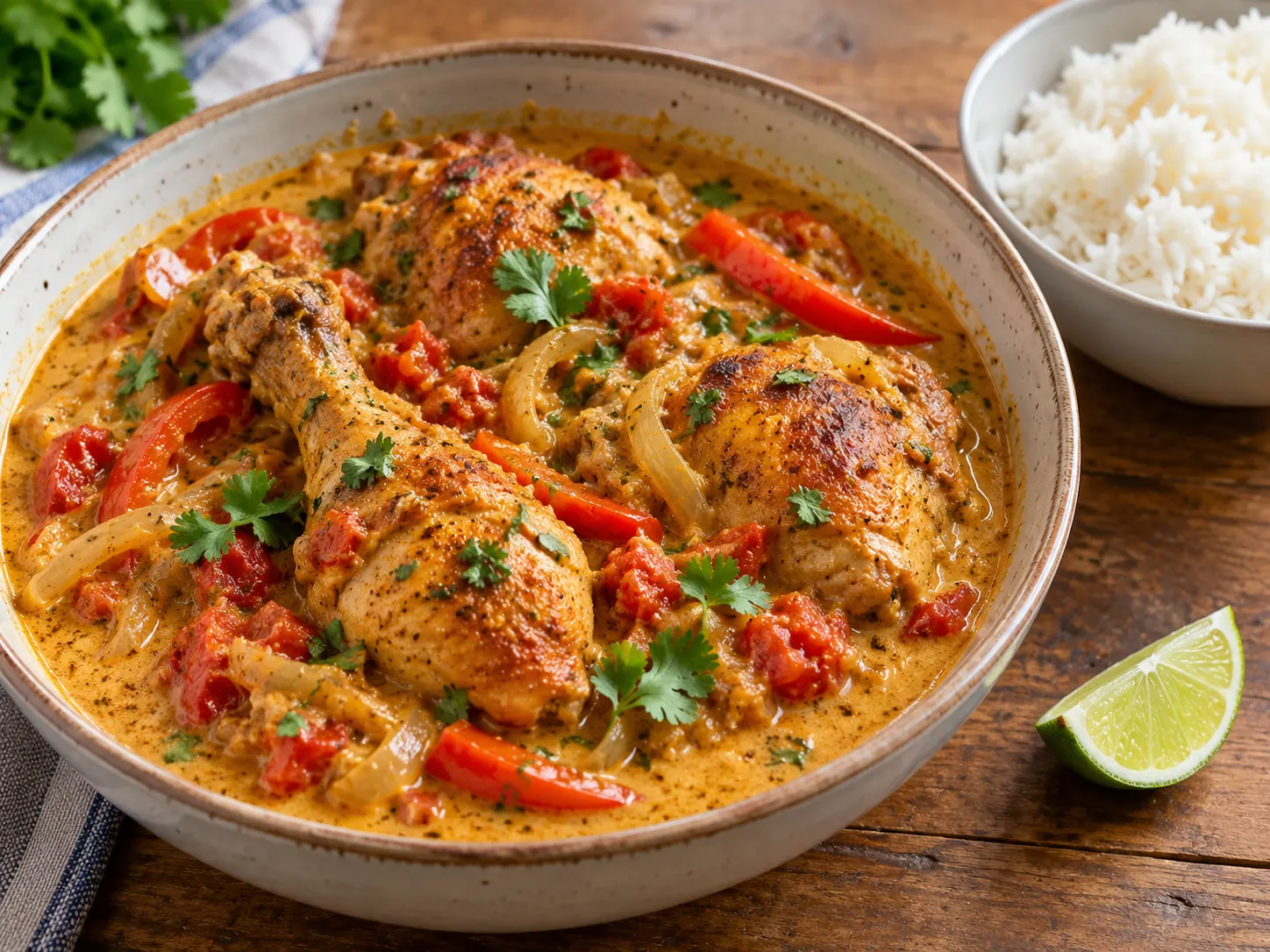
Kenya: kuku paka brings chicken and sauce together
Our kuku paka combines chicken, milk, aromatics and spices in a coastal version. Coconut softens the overall impression without removing chilli’s actual heat.
Mchuzi wa nazi introduces the sauce itself. Onion, garlic, ginger, tomato and seasonings require the chosen recipe’s preparation; pouring coconut milk over meat does not reproduce every dish.
Adjust citrus and herbs so that richness, acidity and spices remain distinct and balanced.
Pulses: mbaazi, maharagwe and related pots
Kenyan mbaazi za nazi and Tanzanian mbaazi za nazi use pigeon peas. Kenyan maharagwe ya nazi and the Tanzanian version use beans. These are different pulses rather than one grain with several names.
Mozambican feijão com coco and pigeon peas with coconut continue both families. Comorian coconut lentils create another texture.
Dried pulses need their appropriate preparation and cooking before the coconut finish. Do not conceal hard beans under an already reduced sauce. Our beans and cowpeas article explains further.
Mozambique: matapa, leaves, groundnut and coconut
Our matapa combines prepared cassava leaves, groundnut, coconut milk and seafood. Leaves, groundnut, milk and garnish each contribute differently.
Versions with shrimp, with crab and vegetarian allow comparison. An animal-free version must also consider stock and seasonings.
Coconut milk cannot make inadequately processed cassava leaves safe. Use properly prepared food-grade leaves and appropriate instructions; pounded or frozen does not necessarily mean ready to eat. Read our cassava article and the matapa article.
Illustration from the corresponding recipe, already available on RecettesAfricaines.com.
Mozambique’s chicken, shrimp and crab
Frango à zambeziana uses coconut with chicken, garlic, citrus and piri-piri in our version. Its method should not automatically be equated with kuku paka.
Shrimp in coconut milk, coconut crab and fish in coconut milk need cooking suited to their main ingredient, rather than a shared time.
Our mucapata includes rice, beans, coconut and groundnut. Describe that composition explicitly instead of assuming it represents every household version or that a dish name reveals all ingredients.
Comoros: coconut milk within the meal
Ndrovi ya nazi uses green bananas or unripe plantains in our recipe. It differs from ripe bananas with coconut, which take a sweeter direction. Ripeness changes the dish.
Comorian coconut chicken, coconut shrimp, coconut crab and coconut lobster change the garnish.
Breadfruit with coconut, aubergines with coconut and pumpkin with coconut show that meat is not necessary to explore the family. Each vegetable or starch retains its own texture.
Illustration from the corresponding recipe, already available on RecettesAfricaines.com.
Madagascar and Seychelles: distinct island cuisines
Malagasy coconut chicken and coconut fish offer two preparations. Coconut ravitoto is explicitly a variation, rather than a reason to assume every ravitoto contains coconut.
Seychellois kari koko pwason, kari koko zourit and kari koko poul bring milk into fish, octopus and chicken curries. Spices and cooking technique matter as much as coconut.
Octopus needs its own texture and method, not a time borrowed from fish fillets. A specific recipe is more informative than a universal “island curry”.
Atlantic and West African tables also have their recipes
Bioko coconut fish and Equatorial Guinean fuludum offer fish in sauce and a malanga-and-plantain preparation with coconut milk respectively.
São Tomé and Príncipe’s peixe com leite de coco continues the fish family. Guinea-Bissau’s arroz de coco com peixe organises the meal around rice and fish.
Nigerian coconut rice and Sierra Leonean coconut rice offer other readings. Coconut does not impose identical aromatics, colour or histories.
Greens, okra, peas and yam: different textures
Tanzanian mchicha wa nazi, njegere za nazi and bamia za nazi use greens, peas and okra. Milk complements them without giving all three the same texture.
Viazi vikuu vya nazi brings yam into the journey, while Comorian spinach with coconut offers another leaf preparation.
Be careful with names: koko can mean Gnetum leaves in certain Central African dishes. A word resembling coconut does not prove coconut is present. Check ingredients.
Mahamri, vitumbua and breads: coconut in the dough
Our Kenyan mahamri uses wheat flour, coconut milk and cardamom. A fritter called mandazi elsewhere does not automatically have the same composition.
Tanzanian vitumbua uses rice and coconut milk cooked in small mould cavities. Mkate wa kumimina also uses poured rice batter in our version, with another shape and serving style.
Comorian mkatra foutra and mkatra siniya explore breads and cakes. The site’s Kenyan mkate wa sinia contains semolina and wheat flour. Similar names do not guarantee the same base.
Illustration from the corresponding recipe, already available on RecettesAfricaines.com.
Kashata, candies and desserts: flesh supplies texture
Tanzanian kashata ya nazi and Nigerian coconut candy give grated flesh another role. Sugar work and particle size shape the bite.
Cape Verdean doce de coco continues this family. Our pudim de coco contains coconut milk, dairy milk and eggs: its title does not make it dairy-free.
Tanzanian tambi za nazi combines vermicelli, coconut and cardamom. Follow the recipe and handle hot sugar carefully; do not touch it to judge its texture or temperature.
Illustration from the corresponding recipe, already available on RecettesAfricaines.com.
Drinks: coconut water and milk preparations differ
Cape Verde’s água de coco refers to water from the fruit. Comorian vanilla coconut milk is a drink prepared from diluted, flavoured milk, a different product.
Senegalese baobab, pineapple and coconut drink combines those ingredients in our recipe; it does not define every bouye preparation.
Use safe water, fresh ingredients and proper refrigeration. These drinks are presented for their flavour, without assigning special therapeutic properties.
Getting the sauce right: concentration, heat and balance
Mix or homogenise the product as its directions indicate. Coconut milk can separate into a richer layer and a thinner liquid; that alone neither diagnoses spoilage nor proves safety.
For a smooth sauce, control heat and reduce gradually. Some recipes deliberately reduce further, so follow the selected method rather than a universal ban on boiling.
Consider existing fat before adding oil. Rich milk, groundnut and fatty meat already contribute. Adjust acidity and chilli gradually: coconut does not neutralise chilli heat.
Allergens, storage and the complete meal
Coconut milk is not animal milk, but the dish may also contain butter, dairy milk, eggs, wheat, groundnut, fish or shellfish. Check the whole recipe and labels for anyone avoiding an ingredient.
Follow storage instructions after opening. Shelf-stable sealed milk, fresh flesh and homemade milk do not keep in the same way. Do not leave a coconut sauce at room temperature for hours.
Refrigerate cooked dishes within two hours and keep the coldest fridge area between 0 and 4°C. [2] Divide large quantities to cool promptly. Aroma, spices and reheating cannot repair poor storage.
Three meals to discover coconut differently
Begin with coconut rice, vegetables and fish or pulses. Another time, prepare a coconut sauce around chicken, okra or yam. Finish the journey with a few vitumbua or a small sweet.
You will have encountered coconut as cooking liquid, sauce base and dough ingredient. Compare textures without expecting it to taste the same in every role.
Sharing these dishes means passing on extraction, straining, simmering, grain cooking, dough work and serving, while allowing each table its own voice.
Sources and further reading
Links describe the versions on RecettesAfricaines.com, not every local or family practice. Illustrations come from the site’s recipes.
- Tetra Pak — Coconut Handbook: Coconut Food Production: an industrial technical source for the distinction and manufacture of coconut water, milk and cream.
- French Ministry of Agriculture — Kitchen hygiene.
Read also matapa, cassava, groundnut paste, edible leaves and yam.