African fritters: happiness is best shared warm
Puff-puff, mikaté, yovo doko, sfenj, mandazi, akara and koeksisters: a delicious journey through risen dough, banana, cowpeas, cardamom and syrup.
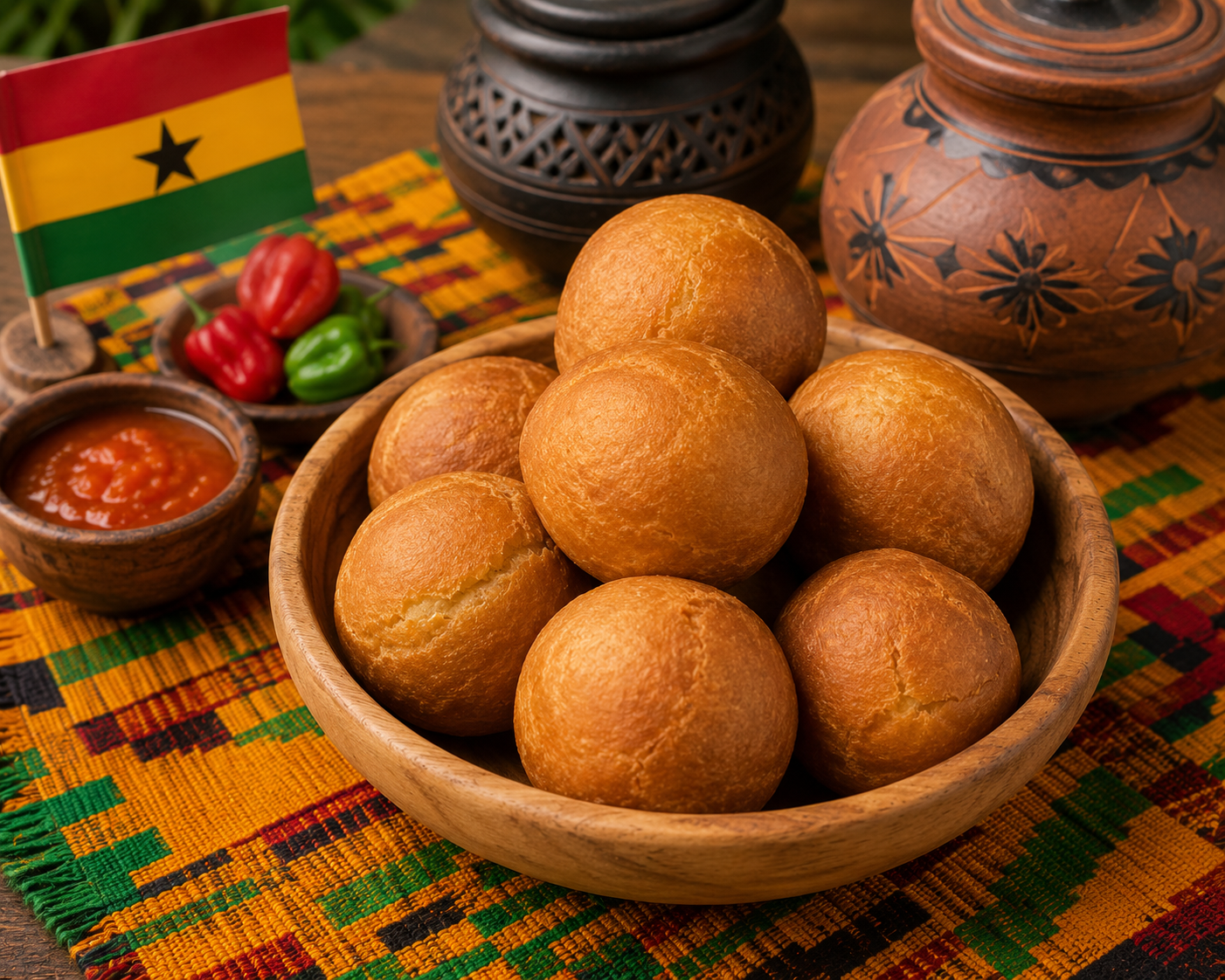
First comes a little sound. Dough meets oil, a ring of bubbles appears, and the fritter rises and colours. Someone makes tea. A plate moves closer. We wait long enough to avoid a burn, seldom long enough for everything to go cold.
Fritters make a kitchen welcoming before the table is even laid. Round or ring-shaped, sweet or savoury, filled with meat or scented with cardamom, they may start with flour, banana or cowpeas. Across Africa they carry different names and skills. Read with an appetite, then follow the site’s recipes into the kitchen.
One broad family, different pleasures of texture
“Fritter” covers preparations with very different batters and doughs. Some rise with yeast, some with baking powder, while others rely on blended pulses or mashed fruit.
The first bite may offer a thin crust and airy centre, a richer crumb, crisp sugar or soft banana. One word does not promise one result.
That makes comparison enjoyable. We need not ask akara to resemble sfenj; we can discover what each does well.
Puff-puff: a few ingredients and time to wait
Our Nigerian puff-puff starts with flour, water, sugar and yeast, plus a little nutmeg. With a short ingredient list, resting and consistency matter.
A soft batter is shaped differently from firm dough rolled on a board. Hand or spoon creates rounded portions without demanding perfect geometry.
The moment to enjoy them comes when a golden surface surrounds a cooked, tender centre. Make enough for at least a few to reach the table.
Mikaté, yovo doko and Ivorian fritters: family resemblances
Congo-Brazzaville mikaté and Beninese yovo doko extend the family of risen flour doughs. Sugar, liquid and optional enrichments vary in our recipes.
Our Ivorian fritters contain milk and egg. The site’s sweet gbofloto includes banana: that is a particular version, not a definition of every gbofloto.
Guinean boulaki from Conakry continues the comparison. Nutmeg, vanilla or zest can each give direction without putting every fragrance in the cupboard into one bowl.
Illustration from the corresponding recipe, already available on RecettesAfricaines.com.
Cameroon: a fritter can arrive with a whole breakfast
Our BHB, fritters, beans and porridge, brings risen dough together with beans and maize porridge. The fritter becomes part of a meal rather than only an afternoon sweet.
Stewed beans change the bite differently from sprinkled sugar; warm porridge sets another pace.
Prepare the longest-cooking components first and fry last. Everyone can then sit down together instead of the cook eating alone beside the stove.
Sfenj, sfinz and bambalouni: the crisp edge
Algerian sfenj, Libyan sfinz and Tunisian bambalouni introduce another stop. Our versions use hydrated, risen flour doughs, shaped with an open centre according to the preparation.
The pleasure lies in contrast: a little resistance at the surface, then yielding crumb. Sugar, honey or other accompaniments can follow the chosen recipe without hiding the fritter.
Algerian zlabia adds syrup and another kind of batter work, taking fried sweets beyond the ball or ring.
Illustration from the corresponding recipe, already available on RecettesAfricaines.com.
Mandazi and mahamri: cardamom enters the kitchen
Our Kenyan mandazi combines flour, coconut and spices in an enriched dough. Mahamri foregrounds coconut milk and cardamom; the aroma seems to arrive before cooking.
Not every mandazi has the same ingredients. Compare versions from Tanzania, Uganda, Rwanda, South Sudan and Burundian coconut mandazi. Water, milk, coconut and raising agents differ.
With tea or coconut pigeon peas, these can occupy a different place from a heavily sweetened dessert. Let guests choose their additions.
Illustration from the corresponding recipe, already available on RecettesAfricaines.com.
Madagascar and Somalia: other ways to bite
Our Malagasy menakely and mofo baolina offer enriched doughs and different flavour options. A little vanilla or zest may be enough.
Somali kac kac explores small cut pieces with cardamom in our version. They invite nibbling but also need careful cooking to avoid becoming too dark.
Shape affects the bite, the ratio of crust to centre and the way a plate is shared. There is no single ideal fritter size.
Ripe banana: fruit brings tenderness
Malawian zitumbuwa combines banana with maize flour in our recipe. Guinea-Bissau’s bolinho de banana uses another base, while Sierra Leonean rice akara brings banana and rice flour together.
That last name deserves a pause: despite “akara”, this linked version is not a cowpea fritter. Ingredients reveal a different sweet.
Ripeness matters. Ripe fruit brings aroma, moisture and sweetness, inviting considered sugar adjustments rather than automatic additions. Let the fruit remain part of the flavour.
Akara and ata: cowpeas take another shape
Nigerian akara, Beninese ata, Togolese akara and versions from Côte d’Ivoire, Niger and Mali open the savoury chapter.
These recipes use prepared cowpeas blended with aromatics. This is not puff-puff batter with the sugar removed. Water and working the mixture affect how a portion holds in oil.
Onion, chilli and accompaniments change the experience. Serve tomato-chilli sauce separately so each guest can choose. A small savoury plate creates a welcome contrast among sweets.
Illustration from the corresponding recipe, already available on RecettesAfricaines.com.
Vegetables, cassava and fish: the savoury side
Our Kenyan bhajia combines potatoes and chickpea-flour batter. Djiboutian bagya uses a different pulse-and-aromatic preparation; similar names should not conceal ingredients.
Comorian vegetable fritters, Cameroonian maize fritters and Burundian cassava fritters explore further textures. The cassava recipe starts with properly prepared, cooked food-grade cassava; frying does not replace that preparation.
Cape Verdean bolinhos de bacalhau combines desalted cod, potato and egg in our version. Check the prepared fish before deciding whether the mixture needs additional salt.
Millet and other flours: let the grain speak
Burkinabè millet fritters and Senegalese millet fritters show different constructions. The Senegalese recipe includes both millet and wheat.
One flour does not always replace another by weight. Absorption, fineness and gluten affect consistency. Begin with a specific recipe before adapting.
Millet also shifts attention towards the grain’s own aroma and its meeting with sweetness, spice or a drink.
Vetkoek and magwinya: a fritter can become lunch
South African vetkoek offers sweet or savoury fillings in our recipe. Botswana magwinya, Lesotho makoenya and Eswatini amagwinya extend this fried-bread family.
Magwinya with minced beef shows the move towards a filled meal. Choose crumb and filling together: cooked bread should welcome its sauce rather than disappear beneath an excessively wet filling.
For a shared table, offer fillings separately. Guests choose their balance, and the bread keeps its texture longer.
Koeksister and koesister: one letter, two discoveries
Our South African koeksister works shaped dough and syrup, inviting attention to pattern, shine and the meeting of crispness and sweetness.
Cape Malay koesisters have another composition: yeast, spices and potato in our version, followed by coconut and syrup. Related names should not collapse them into one recipe.
Serve small pieces and take time to taste them. Syrup is part of the preparation, with timing and method shaping the result.
Illustration from the corresponding recipe, already available on RecettesAfricaines.com.
Small gestures that improve the batch
Choose a dough and follow its logic. Yeast needs the specified resting time; baking powder is not an identical substitute. Similar thickness helps portions cook evenly.
Cook a small first piece to observe the result. Rapid colour does not guarantee a cooked centre, and crowding changes frying conditions. Follow equipment and oil instructions, supervise continuously and avoid smoking oil.
Do not taste raw batter: flour is a raw food, and optional eggs add another reason to wait. [1] A cooked first fritter makes a better test.
A tea-time gathering where everyone sits down
You do not need ten recipes. One risen-dough fritter, a small savoury option and a drink can tell a lovely story. Prepare sauces, cups and serving dishes before the final cooking.
Drain without immediately sealing hot pieces in a box, where steam softens the surface. Let them cool enough to eat comfortably. Follow the recipe’s serving method for syrup sweets.
Check ingredients for guests avoiding wheat, eggs, milk, fish or a pulse. “Millet”, “cassava” and “coconut” do not automatically mean free of wheat, eggs or milk.
Enjoyed warm, then stored properly
Fritters are often best the day they are made, but they do not all store alike. Plain dough and meat-filled fried bread need different arrangements. Follow ingredient and recipe guidance.
Refrigerate perishable preparations and fillings promptly, within two hours, keeping the coldest fridge area between 0 and 4°C. [2] Reheating cannot repair poor storage.
Then comes the nicest part: put down the plate and let conversation do the rest. A fritter cannot tell an entire continent’s story, but a few thoughtfully chosen recipes can open a delicious conversation between its cuisines.
Sources and further reading
Links describe versions on RecettesAfricaines.com, not every local or family practice. Illustrations come from the site’s recipes.
Continue with coconut, beans and cowpeas, millet, sorghum and fonio, cassava and plantain.