Chillies of Africa: from fragrance to fire, a thousand ways to enliven a meal
Harissa, piri-piri, shito, sakay, basbaas and berbere: a delicious journey through African sauces and seasonings, with recipes and ways to keep flavour ahead of heat.
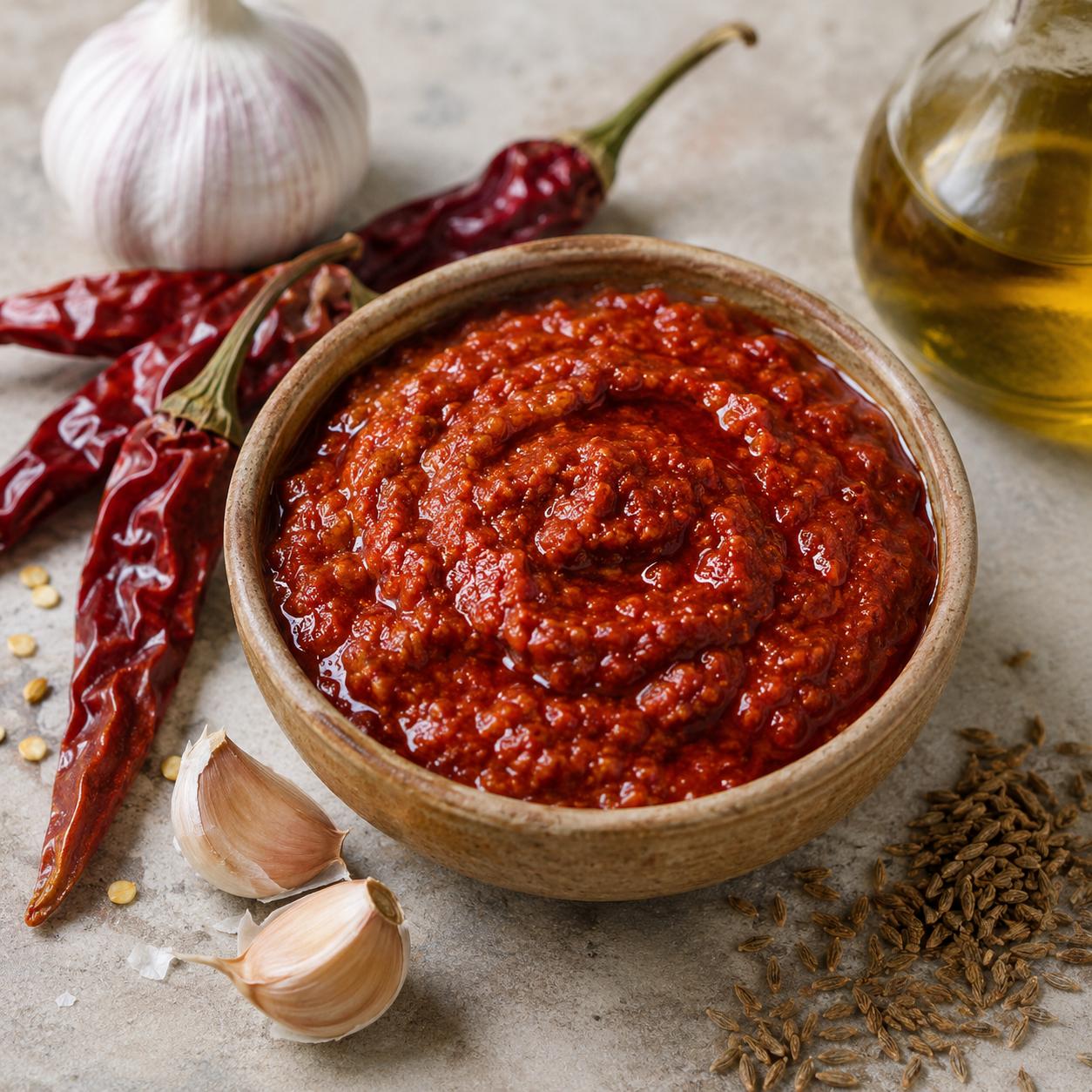
The little bowl often arrives after the main dish. Red, green or almost black, it waits beside the rice. Someone takes a tiny spoonful; someone else asks, “Is it hot?”
Behind that question lies more than a burning sensation. Chilli can bring fresh, fruity or dried flavours; a sauce may first reveal garlic, citrus, dried fish or spices. Follow the site’s recipes through these small preparations that change a whole plate. They represent particular versions, rather than one formula for every household.
Fragrance before strength
Two equally hot sauces can taste very different. One begins with tomato, another with dried chilli and garlic, a third with fish or coriander. Calling them all “hot sauce” misses much of their character.
Ask how the preparation enters the meal: as a condiment, marinade or cooking sauce? A concentrated paste and a large stew need different quantities. Good seasoning still lets you recognise the fish, beans, plantain or bread.
Fresh, dried, whole or crushed
Chopped fresh chilli behaves differently from a whole chilli. Powder disperses readily; a paste already contains its own moisture, oil and salt, sometimes acid too. A spoonful of one is not automatically equivalent to another.
A whole chilli may split during cooking, so it does not guarantee mildness. Colour and size do not reliably predict strength. Removing seeds and inner parts may change the result without making a hot chilli harmless. Begin modestly, mix thoroughly and taste with a clean utensil before adding more.
Harissa: depth as well as heat
Our Tunisian homemade harissa combines dried red chillies, garlic, coriander, caraway, cumin, olive oil and lemon. Drying, soaking and grinding produce something different from a fresh tomato sauce.
Libyan harissa offers another balance. Related names do not make the recipes interchangeable. Start with a little beside vegetables and bread, or stir it into a small portion of cooked sauce before seasoning the whole pan.
Pili-pili and piri-piri meet the grill
Pili-pili and piri-piri circulate across several cuisines and may name a chilli or a preparation. They do not promise one botanical variety or a single sauce everywhere.
Mozambican grilled chicken, piri-piri ribs and camarão piri-piri pair heat with garlic, citrus and oil, while requiring different cooking.
Piri-piri squid and piri-piri chicken rice continue beyond the barbecue. Marinade does not replace cooking. Set aside a clean portion before contact with raw meat or seafood if you want sauce for the table.
Illustration from the corresponding recipe, already available on RecettesAfricaines.com.
Shito: chilli can speak of the sea
Many Ghanaian shito versions combine chilli, oil and aromatics with dried fish or shrimp. Their dark depth differs from harissa’s red paste.
Compositions vary, including adaptations without animal ingredients. Check rather than assume a sauce is vegetarian or free from allergens. Fish and shellfish should be clearly identified.
Our gobe, beans with gari and palm oil lists shito among serving options: an inviting way to discover it alongside beans, with each guest choosing a quantity.
Nigeria: yaji powder and ewa agoyin sauce
Suya shows a dry seasoning. Our yaji includes ground roasted peanuts, paprika, ginger, cayenne, salt and cloves. Peanut flavour matters alongside heat; tell guests about this allergen.
Ewa agoyin pairs soft beans with a concentrated dried-chilli and pepper sauce. Asun and bole and fish turn towards grilled goat, roasted plantain and fish. These dishes give chilli different roles rather than repeating one sauce.
Illustration from the corresponding recipe, already available on RecettesAfricaines.com.
Côte d’Ivoire, Benin and Central Africa
The site’s Ivorian chilli sauce combines chilli, tomato, onion, garlic and oil, finished with lemon. Tomato gives a broader base than a predominantly chilli paste.
Beninese amiwo with crushed chilli and wassa-wassa with chilli show how an accompaniment changes beside maize dough or yam-flour grains.
Pili-pili also names chilli or its condiment in several Central African cuisines, with varying compositions. In the Gulf of Guinea, our São Toméan molho fogo offers another meeting of chillies, tomato, aromatics and lime.
Basbaas and doukouss: lively freshness
Our Somali basbaas combines sweet green pepper, green chilli, onion, coriander, garlic, lemon and vinegar. The sweet pepper contributes texture and flavour.
Bariis basbaas leh introduces this condiment alongside fragrant rice. Djiboutian doukouss offers another raw chilli sauce; read its ingredients rather than assuming neighbouring sauces are identical.
Make a quantity suited to the meal, use a clean container and avoid dipping a used spoon back into the pot.
Illustration from the corresponding recipe, already available on RecettesAfricaines.com.
Berbere and awaze: heat among spices
Berbere is a spice blend, not one chilli variety; strength follows composition. Awaze can be made from that blend, but powder and sauce are not automatic substitutes.
Ethiopian awaze tibs and yebeg wat lead towards cooked beef and lamb. Eritrean shiro with berbere, spiced red lentils and injera fit-fit explore pulses and bread.
Compare mild shiro and vegetable alicha without hot chilli. The Horn’s cooking has room for gentler flavours too.
Illustration from the corresponding recipe, already available on RecettesAfricaines.com.
Sakay, rougail and rougaille: island nuances
In Madagascar, sakay belongs to the world of chillies and their condiments, with variable compositions that may include ginger. The name alone guarantees neither a fixed sauce nor strength.
Our Comorian rougail is a fresh tomato, onion, chilli and lime accompaniment. Mauritian rougailles with prawns, eggs or aubergines are cooked dishes.
Seychellois salt fish rougay adds another ingredient and preparation. Similar words need not mean the same texture or place in a meal.
When chilli becomes a bite
Mauritian gâteaux piments are savoury split-pea fritters, not sweet cakes. Heat meets a batter, crust and serving size.
Our stuffed chillies use large mild chillies filled with potato and coated for frying. Substituting tiny fiery chillies would transform the dish. Read beyond the title and consider the person taking the first bite.
Illustration from the corresponding recipe, already available on RecettesAfricaines.com.
Salads and fruit: another face of chilli
Kenyan kachumbari and Tanzanian kachumbari combine tomato, onion, citrus and herbs, with a variable role for chilli.
Namibian kapana salsa answers grilled food with freshness; Ethiopian timatim salata gives tomato another setting. Guinean mangoé rafalari introduces mango in a cooked sweet-savoury preparation.
Sweetness and acidity change balance but do not magically remove heat. Test adjustments in a small portion before changing the entire dish.
Control the heat and keep the recipe
Know the fresh chilli, labelled paste or spice blend you are using. “One chilli” is imprecise when sizes and strength vary.
For a shared meal, keep the base moderately seasoned and offer extra heat separately where appropriate. If a sauce is too hot, try extending a small portion with its unspiced base. This also dilutes salt and other flavours, which need rebalancing.
Sugar and lemon do not neutralise capsaicin. Enjoying aroma need not involve proving your tolerance.
From knife to refrigerator
Capsaicin can irritate skin, eyes and airways. Use food-safe gloves for strong chillies, avoid touching your face, ventilate and clean hands, boards and knives afterwards. [1]
Wash produce served raw and keep raw-meat utensils away from ready-to-eat sauces. Refrigerate perishable preparations promptly; cooked dishes should not remain at room temperature beyond two hours. Keep the coldest fridge area at 0–4°C. [2]
An oil layer, lemon juice or closed jar does not establish that a homemade sauce is safe in the cupboard. Without a validated preservation process, treat it as perishable. Follow storage labels on purchased sauces.
A lively table with a place for everyone
Start with one sauce and a familiar meal: harissa with bread and vegetables, basbaas with rice, yaji on skewers or chilli beside beans. It is easier to notice character than in a line-up of fiercely hot sauces.
Identify important ingredients, especially peanuts, fish and shellfish. Give each bowl a dedicated spoon and keep a portion without extra chilli available.
The nicest compliment may be “You can still taste the fish,” or simply a hand returning for another small spoonful.
Sources and further reading
Culinary links describe versions published on RecettesAfricaines.com, not every local practice. Illustrations come from the site’s recipes.
- National Capital Poison Center — Capsaicin: When the chili is too hot.
- French Ministry of Agriculture — Kitchen hygiene.
Continue with African breads, beans and cowpeas, plantain, groundnuts and African fritters.