Piri-piri squid
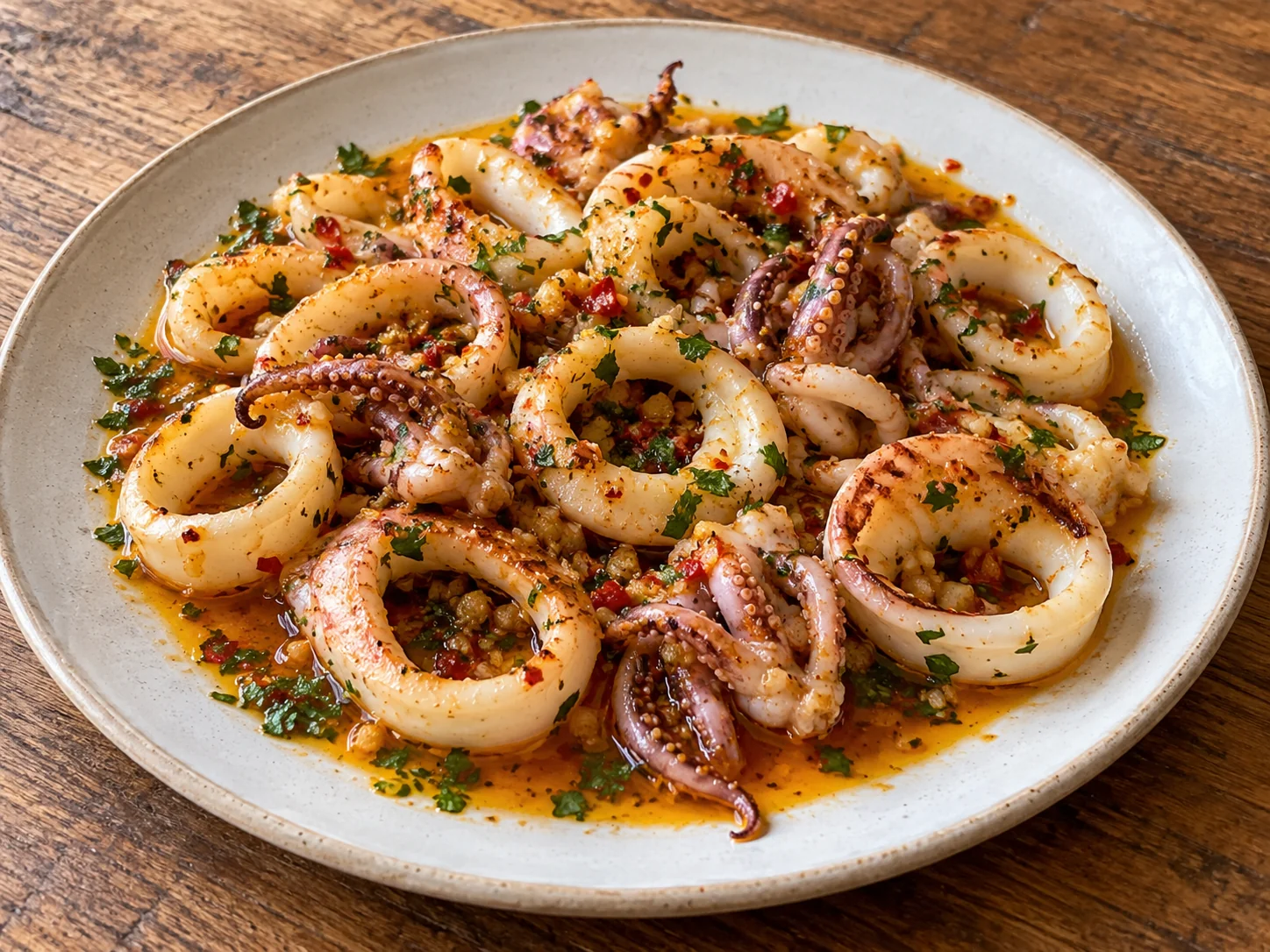
Squid seared quickly, without deep-frying, meets a lemony piri-piri sauce emulsified separately. This preparation favours tender flesh, a lightly golden surface and adjustable heat. Garlic and parsley complement the marine flavour without masking it, creating a bright dish to share straight away.
Ingredients
- 800 g of cleaned raw squid, drained edible weight; allow approximately 1200 g of whole squid depending on cleaning losses.
- 40 g of weighed olive oil, all used: 10 g for coating the squid, 10 g for the aromatics and 20 g for finishing the emulsion.
- 12 g of peeled garlic, finely chopped: 4 g for the squid and 8 g for the sauce.
- 8 g of fresh red piri-piri-type chilli, stalk removed, chopped: 4 g for the squid and 4 g for the sauce.
- 40 g of freshly squeezed lemon juice, reserved exclusively for the ready-to-eat sauce.
- 12 g of fresh parsley, washed, dried and chopped, reserved exclusively for finishing the sauce.
- 2 g of weighed fine salt: 1 g for the squid and 1 g for the sauce; do not add salty stock.
- 30 ml of drinking water to loosen the sauce and allow gentle cooking of the aromatics without excessive browning.
Preparation
Organise the 20 min of preparation: weigh the ingredients, immediately reserve the sauce portions in clean containers, then clean the squid. Remove the innards, quill, beak and inedible parts; check the tentacles and dry the flesh thoroughly. Weigh the required edible yield, cut the mantles into wide rings and separate large clusters of tentacles.
Wear gloves to chop the chilli, without touching your face or eyes. Ventilate the kitchen and then wash your hands, knife and board. Mix the squid with its oil, garlic, chilli and salt in a container reserved for raw seafood. Keep this lemon-free marinade for 10 min at 0–4°C, included in preparation time, while organising the cooking station.
Start the 12 min of cooking with the sauce: gently heat its first portion of oil with its garlic and chilli in a small saucepan. Add the water and simmer for 3 min, without browning the garlic or producing smoke. Remove from the heat, incorporate the lemon, then gradually whisk in the remaining oil and parsley to obtain a loose emulsion. Add the reserved salt.
Cover the sauce in its clean container. Never pour raw marinade into it or dip tongs that have touched raw squid into it. Prepare clean tongs for serving and a clean dish to receive cooked squid. Wash contaminated equipment before any reuse; lemon does not disinfect seafood.
Heat a large heavy pan for 2 min over controlled high heat, with ventilation, without allowing it to smoke. Divide the squid and all its coating into comparable batches, without adding oil. Sear in 3 batches for approximately 2 min each, turning the pieces; space them sufficiently to evaporate moisture rather than boil the flesh.
Check each batch with a clean thermometer inserted into the thickest part: reach a core temperature of 63°C. Timing is only a guide depending on thickness and power; extend it if necessary rather than serve undercooked squid. Clean the probe between raw and cooked checks. Transfer each completed batch to the clean dish, never to the marinade container.
Off the heat, return the cooked squid to the pan and coat with all the sauce for approximately 1 min. Scrape up unburnt cooking juices and distribute the emulsion without extending cooking. If it separates slightly, simply stir: a glossy but fluid sauce works better than a thick coating that hides the texture.
Serve immediately on warm plates with clean utensils. For leftovers, quickly divide into shallow containers and refrigerate within 2 h at 0–4°C; eat within 24 h. Reheat only once to a core temperature of 74°C, accepting a firmer texture; discard leftovers if their cold chain is uncertain.