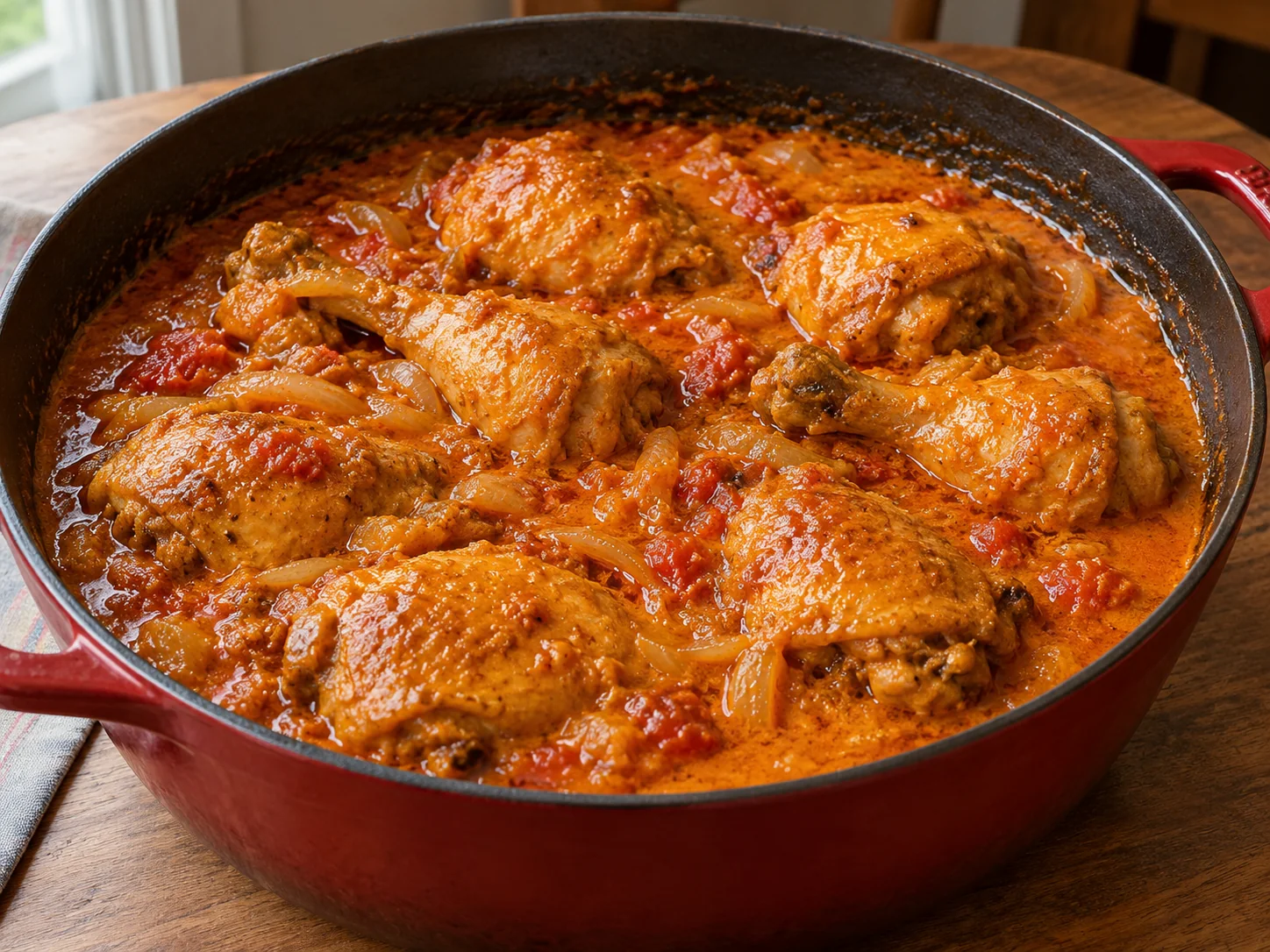
Poulet Moambé (National Dish)
Poulet moambé is much more than a simple dish: it's a true culinary institution
Rating · 5/5 (1 ratings)
Ingredients
- 1 whole free-range chicken (1.6–2 kg), cut into 8 pieces, cleaned and drained
- 800 g moambé sauce (food-grade palm fruit pulp purée, canned or properly processed; distinct from palm oil)
- 3 large onions
- 3 cloves garlic
- 4 fresh tomatoes (or 3 tablespoons tomato paste)
- 2 tablespoons natural peanut butter (pure, unsweetened peanut cream)
- 2 West Indian or African red chilies (mild or strong according to taste)
- 2 bay leaves
- 3 tablespoons palm oil (or peanut oil if specified)
- 1 to 2 bouillon cubes (Maggi, Jumbo, optional)
- Salt, freshly ground pepper
- A bunch of parsley or chives (optional)
- Approximately 80 cl water
- 800 g fully cooked chikwangue, ready to reheat
- 600 g long-grain white rice (basmati, African rice farmer's rice), according to preference
- 1 kg saka-saka/pondou, already properly processed and fully cooked, ready to reheat according to its instructions
- Ripe plantain or yam according to season
Preparation
PREPARING THE CHICKEN: 1. Cut the chicken without washing or rinsing it with lemon. If necessary pat dry with disposable paper, then wash hands and utensils. 2. Heat 2 tablespoons of palm oil in a pot. Brown the pieces on all sides for 8–10 min, then set aside on a plate reserved for food still requiring cooking. 3. Sauté all 3 onions from the ingredient list in the remaining fat until translucent. Add garlic and stir.
PREPARING THE MOAMBÉ SAUCE: 1. Add the crushed fresh tomatoes (or tomato paste) to the pot, reduce for 6–8 min over low heat. 2. Incorporate the moambe paste (palm nut pulp), bay leaves, bouillon cubes, whole chilies (or minced for more heat), salt, pepper. 3. Dilute with 80 cl of hot water, bring to a gentle boil. Mix well to obtain a thick and shiny sauce. 4. Add the pre-cooked chicken pieces. Let simmer over medium heat for 30–40 min. Turn gently to avoid breaking the meat.
ADDING PEANUT AND FINISHING: 1. Meanwhile, mix the peanut butter in a bowl with a little hot water to make it creamy and avoid lumps. 2. Incorporate the peanut into the moambe sauce: this will thicken the sauce and give it that silky, smooth, slightly sweet side typical of the Kinshasa (Kinoise), Kasai, or Bas-Congo versions. 3. Continue cooking over very low heat for another 15–20 min, stirring often to prevent the sauce from sticking. 4. At the end of cooking, adjust seasoning, sprinkle with minced parsley or chives. Check 74 °C with a thermometer in the thickest pieces without touching bone, and cook longer if needed.
SIDE DISHES: • Cook rice according to its packet instructions. • Reheat fully cooked chikwangue according to its packaging and remove any wrapping not authorised for heating. • Use only saka-saka/pondou that has already been properly processed and fully cooked, ready to reheat according to the supplier. This recipe does not provide a method for preparing raw cassava leaves.
PLATING: • Arrange the hot rice on a large flat dish, place the chicken pieces on top, and generously coat with the shiny moambe sauce. • Serve the sliced chikwangue around it, the saka saka sauce in small bowls, and fried or boiled plantains. • Everyone helps themselves: the cassava "catches" the moambé sauce, the rice collects the flavors, and the chicken is abundantly basted with bright orange sauce.
Introduction
Poulet moambé is much more than a simple dish: it's a true culinary institution, the beating heart of the Congolese table, and one of the symbols of Central Africa's gastronomic heritage. It is recognized as a national dish not only in the Democratic Republic of Congo but also in the Republic of Congo, and its recipe circulates in various versions among their Central African neighbors, testifying to ancestral know-how where local products, matriarchal traditions, and daily creativity intertwine. Both rich and comforting, generous and unifying, poulet moambé embodies the art of transcending the simplicity of ingredients: it marries the tenderness of chicken (often free-range), a deep red sauce made from palm nut paste (moambé or mwambe), tomato, peanut, and chili, in a dreamily creamy texture. This dish brings family and friends together around a large shared platter, for celebrations and everyday meals alike, and tells the story of a whole country's cultural blend.
Cultural context
History and Symbolism Congolese cuisine is rooted in an exceptional environment: a territory rich in vast forests, rivers, and savannas, offering fish, game, leafy vegetables, tubers, and cassava. At the base of moambé is the palm nut (Elaeis guineensis), fruity, abundant, and a pillar of Bantu culture for centuries. The cooked and pounded pulp, then filtered, yields the famous moambe (red-orange paste or puree), used in countless sauces and stews. The word "moambé" refers to both the sauce and the mother ingredient. Formerly reserved for feasts and ceremonies, then becoming a popular Sunday dish, poulet moambé gradually became democratized, sometimes replacing more noble or exotic meats (crocodile, wild duck, etc.). In local symbolism, moambé sauce celebrates fertility (the red color of the palm tree), the warmth of hospitality, and the link between generations. Prepared by hand, inherited from women, this recipe is transmitted orally, with each family adding its touch (more peanuts, strong or mild chili, fish or leaves), depending on the region, the occasion… or what the land offers that day. Sociability and Sharing Poulet moambé is THE dish for large gatherings: it is cooked to bring family together, celebrate a birth, a wedding, host distinguished guests, or during religious holidays. It also holds a special place on Sundays, where the "woman of honor" proves her expertise by simmering her own version. It is traditionally eaten by hand (or with a spoon for the more modern), sharing around a platter; this embodies Congolese generosity and conviviality. After the sauce, more cassava or rice is served to finish the last drops, ensuring nothing is wasted.
Tips
The choice of chicken: prefer a good free-range chicken for more flavor and meat that holds up during cooking. Industrial commercial chicken can shred and lack character.
Homemade moambe: if you have oil palm fruits, prepare homemade moambe for incomparable authenticity and flavor: cook them in boiling water, pound them, extract the pulp, filter, then use it directly.
Freshly ground peanuts: for a silkier sauce, lightly toast your peanuts before grinding them into a paste.
Slow and long cooking: don't rush the heat; the sauce needs time to develop its deep flavors.
Chili: traditionally, the chili is left whole in the sauce "for the aroma"; each guest presses theirs into their plate.
For a beautiful shine: finish the sauce with a drizzle of raw palm oil just before serving.
Planning
🍗 Use food-grade palm fruit pulp purée for the moambé sauce: it is not oil or pure fat. Do not wash raw chicken, even with lemon; pat dry with disposable paper if needed. Check 74 °C in the thickest pieces without touching bone. This version contains peanuts: tell diners.
Serving
🍽️ Serve the chicken coated in sauce with rice or already cooked chikwangue. Any accompanying saka-saka must be properly processed and fully cooked, ready to reheat according to its instructions. Offer plantains and chilli separately to suit preferences.
Storage
❄️ Store chicken and rice separately. Cool rice quickly, ideally within 1 hour, refrigerate at no more than 4 °C and eat within 24 hours. Refrigerate chicken within 2 hours and eat within 48 hours. Reheat each portion only once until very hot throughout, then eat immediately.
Variations
Moambe without peanuts: in the west and north, a pure, simple moambé sauce is preferred, to appreciate the taste of the palm pulp without sugar. Tomato poulet moambé: adding much more tomato for a lighter and slightly tangy sauce. Village moambe: meat can be replaced by smoked fish, game, or even caterpillars (mbinzo) or yam for a vegetarian version. "Bush" moambe: the sauce incorporates dried fish, smoked chili, or wild vegetables depending on the season. Urban version: simplified with commercial palm paste and peanut butter; sometimes, the dish is baked for a fragrant crust.
Accompaniments
SIDE DISHES: • Chikwangue / cassava sticks: soft, slightly acidic, and elastic paste, ideal for "catching" the sauce. • Pounded cassava leaves (saka-saka, pondu, matamba): simmered in palm oil, garlic, onion, cube, chili. • White rice: for those who prefer a more neutral texture. • Ripe plantains or boiled yams. • Red beans or black-eyed peas (for more fiber and vegetable protein). DRINKS: • Fresh water: essential against the heat of the chili! • Local beer (Primus, Skol, Simba, Turbo King), very popular during festive meals. • Local fruit juices (bissap, ginger, tamarind, soursop). • Palm wine (matondo), sweet, slightly alcoholic, served in villages during celebrations. CONCLUSION: Poulet moambé is to the DR Congo what paella is to Spain: an identity dish, with a depth of flavor that transcends continents and has accompanied the lives of all families for generations. It is the legacy of a centuries-old commitment to the land, the forest, sharing, and the love of a job well done. Easy to share, rich without ever being heavy, it summarizes the generosity, cultural blending, and evolution of an African cuisine that has become universal. Prepare it for your loved ones: it's offering not only a meal but also a piece of Congo, its history, its warmth, and its incredible diversity. BON APPÉTIT – "MABOKO MAKASI! MANGI MALAMU!"
Nutrition notes
The dish is very complete, satisfying, and balanced by the presence of unsaturated fatty acids (peanut), fiber, vitamins, and lean proteins. However, it remains rich: to be consumed as part of an active lifestyle or to moderate the addition of oil for a lower-calorie diet.
Conclusion
This version combines palm fruit pulp with a small amount of peanut paste to bind the sauce. Distinguish the pulp from the oil used to brown the chicken. Check the core temperature and choose properly prepared accompaniments to complete the meal.
Enjoy your meal
Mboté na bile! Enjoy your meal! 🇨🇩