Boiled plantains
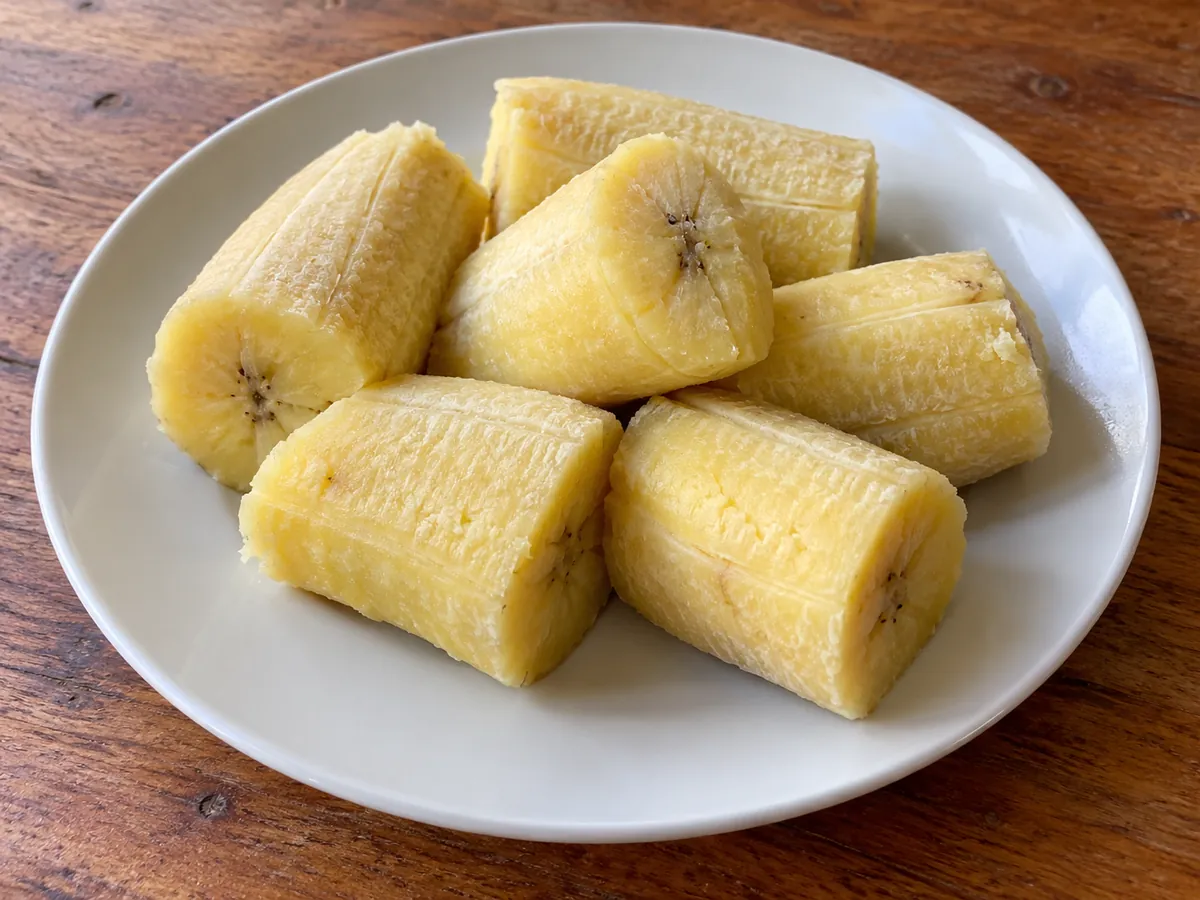
Boiled plantains — Alioune’s home version for four servings. The ingredients and method below define this version; a documented local preparation is distinguished from a contemporary adaptation.
Ingredients
- 1200 g peeled firm plantains
- 1600 ml drinking water
- 2 g maximum salt, adjust to taste
Preparation
Prepare the saucepan, colander, and serving dish before peeling. Wash the fruit externally, then peel it with a steady knife, keeping the blade away from your hand. Weigh out 1200g of flesh to help you determine the four portions.
Cut the plantains into even pieces, about 4 to 5 cm long depending on their diameter. Avoid combining very thin slices with large pieces: the former may fall apart before the latter are tender. Briefly rinse the flesh if necessary.
Pour 1600 ml of water into a fairly large saucepan. Add some of the salt, or cook without salt if the sauce is already well-seasoned. Bring to a simmer before carefully adding the pieces.
Cook for about 20 to 25 minutes over moderate heat, without a rolling boil. The water should circulate around the pieces without splashing them against the sides of the pan. Gently turn over any pieces that are sticking out, rather than vigorously stirring the entire pan.
Start checking after 20 minutes. A fork should slide into the center without encountering any resistance. If the fruit remains firm, continue for a few more minutes and check again. A darker exterior color alone is not a reliable indicator of internal doneness.
Drain immediately when the flesh is tender. Allow the steam to escape for a minute in the colander, then transfer to the dish without crushing the pieces. Prolonged soaking in hot water would make the surfaces soggy and the filling mushy.
Divide into four portions, keeping the pieces whole. Serve hot with the sauces on the side. If the meal isn't ready, it's better to coordinate the cooking with the other dishes than to leave the pot on the stove until you're ready to eat.
Introduction
Boiled plantains are served in tender pieces, without being mashed or enriched with oil. The method seems simple, but the ripeness of the fruit, the thickness of the pieces, and the timing of the draining greatly affect the result. The flesh must be cooked through and still hold its shape well enough to be scooped out with a spoon or placed on a plate alongside a sauce.
This recipe clearly distinguishes boiled plantains from pounded or fat-enriched preparations. It is presented as a domestic method from the Congo-Brazzaville collection, without attributing any exclusive national origin. Plantains accompany meals in several countries, and the customs regarding ripeness and serving vary from place to place. The descriptive name here retains the essential information: boiling and serving the fruit in pieces.
Cultural context
In a meal featuring a leafy green sauce, fish, or beans, plantain can replace the starchy side dish. Its presence doesn't automatically necessitate a second large portion of rice or cassava. The plantain pieces remain separate from the sauce until serving, allowing everyone to choose their portion size and enjoy the contrast between a mild base and a more aromatic accompaniment.
A green plantain will generally be firmer and less sweet than a ripe one. For this version, we choose plantains that are still firm, able to withstand cooking without falling apart. A dessert banana is not a direct substitute, even if it looks similar. The 1200g weight refers only to the peeled flesh; the weight of whole plantains to buy is greater. The four servings make a generous side dish, to be adjusted to suit the rest of the meal.
Tips
Buy plantains intended for cooking, not dessert bananas that are simply underripe.
Specify the maturity when reproducing the recipe: two different batches of plantains may require slightly different times.
The stated weight is edible, after removal of the skin; do not unintentionally reduce the portion by weighing whole fruits.
Keep a gentle simmer to limit damaged edges and pay closer attention to already ripe fruit.
Drain as soon as the center is tender; leaving the pieces in their water does not keep them in the same texture.
To prepare the meal in advance, quickly cool the leftovers, refrigerate and reheat by steaming or with a little water to the center.
The values refer only to the garnish; the sauce, oil added at serving time and other starches must be counted separately.
Variations
Slightly riper plantains make a milder filling, but the cooking time needs to be carefully monitored. Steaming is possible, but the water level and cooking time must be adjusted according to your equipment. Mashing the plantains after cooking results in a different preparation; this step is not part of the chunk version.
Accompaniments
Serve with fish in tomato sauce, beans, or leafy greens in sauce. A small, crisp salad provides a pleasant contrast. The plantain already constitutes the starchy element of the dish; the amount of rice or bread added is optional and not included in the calculation.
Nutrition notes
Plantains are a primary source of carbohydrates, as well as fiber and potassium. This method does not involve adding any oil. Boiling can alter heat-sensitive vitamins; the estimate does not assume that the nutritional content of the raw fruit is fully preserved.