Bissap, karkadé, zobo: the hibiscus that connects our tables
From Senegal to Sudan, from Nigerian zobo to Cameroonian foléré, hibiscus is both a drink and a cooking ingredient. Explore its names, histories, leaves and calyces, recipes, preparation methods and storage across African food cultures.
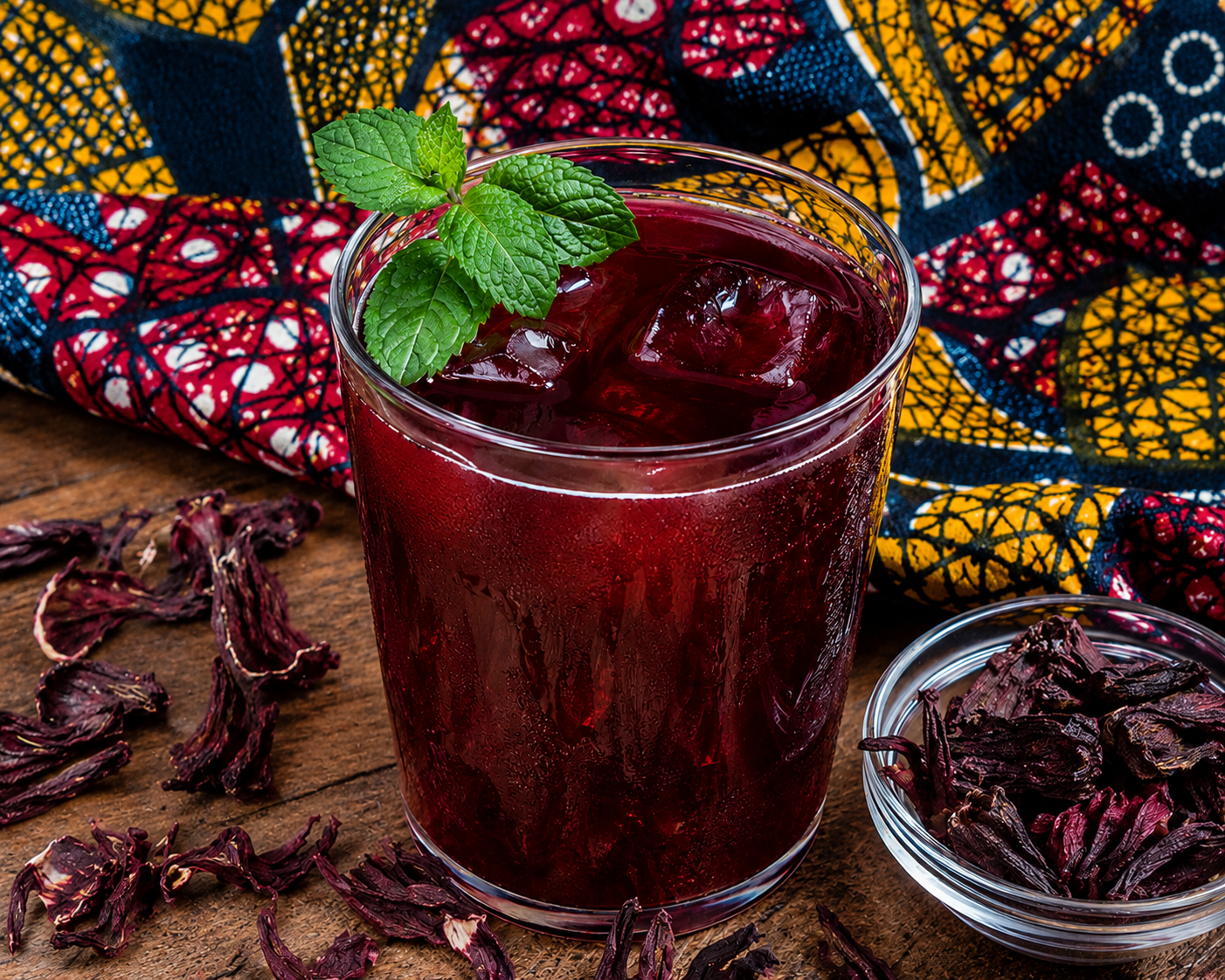
A ruby-red jug arrives at the table. Ice clinks, mint scents the glass, and the first sip brings a bright tartness that awakens the palate. For many people, this is the bissap of family meals. Elsewhere, the same ingredient evokes karkadé, zobo, foléré or wonjo. The name changes, and so do the temperature, flavourings and place within a meal.
Following hibiscus through African kitchens brings these experiences together while respecting their differences. The journey goes beyond drinks: leaves enter savoury dishes, calyces become jam, and seeds have their own uses. This in-depth overview leaves room for family variations while explaining what we buy, prepare and share.
One plant, several ingredients
Culinary bissap is associated with Hibiscus sabdariffa, a member of the mallow family also called roselle or Guinea sorrel. It is neither the tea plant nor European sorrel. Ornamental hibiscus plants are not all interchangeable: choose an identified product sold for food use.
The dried pieces commonly sold as “flowers” are mainly the fleshy calyces surrounding the fruit, sometimes accompanied by the epicalyx. Flower petals and calyces are different plant parts. This explains why the market product resembles thick little envelopes rather than delicate petals. [1, 2]
The leaf is a vegetable; the calyx is used particularly for drinks and tart preparations; the seed is another ingredient again. A handful of leaves cannot automatically replace a handful of dried calyces. Variety and intended use matter more than a simple division between “red hibiscus” and “white hibiscus”.
Bissap, karkadé, zobo: a geography of names
Names travel through languages, households and markets. “Bissap”, from Wolof usage, is especially familiar in Senegal and widely understood elsewhere in West Africa. “Karkadé”, with various spellings, is associated particularly with Egypt and Sudan. “Zobo” commonly names the drink in Nigeria, while “foléré” occurs in Cameroon. [2]
Our recipes offer further starting points: Gambian wonjo, bissap from Benin, Burkina Faso bissap, Sierra Leone bissap and Guinea-Bissau sumo de bissap. These are situated versions, rather than exclusive names assigned to national borders.
Sobolo in Ghana and dableni or da bilenni in parts of West Africa also occur. Spellings vary between languages and transcription systems. A name may refer to the plant, its edible part or the drink: asking “leaves or calyces?” is often more useful than seeking one universal translation.
African histories and worldwide journeys
The precise origin of this long-cultivated plant remains debated; African origin is generally considered probable. Hypotheses about domestication do not themselves establish when today's drinks first appeared. Describing every glass as an unchanged ancient recipe would go beyond the evidence. [2, 3]
Bissap also has an everyday history of transmission: selecting a dry batch, measuring an infusion, recognising a mint's aroma or filling bottles for a shared meal. These modest skills contribute to its lived history alongside broader stories of travel.
Beyond Africa, Caribbean sorrel, groseille pays in the French Antilles, oseille péyi in French Guiana and Mexican agua de Jamaica show other settings for the same species. [2] Sweetening and spice combinations differ. Such connections invite dialogue between cuisines without proving an exact historical route for every recipe.
Senegal and its neighbours: bissap as a welcome
Our Senegalese bissap drink is a useful starting point. Enjoyment comes from balancing hibiscus tartness, water that lightens it, sugar that rounds it out and the chosen aroma. Mint is a familiar possibility; orange blossom, vanilla and other flavourings belong to particular versions rather than a national requirement.
For a shared meal, a lightly sweetened jug with syrup offered separately allows everyone to adjust their glass. This is a practical editorial suggestion. It also avoids equating a traditional drink with a fixed quantity of sugar.
With a rich dish, bissap brings a pleasant tart sensation. With dessert, a less sweet glass often works better. The same concentrate can be served still or topped up with sparkling water just before drinking: a contemporary variation that should be described as such.
Zobo and sobolo: a conversation between flavourings
The site's Nigerian zobo combines hibiscus, pineapple and ginger. Fruit contributes aroma and sweetness, while ginger gives warmth that lingers after the sip. Its character differs from plain hibiscus infusion even when their colours look similar.
Ghanaian sobolo belongs to this family of related drinks. A frequently encountered combination should not become a rule: zobo and sobolo do not invariably contain identical fruit, spices or quantities.
Build a simple base first, then add one dominant flavour and taste. Combining ginger, cloves, cinnamon, vanilla and citrus all at once can overwhelm the hibiscus. When tasting with friends, two jugs made from the same infusion help compare aromas without changing every variable.
Existing visual from the Zobo recipe — Nigeria, RecettesAfricaines.com.
From Sudan to Egypt: the many faces of karkadé
Our recipes for Sudanese karkadé, Egyptian karkadé and South Sudanese karkadé explore several presentations. Karkadé can be served hot or chilled. Reserving hot drinks for one country and cold drinks for another would oversimplify matters.
Sudanese Kitchen describes a soaked, strained and sweetened preparation served chilled, alongside a quicker boiling method. [4] This culinary account shows that one tradition can accommodate several techniques. In our domestic preparation, prolonged soaking should take place in the refrigerator with drinking water.
A hot cup can be tasted gradually and sweetened very lightly. A chilled jug requires allowance for dilution by ice. The aim remains clear tartness and an enjoyable expression of the ingredient, rather than a competition for the darkest colour.
Existing visual from the Karkadé recipe — Egypt, RecettesAfricaines.com.
Foléré and ngai-ngai: hibiscus is food too
The red drink dominates photographs, but does not represent the whole plant. In Cameroon, our foléré with beef illustrates savoury cooking, while our foléré drink explains why the preparation must be specified.
Ngai-ngai from DR Congo and ngai-ngai ya musaka from Congo-Brazzaville offer another perspective on tart leaves. Vernacular names can cover related plants and uses: the recipe and food identification remain essential, especially when buying leaves without a botanical label.
Leaves change the cooking task. Their texture, acidity and combination with meat, fish or sauce become central. A strained drink and a leafy dish provide neither the same experience nor the same nutritional composition.
Our Senegalese lakhou bissap and Guinean fouti foléré extend the journey. Reading their ingredient lists first prevents mistakenly applying a herbal-infusion method to a complete dish.
Existing visual from the Foléré with beef recipe — Cameroon, RecettesAfricaines.com.
Seeds, green calyces and diverse uses
Botanical and food references describe uses of the seeds, including after processing. [1, 3] This is less familiar to consumers who buy only red packets for drinks. An edible plant is more than its best-known export product.
Do not improvise seed fermentation from a general description. A fermented preparation requires a documented recipe, suitable ingredients and controlled conditions. Likewise, a green calyx used in a sauce is not simply a red calyx that has yet to ripen.
To discover these uses, begin with an identified dish and the knowledge of someone who prepares it. Naming the plant part, harvest stage and processing method is a practical way to respect local expertise.
Choosing calyces and keeping them in good condition
Choose dry, food-grade calyces in sound packaging, without dampness, mould, insects or a musty smell. Check cleanliness too: sand, dust and plant debris require sorting. Depth of red colour alone cannot establish quality or identify a variety.
At home, keep them dry, away from light and strong smells, in a closed container. Record the purchase date and follow the seller's instructions. Buying quantities suited to your needs is better than repeatedly opening a large bag for a long period.
A brief rinse in a sieve removes some dust, but does not disinfect a damaged batch. Reject an ingredient if you doubt its smell, see mould or cannot establish that it is intended for food. Cooking does not reliably restore poorly stored ingredients.
Making an infusion: an adaptable starting point
For about one litre, our suggested starting point is 15–20 g of dried food-grade calyces, one litre of drinking water and optional sugar added after tasting. This is a practical base rather than a national reference recipe. Begin with just one flavouring, such as a few clean mint leaves.
Sort and briefly rinse the calyces. Bring the water to the boil, remove from the heat, add the calyces and steep for around ten minutes. Strain using clean equipment, taste and adjust: water if too strong, a little sugar if desired. Adding water increases the final quantity.
For a cold drink, cool quickly in small containers and refrigerate. For cold extraction, use a clean, closed container in the refrigerator, strain after a few hours and taste. This method is not a disinfection step: initial ingredient quality and refrigeration remain essential.
Change one factor at a time: calyx quantity, steeping time, dilution or aroma. Too tart? Dilute before compensating with lots of sugar. Too weak? Moderately increase the amount next time. Longer cooking does not necessarily improve flavour.
Sweet, savoury and frozen: taking hibiscus further
Hibiscus jam and fruit salad with bissap demonstrate two further uses. One develops a spreadable texture; the other uses acidity and colour alongside fruit. Each needs its own proportions rather than borrowing a drink's formula unchanged.
Aïssatou Mbaye suggests jam made from calyces freshly recovered after infusion. [5] This gives the plant material a second use. It requires calyces kept clean and promptly used or refrigerated, rather than material left warm in a jug all day.
For your own experiments, try a little infusion in a coulis, dressing or granita. These are creative suggestions rather than traditions attributed to a country. Sweetness, acidity and texture need adjusting for each use. Improvised jam does not become shelf-stable merely because it contains sugar.
Existing visual from the Hibiscus jam recipe — Senegal, RecettesAfricaines.com.
Nutrition and health: enjoy without promises
Anthocyanins contribute to the red colour, and composition varies with the product and preparation. [1] Values measured in dried calyces, leaves or concentrated extracts cannot all be transferred to a strained glass. We therefore assign neither a fixed vitamin C content nor a “detox” promise.
Added sugar directly changes the drink's profile. As a calculation, 40 g of sugar in one finished litre gives 8 g per 200 ml glass, or approximately 32 kcal from that sugar alone. Honey and syrups also provide sugars.
For blood pressure, the 2021 Cochrane review found insufficient evidence to establish roselle's effectiveness in people with hypertension. [6] A culinary drink does not replace treatment. Pregnancy, breastfeeding, current medication or plans to use concentrated products therapeutically warrant professional advice.
Water, refrigeration and storage
Use drinking water, ice of the same quality, clean bottles and washed hands. Wash fresh fruit and herbs carefully. Acidity and a red colour do not make a drink sterile.
Cool promptly and refrigerate within two hours of preparation; keep the refrigerator's coldest zone at 4°C or below. These are general household hygiene principles, not a validated shelf life for every bissap recipe. [7]
Make small quantities for prompt consumption and follow the recipe's instructions. For travel or a buffet, keep bottles cold and serve gradually. Fermented smells, gas production or mould mean the preparation should be discarded without tasting; absence of these signs alone cannot establish safety.
A tasting that tells the differences
Make one infusion and divide it between three small jugs: plain, mint and ginger. Keep dilution comparable and explain the additions. If desired, add a specific zobo or karkadé recipe, naming its country and source.
Offer a small savoury leafy dish or a slice of bread with jam alongside. The contrast immediately shows that hibiscus is more than “red juice”. Smelling dried calyces, watching the water change colour and comparing textures can become a valuable learning experience for children and adults alike.
Invite everyone to share their family's name for it and preparation method. Avoid ranking countries: a jug tells of a home, market, memory and taste. This is the spirit of shared food traditions: visible connections, respected differences and the pleasure of cooking together.
Continue the journey
Follow the linked recipes to move from reading to cooking. Our article The culture of karkadé offers another entry into its Egyptian setting. This overview complements it across regions without replacing individual traditions with one universal recipe.
All images on this page come from visuals already present on RecettesAfricaines.com. They illustrate particular preparations, not historical documents or botanical identification criteria. The references below distinguish scientific resources, culinary accounts and hygiene guidance.
## Sources and further reading 1. Cissé et al., Fruits (2009) — composition and uses 2. IRD French Guiana Herbarium — names and botany 3. PROTA — Hibiscus sabdariffa 4. Sudanese Kitchen — Karkadey 5. Aïssatou Mbaye — Hibiscus jam 6. Cochrane (2021) — Roselle for hypertension in adults 7. French Ministry of Agriculture — kitchen hygiene