Thiéré ak sow
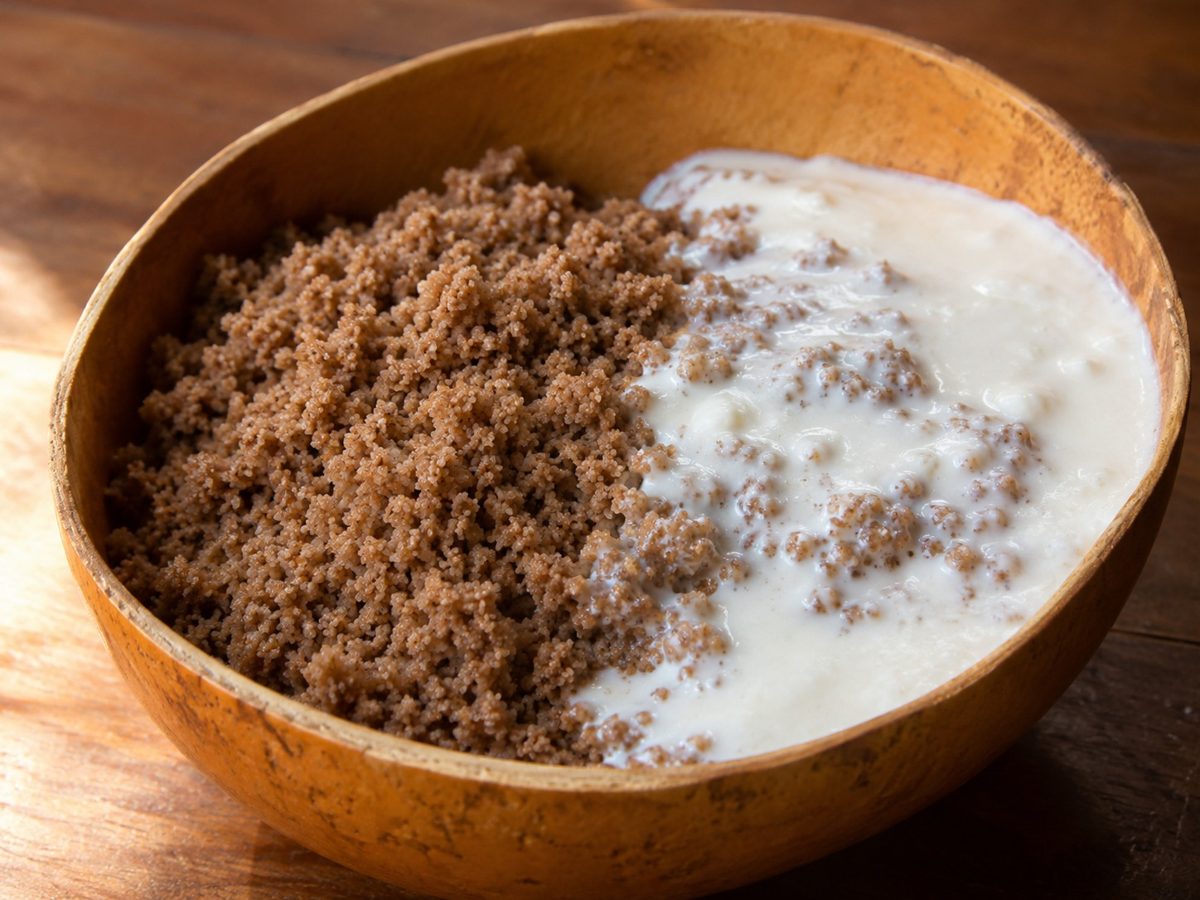
Millet and fermented milk are enough to make a preparation whose quality depends above all on the grain. This thiéré ak sow is deliberately plain, with no added sugar, vanilla or cream. It can be a simple meal or a small portion within a larger one. The milk supplies freshness and acidity; the millet retains its aroma and a discernible texture. This distinguishes the recipe from the sweet thiakry already included in the collection.
Ingredients
- 300 g precooked millet couscous
- 800 g plain commercially produced fermented milk, made from pasteurised milk
- Drinking water to prepare the thiéré according to its packaging
- 1 g optional salt for the preparation water, depending on the product purchased
- No additional sugar, flavouring or fat in the basic formulation
Preparation
Check the thiéré packet and read its instructions. Weigh the 300 g into a container wide enough to fluff the grains. Keep the fermented milk refrigerated throughout the grain preparation.
Cook or rehydrate the couscous as directed on its packet. Use drinking water and the quantity specified for the actual product. This recipe does not prescribe a universal ratio: fine precooked thiéré and a drier artisanal product do not absorb the same volume.
After the required resting time, fluff gently. Check a few grains: they should no longer have a hard centre. If the instructions require a second cooking, carry it out; do not try to compensate for undercooked grain with cold milk.
Spread the cooked thiéré in a thin layer on one or two clean dishes. Let it lose its heat quickly, stirring once or twice with a clean fork. Once no longer warm, refrigerate if it will not be served immediately.
Gently stir the fermented milk in its container or a clean jug to even out the texture. Divide the cooled couscous between four bowls, then pour approximately 200 g fermented milk over each portion.
Lightly mix only part of it, or serve the grain and milk separately so each person can adjust the texture. Serve immediately. The thiéré should remain recognisable beneath the milk rather than becoming a compact porridge.
Introduction
Millet and fermented milk are enough to make a preparation whose quality depends above all on the grain. This thiéré ak sow is deliberately plain, with no added sugar, vanilla or cream. It can be a simple meal or a small portion within a larger one. The milk supplies freshness and acidity; the millet retains its aroma and a discernible texture. This distinguishes the recipe from the sweet thiakry already included in the collection.
These preparations are related without being interchangeable. Couscous, rolled grains and porridges do not behave in exactly the same way. Lakh, fondé and thiakry do not become a single recipe simply because they can be combined with dairy products. Here, prepare millet couscous, cool it quickly, then add plain fermented milk at mealtime. This simple sequence should remain clear in both the text and the illustration.
Cultural context
Practical details Makes 4 light-meal portions or 6 small portions. Active preparation: 15 minutes. Cooking or rehydration depends on the thiéré purchased, generally 10–25 minutes for a precooked product. Cooling takes approximately 30 minutes in a thin layer, adjusted to room temperature. Allergen: milk. Use a plain commercially produced fermented milk made from pasteurised milk and kept refrigerated.
Choosing the millet and dairy product Millet is a familiar ingredient in many Senegalese preparations, but the forms sold vary. For this recipe, look for couscous intended for cooking or rehydration, not fine porridge flour. The grains may be small or more irregular depending on how they were made. Their colour also varies; an excessively white photograph would wrongly suggest wheat couscous. The real product's taste matters more than a uniform colour achieved by retouching an image.
Plain fermented milk has varying acidity according to brand and manufacture. Choose it first for its flavour and texture, checking the ingredients list. A sweetened or flavoured dairy dessert would produce a different result. Plain yoghurt may be a home adaptation if a different texture is acceptable; it should not be presented as a perfect equivalent of every kind of fermented milk consumed in Senegal. This distinction helps readers make realistic shopping choices.
The recipe does not propose fermenting milk at room temperature. This choice keeps the focus on combining millet and dairy using a controlled, refrigerated product. If a later chapter discusses home fermentation, it will need a separate, measured and documented method. Simply writing “leave the milk to turn” would not be precise enough for a book intended for readers in several countries.
Getting the texture right Do not cool the couscous as a large ball enclosed while still piping hot. Spreading the grain allows heat to dissipate more quickly. Choose a clean, sufficiently wide dish; two dishes are better than a thick layer. This also limits large clumps, which become harder to separate in cold liquid. Keep the milk refrigerated until the last moment rather than leaving it beside warm grain.
Once dairy is added, the grains continue absorbing liquid. A mixture made long in advance therefore thickens even if its initial proportions appeared right. For a supple result, combine the elements close to mealtime. To prepare breakfast the evening before, store them separately and assemble in the morning. Avoid automatically diluting the milk with plenty of water: that weakens its flavour without correcting over-compacted couscous.
At the table Serve in bowls wide enough for the spoon to collect grain and dairy together. Some milk can be offered in a clean jug, kept refrigerated until serving. The plain version makes the acidity and millet aroma easier to appreciate. Anyone wanting sugar can add a small quantity to their own portion without changing the definition of the whole recipe. This remains an optional choice at the table.
Mango or papaya served separately can complete the meal, but neither is included in this formulation. Fruit shown in a recipe image could imply ingredients absent from the text. A few millet grains and plain white milk allow a simple, appetising presentation. A calabash may be suitable for serving if it is food-safe and properly maintained.
Storage Keep the two elements separately at 4 °C or below. For this preparation, preferably use the cooked thiéré within 24 hours and follow the fermented milk's use-by date and time limit after opening. Do not return already-served leftovers to the shared container. The mixture is not intended to remain on a warm table for several hours. Take only the portions needed and return the remainder to the refrigerator immediately.
Adjusting the preparation To adapt portion sizes, weigh the dry couscous and dairy separately. A small serving after a meal does not require the same quantities as a bowl replacing dinner. Keep the same method, however: fully cook the grain, cool it quickly, keep dairy refrigerated and combine close to serving. If the grains become too compact after mixing, add a little of the same fermented milk rather than a different flavoured dairy dessert. For comparison, serve two different plain fermented milks in two small bowls: their acidity and thickness change the perception of the millet even when the quantities are identical.
Sources Aïssatou Mbaye, Thiéré, on the diversity of couscous and its accompaniments: https://aistoucuisine.com/publications/thiere-couscous-senegalais The plain formulation and quantities above are original. The connection with dairy preparations in the Pulaar-speaking area provides context, not an attribution of this exact formula to every family.