Thiéré sim
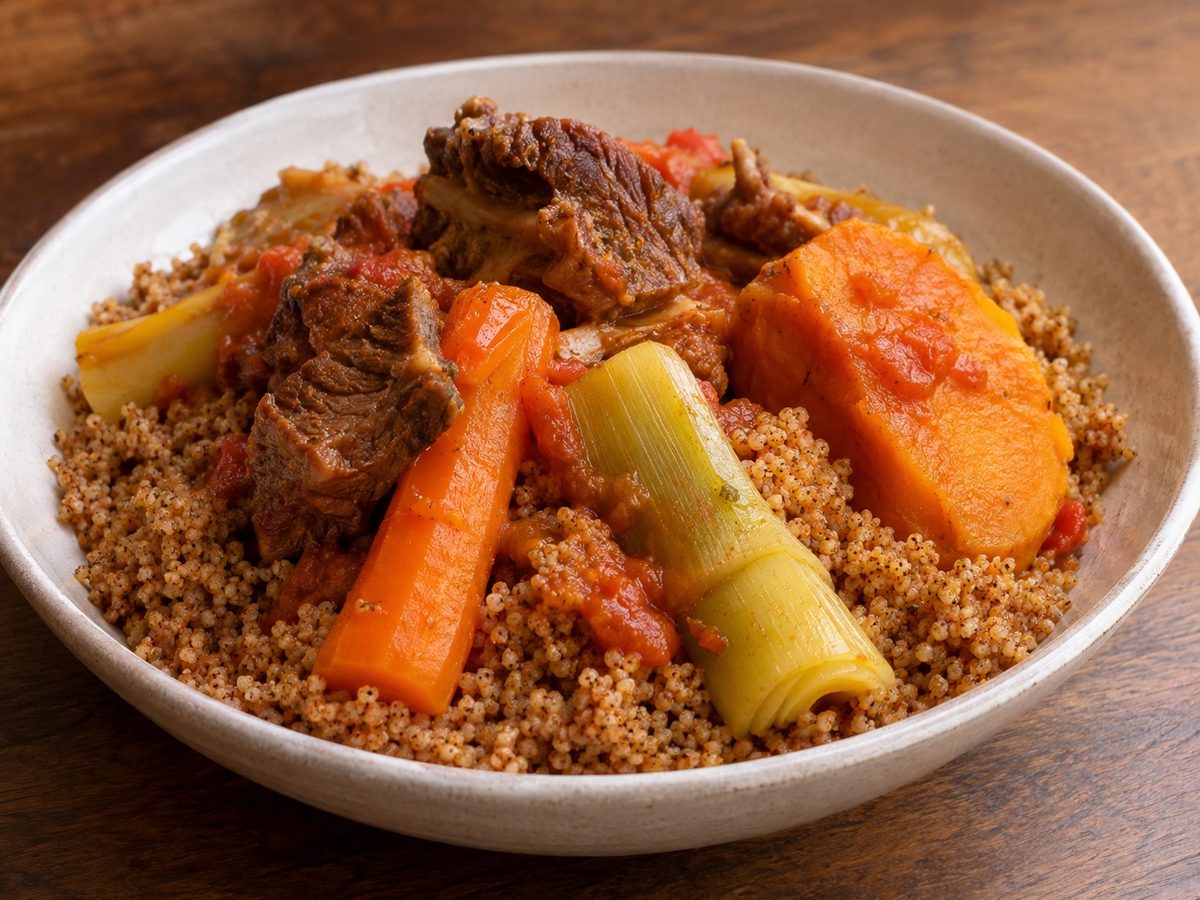
Thiéré sim offers a different relationship between grain and sauce from the great rice dishes. Millet couscous is prepared separately, then moistened with the juices from meat and vegetables. This version uses lamb, leek, carrots and sweet potato. It adds neither chicken nor dried fruit. The aim is supple couscous flavoured with a tomato sauce, topped with pieces that retain their identity.
Ingredients
- 300 g precooked millet couscous, thiéré
- 600 g boneless lamb shoulder, in 3–4 cm pieces
- 250 g peeled carrots, cut into large pieces
- 250 g peeled sweet potato, cut into large pieces
- 150 g cleaned leek, in thick rounds
- 200 g chopped onion
- 250 g chopped tomatoes
- 40 g tomato paste
- 3 crushed garlic cloves
- 30 ml neutral oil
- 900 ml hot water for the sauce, plus extra as needed
- 1 bay leaf
- 3 g salt initially, pepper and optional chilli
- Water for the thiéré according to its packaging, separate from the sauce water
Preparation
Read the thiéré instructions before starting. Measure its water separately from the sauce water. Wash carefully between the leek layers, then prepare the remaining vegetables. Pat the lamb dry.
Heat the oil in a casserole. Brown the lamb in two batches for approximately 8 minutes in total. Set aside. Cook the onion in the same pan for 6 minutes, add the garlic and tomato paste, then stir for 2 minutes without allowing them to blacken.
Add the chopped tomatoes and cook for 5 minutes over moderate heat. Return the meat and its juices, then add the 900 ml hot water, bay leaf, salt, pepper and optional chilli. Bring to a gentle simmer, partially cover and cook for approximately 50 minutes.
Add the carrots and leek. After 15 minutes, add the sweet potato. Continue cooking for 15–20 minutes. Check the meat and vegetables separately; set aside tender vegetables if the lamb needs longer.
Prepare the millet couscous near the end of the simmering. Follow its hydration or steaming instructions. Fluff with a fork or clean hands once it has cooled enough to handle safely. Do not add more water before the grains have had time to absorb the first addition.
Once the lamb is tender, remove the bay leaf and chilli. Taste the sauce. If too concentrated, add a little hot water; if very watery, reduce briefly uncovered before returning the vegetables.
Take approximately 150 ml sauce without large pieces. Gradually distribute it through the thiéré, mixing gently. Reserve the remaining sauce for serving. Arrange the couscous, top with lamb and vegetables, and add sauce as desired.
Introduction
Thiéré sim offers a different relationship between grain and sauce from the great rice dishes. Millet couscous is prepared separately, then moistened with the juices from meat and vegetables. This version uses lamb, leek, carrots and sweet potato. It adds neither chicken nor dried fruit. The aim is supple couscous flavoured with a tomato sauce, topped with pieces that retain their identity.
The name should not create an artificial boundary between all the family ways of cooking thiéré. Published recipes and everyday practices sometimes overlap. This recipe therefore specifies its ingredients and principal technique. Family names may overlap; this version is defined by its simmered lamb and sauce-moistened couscous, without dried fruit or chicken.
Cultural context
Practical details Serves 4. Preparation: 30 minutes. Sauce cooking: approximately 1 hour 50 minutes, adjusted to the lamb. Prepare the thiéré at the same time according to the manufacturer's instructions. You will need a casserole and the equipment specified for the couscous you buy. The recipe assumes precooked thiéré; an uncooked artisanal product requires a different arrangement. No major allergen is deliberately added to the basic recipe, but check the couscous packaging and possible cross-contamination.
Understanding millet couscous Products called thiéré do not all require the same preparation. Grain size, drying and precooking affect absorption. A packet intended for quick rehydration should not undergo the same repeated steaming as raw artisanal couscous. This recipe chooses a precooked product for accessibility, while keeping the identity of the grain clear. Replacing millet with wheat would change the taste and introduce an allergen that must be declared.
Fluffing does not mean crushing. Separate the clumps while preserving the individual couscous grains. Add liquid a little at a time and lift the grains with a fork. If one area becomes saturated with sauce while another remains dry, stop pouring and distribute the liquid already present first. Resting is part of hydration. Adjusting too quickly can make the bottom pasty and lead to unnecessarily adding dry couscous at serving time.
The sauce also flavours the grain before plating. The suggested 150 ml is a guide for this quantity of cooked thiéré, not a compulsory volume for every product. Use less if the couscous is already very moist. Keep the remainder available at the table. This respects different preferences for texture and prevents the entire dish from becoming compact while waiting for diners.
A well-defined sauce Moderate browning adds depth without making the juices bitter. If too many pieces enter the casserole together, the lamb releases water and browns poorly. Two batches offer better control. Conversely, do not hide a blackened base under tomatoes. The cooking juices you want are brown; a burnt smell means stop and begin again in a clean pan.
Sweet potato cooks faster than some cuts of lamb, which is why it is added late. It should remain firm enough to serve with a spoon, while yielding easily to a fork. The leek may soften further into the juices because it forms part of the sauce. The timetable therefore aims for several textures rather than uniform softness produced by cooking everything together from the beginning.
Serving and variations A wide platter shows the grain beneath the topping. Distribute the meat before arranging the vegetables so the portions are comparable. Chilli may remain separate. A chicken version would need its weight, whether it is bone-in or boneless, and appropriate checks for doneness specified; adding a whole bird without changing the timetable is not a sufficiently developed variation. Already-cooked beans feature in other family versions without becoming compulsory in this one.
This formulation does not add lalo. Some thiéré products already contain it, and certain traditional methods use it separately. Follow the actual product rather than adding a powder whose identity or quantity is uncertain. The amount of separately added lalo depends on the product chosen; this version follows only the instructions for the precooked thiéré.
Storage and passing on the method Cool the sauce and couscous quickly in separate containers, then refrigerate within two hours, sooner in very hot surroundings. Preferably consume within 48 hours at 4 °C or below. Reheat only the portions needed until evenly hot throughout; moisten the thiéré with very little water before reheating it covered. Simply pouring piping-hot sauce over a cold block of couscous will not restore a pleasant texture.
Adjusting the preparation If the couscous forms a block, first lift it gently with a fork before deciding to add liquid. Grains that stick together but are tender mainly need separating; grains that remain hard need hydration or cooking appropriate to the product. These two problems require different solutions. If the sauce reduces too much while you prepare the thiéré, add hot water before pouring it over the grain. Conversely, a very thin sauce can reduce on its own for a few minutes after the meat and vegetables have been removed, preserving their texture.
Sources La Cuisine de Daba, Thiéré sim, 27 January 2015: https://lacuisinededaba.wordpress.com/2015/01/27/thiere-sim-couscous-senegalais/ Aïssatou Mbaye, Thiéré, 29 February 2020: https://aistoucuisine.com/publications/thiere-couscous-senegalais The quantities and technical explanation are an original formulation; the sources document the culinary family without prescribing one unique recipe.