Gnougoubala yèlen
Mali’s Institut d’économie rurale describes the use of fresh jute mallow leaves and mentions spinach and amaranth as alternatives.
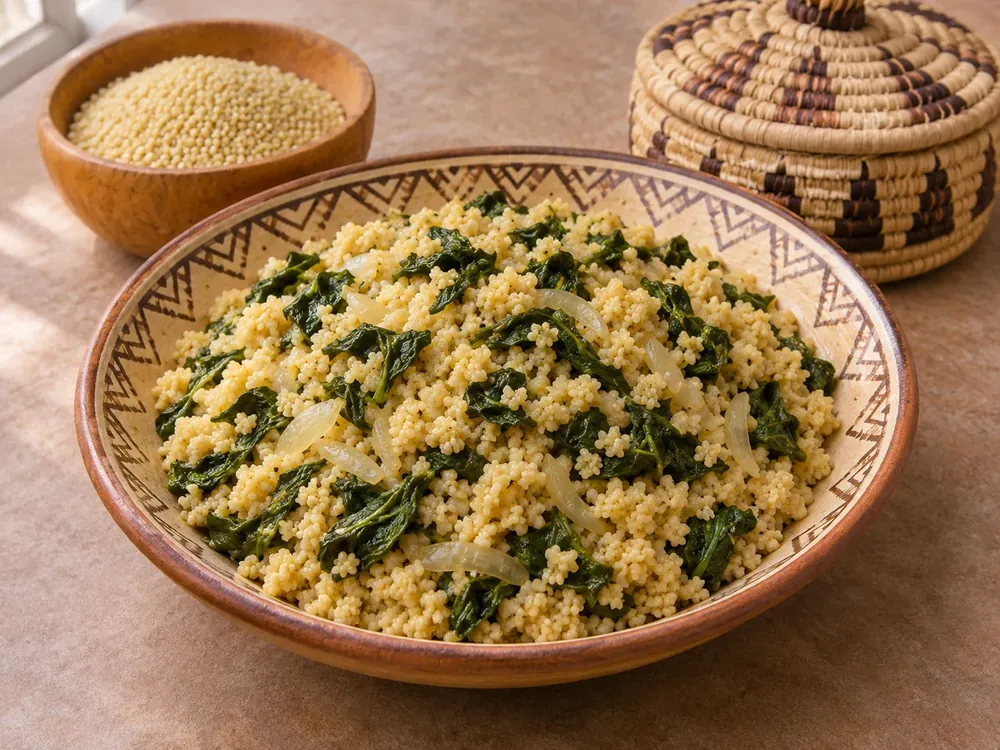
Ingredients
- 260 g precooked millet couscous
- 200 g trimmed fresh edible jute mallow leaves
- 100 g onion
- 25 ml neutral oil
- salt
- water as directed on the packet, plus water for steaming
Preparation
Remove tough stalks from the leaves, wash thoroughly and drain. Slice the onion and roughly chop the leaves.
Gradually moisten the couscous according to the packet and fluff it to break up clumps. Let any free water absorb before steaming.
Spread the couscous loosely in a fine steamer basket above simmering water. Steam covered. If the grains are still firm, fluff, lightly moisten if dry and steam again.
Soften the onion in the oil. Add the leaves and cook uncovered until the stems are tender and excess water has evaporated. Work in batches if the pan is crowded.
Fold the leaves into the hot couscous in stages, separate any clumps, adjust the salt and serve warm.
Introduction
25 min prep, 20–30 min cooking
Drain the jute leaves well and lift the millet couscous with a fork to distribute them evenly.
Cultural context
Mali’s Institut d’économie rurale describes the use of fresh jute mallow leaves and mentions spinach and amaranth as alternatives. Dried leaf powder gives a different result. Millet supplies carbohydrates and oil supplies fat. Grilled fish or beans can round out the meal.
https://ier.ml/admin/documents/Cahiers%20de%20lEconomie%20Rurale%2C%20n%C2%B027%20Juil%20-%20D%C3%A9c%202018.pdf