Sorghum couscous
Sorghum couscous with dry sorghum couscous, cooked drained chickpeas, sliced onions, a detailed home-kitchen version serving four.
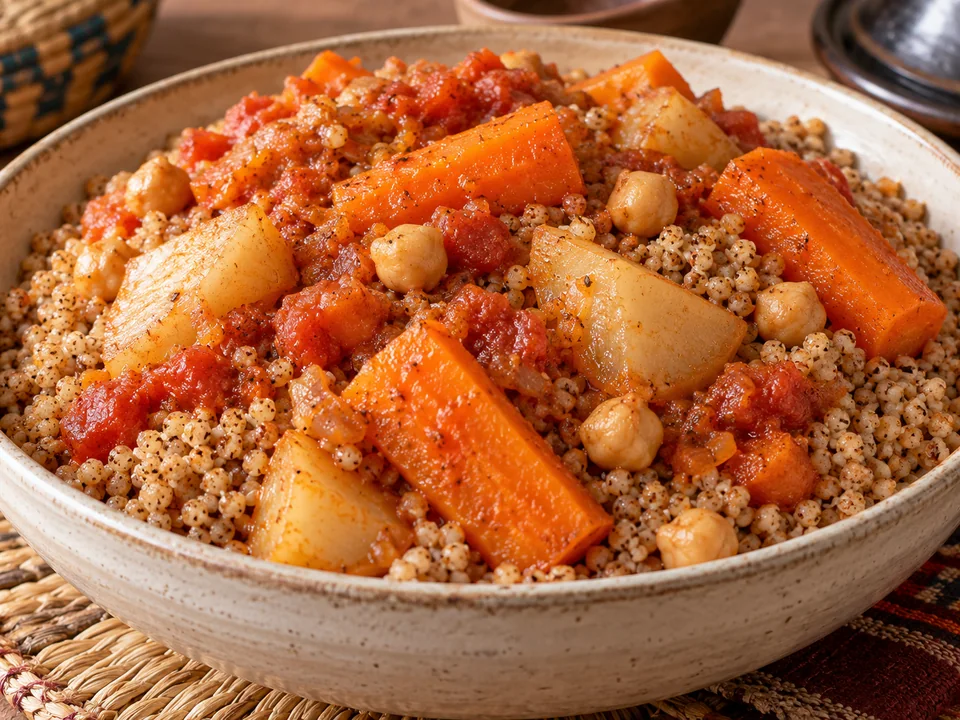
Ingredients
- 300 g dry sorghum couscous
- 240 g cooked drained chickpeas
- 180 g sliced onions
- 400 g chopped tomatoes
- 200 g carrot pieces
- 150 g turnip pieces
- 25 g vegetable oil
- 10 g crushed garlic
- 2 g ground cumin
- 2 g sweet paprika
- 3 g fine salt
- 1 g ground black pepper
- 800 ml drinking water
Preparation
Wash the produce, weigh every ingredient and make the cuts listed. Keep perishable foods refrigerated until needed. Use separate boards and utensils for raw animal products.
Prepare dry sorghum couscous in a steamer: moisten gradually, separate the grains and steam loosely for 20 minutes. Tip into a dish, break up clumps and sprinkle with water if the centres remain dry. Steam again for 15–25 minutes until tender. For a precooked product follow its packet instead. The extra water in the steaming reservoir must not touch the grain.
Heat the oil in a pot and soften the onion for 6 minutes. Add garlic and spices for 30 seconds, then tomatoes. Cook, stirring, for 8 minutes to reduce the aromatic base.
Add the stated sauce water and bring to a gentle simmer. This version needs no meat; the listed pulses are already cooked.
Add carrots and turnips to the broth and cook 20 minutes. Add already cooked chickpeas for another 8–10 minutes.
Taste and adjust salt, then plate the hot grain and topping. Add sauce gradually to keep grains separate; serve the rest alongside.
Introduction
Sorghum couscous serves four here and uses dry sorghum couscous, cooked drained chickpeas, sliced onions. This version provides measured quantities and a method suitable for a home kitchen. It is an explicitly defined family-style variation: the ingredients and their combination are stated clearly, without suggesting that every Mauritanian household cooks in one fixed way. Read the ingredient list and every step before gathering the equipment. Timing is a guide: the thickness of the pieces, heat and cookware affect the result. The texture and doneness checks in the method matter more than a timer alone.
Cultural context
Mauritanian food brings together pastoral traditions, grains, oasis produce, coastal resources and exchanges with neighbouring cuisines. The national tourism office describes wheat, barley and millet couscous, meat prepared in several ways, and the place of dates and tea. These references document broad food traditions, rather than every proportion used here. Sorghum couscous is presented as an explicitly defined family-style variation. The measurements and method are an editorial proposal from RecettesAfricaines.com, not an official recipe or a claim of exclusive origin. Context source: https://visitmauritania.com/restauration/
Tips
Check dry quantities and already cooked ingredients before starting.
Taste before adding more salt and serve condiments separately.
Planning
Commercial dried sorghum couscous is already rolled. Start with less water than you would for wheat semolina, then add a little if the grains still have a chalky core after the first steaming. Spread them loosely in the steamer and fluff with a fork. Cut the carrots and turnips to the same size. Soften the onion, warm the cumin and paprika in the oil, then add the tomatoes and vegetables. Add the cooked chickpeas once a knife begins to slide into the turnip. Set aside a ladle of sauce for the table. If cooking for eight, steam the grains in two batches if they would otherwise form a thick layer. The Mauritanian inventory submitted to UNESCO documents several grains used for couscous. The tomato and chickpea sauce is the version used here.
Storage
Do not leave perishable food waiting on the table. Cool leftovers rapidly in clean shallow containers, cover, and refrigerate at 4 °C or below within two hours. Label the date and preferably use within 24–48 hours, taking the most perishable ingredient into account. A normal smell does not establish that poorly stored food is safe. Foods intended to be eaten cold stay cold; dishes served hot should be reheated completely once, until steaming throughout. Never return portions already served to the container kept for later.
Accompaniments
Water or an unsweetened drink; choose sides to complement the grains or vegetables already present.
Nutrition notes
Values are estimates per quarter of the recipe, based on the stated quantities and average food composition. They exclude unmeasured sides and are not laboratory analyses. Evaporation changes cooked weight without itself changing the total energy of the ingredients. Estimated salt includes added salt; naturally occurring sodium is approximate. Vitamins and minerals are described qualitatively, without percentages of reference intakes. Variety across several days matters more than a benefit attributed to one dish.