Safou and lemon spread
Mash warm safou flesh into a coarse spread and brighten it with lemon juice and spring onion. The colour and texture will vary with the fruit and the amount of peel left in the mixture. Serve with toast or grilled maize.
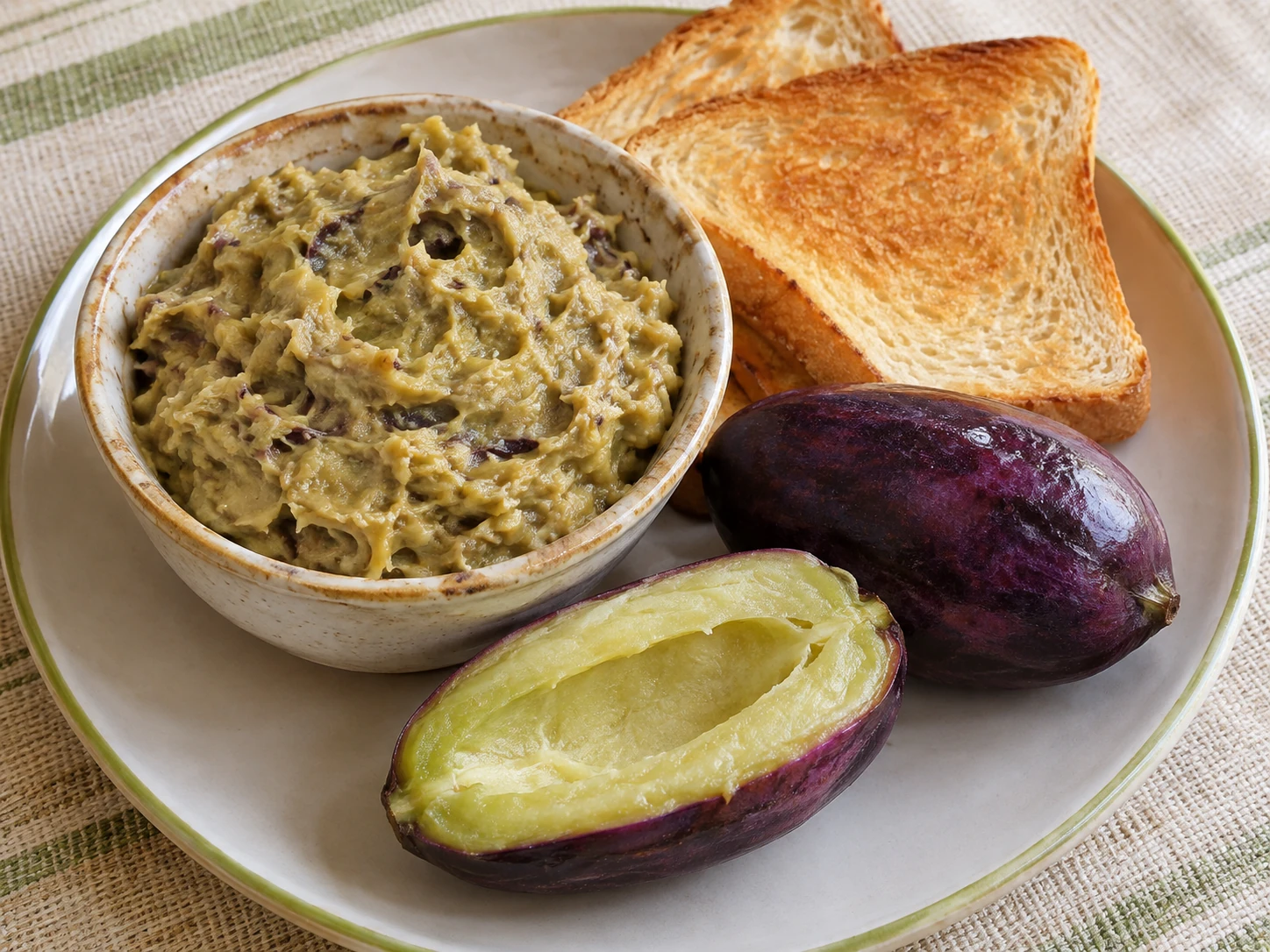
Ingredients
- About 650 g whole safou fruits, to yield roughly 300 g cooked flesh
- 15 ml lemon juice, 20 g spring onion greens and 2 g fine salt
- 20–35 ml hot water as needed and ground black pepper
Preparation
Sort and wash the fruit. Add to simmering water for 6–10 minutes. Start checking for tenderness after six minutes. Lift out a fruit with a slotted spoon and test it with tongs or the back of a spoon.
Drain and cool until the fruits can be handled. Split lengthways, remove the stones and scoop out the flesh. Remove any tough peel.
Weigh out about 300 g of flesh and mash with the lemon and salt. If the pulp is stiff, work in a little hot water by the spoonful until it spreads easily. Taste the fruit before adding all the lemon, as natural acidity varies.
Finely slice the spring onion greens and stir them in with the pepper. Rest for five minutes and serve warm with the chosen accompaniment.
Cultural context
A technical handbook describes safou eaten after cooking and describes spreadable preparations in parts of Cameroon. The RD Congo manuscript already includes roasted safou. This lemon and spring onion version is an editorial creation using an ingredient shared across Central Africa.
Source https://assets.publishing.service.gov.uk/media/57a08cef40f0b652dd00165e/R7187-Safouextensionmanual-Sept03.pdf https://doi.org/10.57745/RDMHWY https://horizon.documentation.ird.fr/exl-doc/pleinstextes/divers11-10/39105.pdf
Nutrition notes
If the batch contains fruits of markedly different sizes, lift the smaller ones out first once tender. Keep a little thin peel for flecks of colour if desired. Work the softest fruit into a base first when using mixed ripeness, then mash in the firmer flesh. Aim for a consistency that holds on toast without running.
The oily pulp contributes most of the fat in the spread, and its composition varies with the fruit. Bread and other accompaniments add their own nutritional values and allergens. Serve the spread on the side if diners are using different breads or garnishes.