Baobab fruit yoghurt
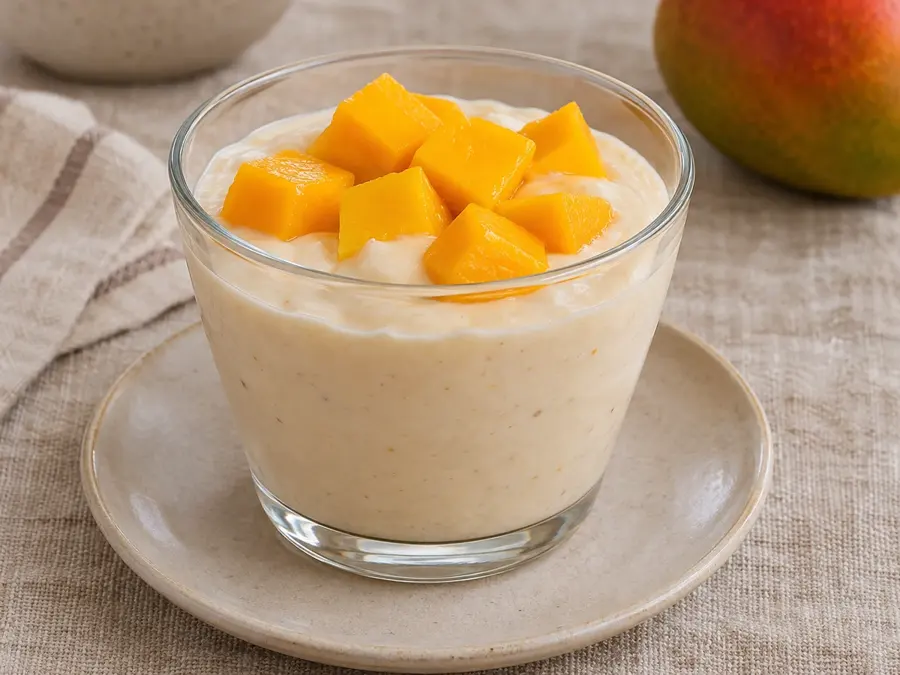
In Naturally Nourishing Namibia, Nanja Limbo describes several uses for baobab pulp, including a dairy preparation. The fruit reminds her of the ways it is used in northern Namibia and lends itself to drinks or desserts. Dried pulp is sold as powder. This recipe uses ready-to-eat plain yoghurt and food-grade baobab powder. It requires no incubation. Whisk to adjust the texture and acidity, using a little honey and topping the yoghurt with spoonfuls of fresh mango.
Ingredients
- 600 g plain commercial yoghurt made with pasteurised milk
- 24 g food-grade baobab pulp powder
- 120 g mango flesh
- 16 g honey, optional
- 20 ml cold drinking water if needed
Preparation
Wash the mango before cutting it. Remove the skin and stone, then weigh out 120 g of flesh. Cut into cubes about 1 cm across and keep cold. Measure the yoghurt and put about 100 g into a clean bowl. Sift the baobab powder over it in three additions, whisking after each one until no dry lumps remain.
Add the remaining yoghurt in two additions. Stir gently and taste. If the acidity calls for it, add the optional honey gradually. Cover and refrigerate for 30 minutes. This rest lets the powder hydrate so you can judge the final consistency.
Take the bowl out of the refrigerator and stir briefly. If the mixture is too thick, add up to 20 ml of cold water a spoonful at a time. Divide among four glasses or small bowls and top each with about 30 g of mango. Serve immediately or keep chilled until dessert.
Cultural context
In Naturally Nourishing Namibia, Nanja Limbo describes several uses for baobab pulp, including a dairy preparation. The fruit reminds her of the ways it is used in northern Namibia and lends itself to drinks or desserts. Dried pulp is sold as powder. This recipe uses ready-to-eat plain yoghurt and food-grade baobab powder. It requires no incubation. Whisk to adjust the texture and acidity, using a little honey and topping the yoghurt with spoonfuls of fresh mango.