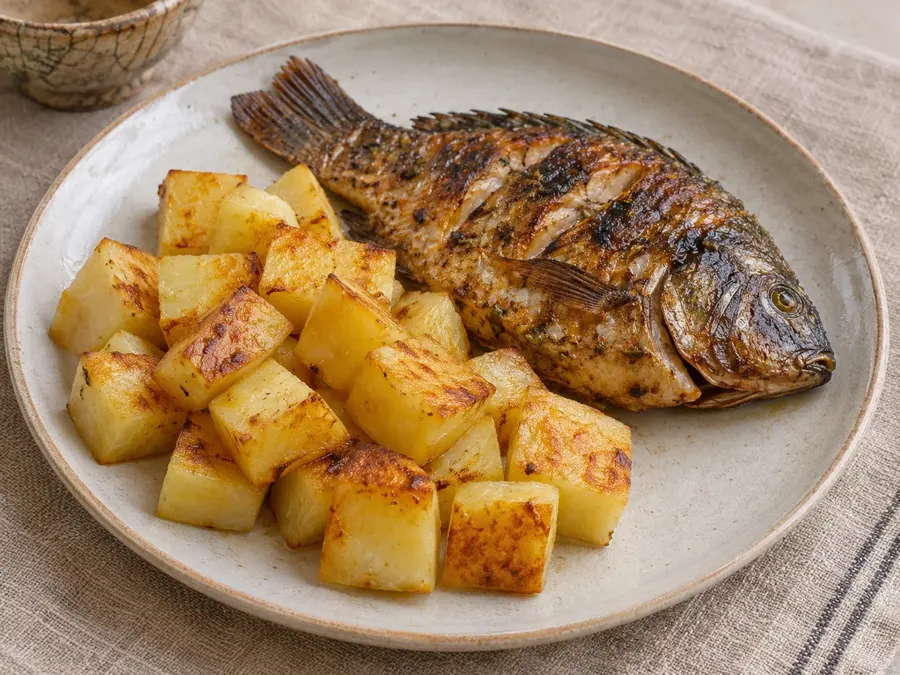
Pan-fried sweet potato for Zambezi bream
Naturally Nourishing Namibia describes a meal of Zambezi bream with inkuma and couscous. It describes inkuma as an edible water lily that is peeled, washed and cooked until tender. The book explains its role in the meal. The botanical identification needed for buying it was not established for this recipe, so the recipe uses a sweet potato side dish to serve with the same fish. The title names the sweet potato. Inkuma remains in the cultural notes and could be covered separately once a product is properly identified.
Ingredients
- 700 g pale-fleshed sweet potato
- 1 L drinking water
- 24 g sunflower oil
- 2 g fine salt
- 1 g ground black pepper
- 10 ml lemon juice
Preparation
Peel the sweet potatoes and trim away any fibrous sections. Cut into cubes 2 to 2.5 cm across and set aside pieces small enough to break up during cooking. If there is a substantial difference in size, group the small pieces and add them to the water a few minutes after the regular cubes.
Bring the water to the boil. Add the cubes, return to a simmer and cook gently for 8 to 12 minutes. Test a cube with a knife. The blade should meet slight resistance at the centre. Drain and spread the cubes out in a large colander or on a plate for 5 minutes so the steam can escape.
Heat half the oil in a wide frying pan. Add half the cubes in a single layer. Leave them to brown for about 2 minutes before turning. Cook for a further 4 to 6 minutes, turning the cubes as their sides brown. Transfer to the serving dish. Cook the second batch the same way in the remaining oil.
Combine the two batches. Add the salt, pepper and lemon juice just before serving. If the pieces were uneven, taste a cube from the centre of the pan and one from the edge. They should be tender all the way through, with visible browning on the outside.
Cultural context
Naturally Nourishing Namibia describes a meal of Zambezi bream with inkuma and couscous. It describes inkuma as an edible water lily that is peeled, washed and cooked until tender. The book explains its role in the meal. The botanical identification needed for buying it was not established for this recipe, so the recipe uses a sweet potato side dish to serve with the same fish. The title names the sweet potato. Inkuma remains in the cultural notes and could be covered separately once a product is properly identified.