Dried cowpea leaves simmered with tomato
In Naturally Nourishing Namibia, Eugenia Shikesho describes omahanda, preparations of leaves traditionally dried and shaped into discs. She names ehanda leEkundu as one her family knows and recalls its place in her childhood meals. The book identifies ekundu as Aloe zebrina in a separate recipe. The part used and its source matter. This recipe uses dried cowpea leaves sold as food and follows two techniques, rehydrating and simmering. It keeps the cultural reference and gives the dish a name that describes the actual ingredients.
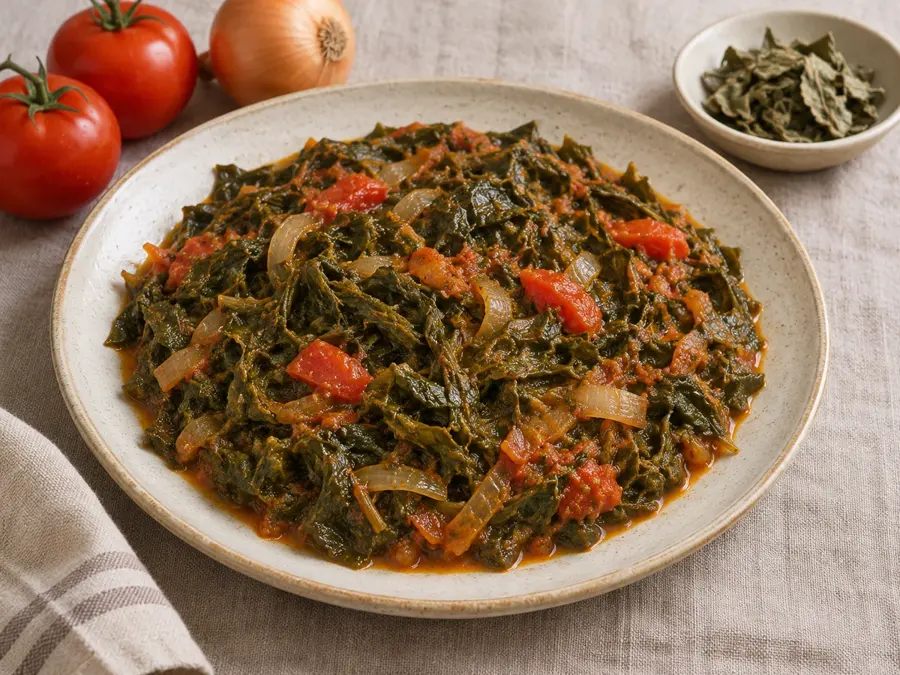
Ingredients
- 70 g food-grade dried cowpea leaves
- 650 ml (500 ml) drinking water
- 140 g onion
- 300 g crushed tomatoes
- 20 g sunflower oil
- 6 g garlic
- 2 g fine salt
Preparation
Spread the dried cowpea leaves on a plate and remove any thick stems. Follow the packet's rehydration instructions if they differ from these. Put the leaves in a bowl, cover with 500 ml of hot water and leave for 20 minutes. Drain and squeeze gently. Chop the larger pieces so the leaves are evenly distributed through the sauce.
Slice the onion and chop the garlic. Heat the oil in a sauté pan. Cook the onion over medium heat for 6 minutes, stirring, then add the garlic for 30 seconds. Add the tomatoes and half of the remaining 150 ml of water. Reduce uncovered for 7 minutes. At the start, crush the larger tomato pieces against the side of the pan.
Add the leaves. Fold them through the sauce with a spatula so they can absorb it. Cover and cook gently for 10 to 12 minutes. Add the rest of the water a little at a time if the leaves absorb the sauce before they become tender. Add the salt. If the liquid is still as thin as broth, uncover the pan and let the excess evaporate.
Cultural context
In Naturally Nourishing Namibia, Eugenia Shikesho describes omahanda, preparations of leaves traditionally dried and shaped into discs. She names ehanda leEkundu as one her family knows and recalls its place in her childhood meals. The book identifies ekundu as Aloe zebrina in a separate recipe. The part used and its source matter. This recipe uses dried cowpea leaves sold as food and follows two techniques, rehydrating and simmering. It keeps the cultural reference and gives the dish a name that describes the actual ingredients.