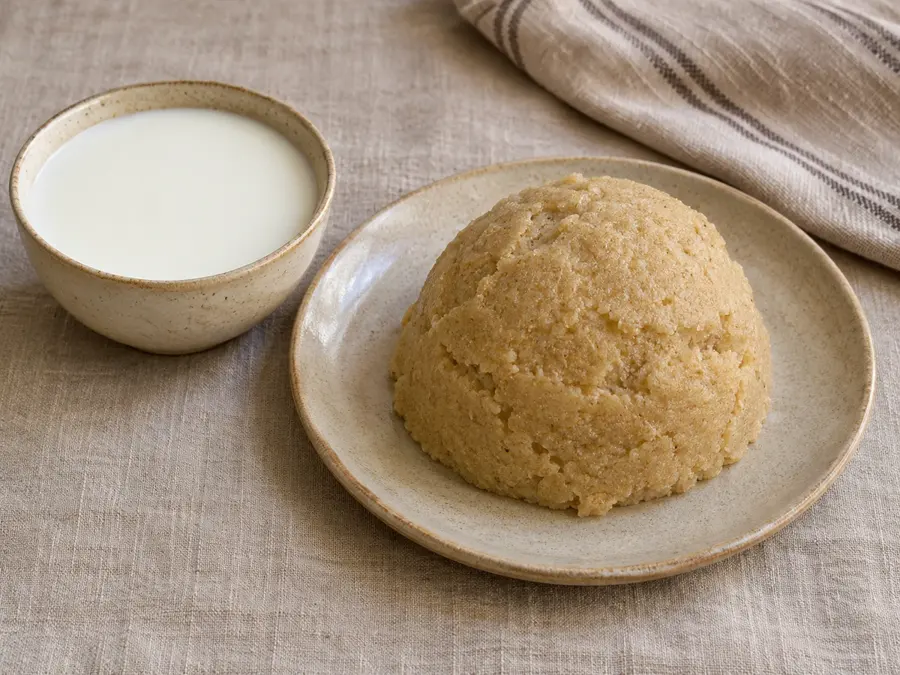
Plain cultured milk served with oshifima
A scientific review of Namibian foods gives omaere as an Otjiherero term for cultured milk. It describes processes in which fermentation and churning produce grains of butter that are removed from the liquid. It also mentions commercial products sold as omaere and omashikwa. This recipe uses shop-bought cultured milk, loosened with a spoon if needed. The quantities make four small bowls to serve with oshifima prepared separately. This presents the pairing while reserving the name omaere for the product it refers to.
Ingredients
- 600 g plain commercial cultured milk made with pasteurised milk
- 30 ml cold drinking water, only if needed
- 1 g fine salt, optional
- 4 servings of separately prepared oshifima
Preparation
Read the label, check the date and open the cultured milk when you are ready to prepare the bowls. Put 600 g into a chilled mixing bowl, scraping the container with a clean spoon. If the milk is already pourable, stir it slowly with the back of a spoon. If it is as thick as set yoghurt, whisk it smooth before adding the water.
Add the cold water a little at a time. After each addition, lift a spoonful and let it fall back into the bowl. Stop when it forms a soft ribbon that blends into the surface. The listed water quantity is the maximum for this version. Taste the cultured milk. Add salt only after tasting the oshifima or whichever dish you are serving alongside it.
Cover the bowl and chill it for ten minutes while you finish the meal. Divide the milk among four clean bowls. Bring the hot oshifima to the table in a separate dish. Diners can break off a piece of the grain paste and dip it in the milk, or pour a little milk around their serving.
Cultural context
A scientific review of Namibian foods gives omaere as an Otjiherero term for cultured milk. It describes processes in which fermentation and churning produce grains of butter that are removed from the liquid. It also mentions commercial products sold as omaere and omashikwa. This recipe uses shop-bought cultured milk, loosened with a spoon if needed. The quantities make four small bowls to serve with oshifima prepared separately. This presents the pairing while reserving the name omaere for the product it refers to.