Carrots and green beans
Carrot batons and green beans cooked separately, then briefly sautéed with onion and garlic.
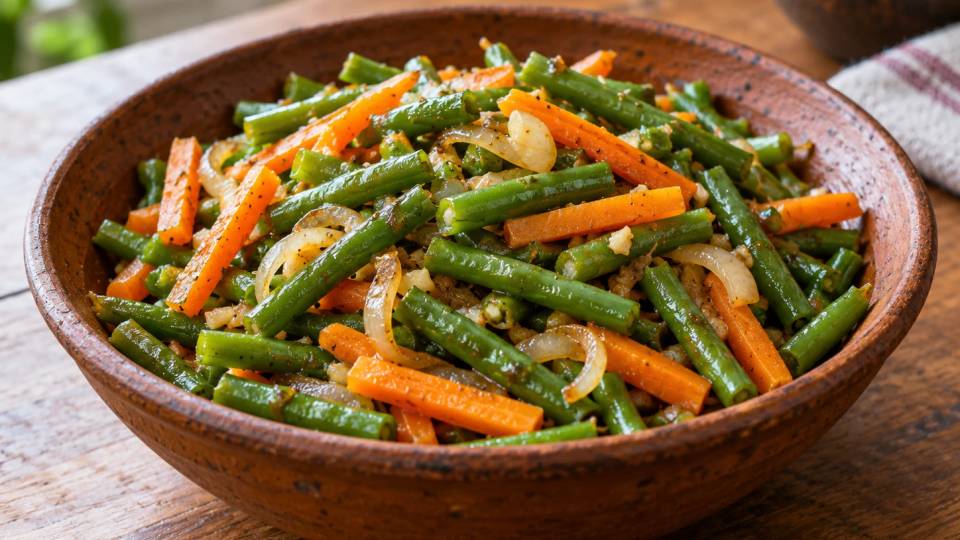
Ingredients
- 400 g prepared carrots
- 400 g prepared green beans
- 120 g onion
- 2 garlic cloves
- 2 tablespoons oil, 30 ml
- 1/2 teaspoon salt initially, then adjust
- 1 pinch black pepper
- 1 tablespoon lemon juice, optional
- Enough water for precooking
Preparation
Peel or scrub the carrots and cut into batons about five to six centimetres long and five millimetres thick. Trim beans and cut into similar lengths. Rinse separately and drain. Even thickness matters more than perfect geometry.
Boil water and cook carrots for four to six minutes according to thickness and firmness. A knife should pierce a baton with some resistance remaining. Drain carefully; excessively soft carrots would break during sautéing.
Cook beans separately in clean boiling water for roughly six to eight minutes, adapting to size. Taste one: it should be pleasant to chew without a marked raw taste. Thin beans cook faster. Drain promptly and spread briefly to release steam; they will finish in the pan.
Meanwhile slice onion and chop garlic. Heat oil in a wide pan that will hold vegetables without crowding. Soften onion for five to six minutes over medium heat, stirring occasionally, until translucent with lightly golden edges. Add garlic for thirty seconds to one minute without burning.
Add well-drained carrots and turn gently for two minutes. Add beans, salt and pepper and cook three to four minutes, just to heat thoroughly and distribute flavoured oil. Use two spoons or a broad spatula rather than vigorous stirring; keep vegetables distinct.
Let small amounts of released water evaporate uncovered. Do not add sauce or cook until the beans dry out. Taste carrot and bean together for texture and seasoning. If one remains firm, extend gently instead of seeking a uniformly brown surface.
Remove from heat. Taste, then add optional lemon gradually. Fold once and serve promptly in a shallow dish. Long covered holding traps steam and softens the vegetables. If a short wait is unavoidable, stop slightly before the softest texture and finish briefly at serving.
Introduction
This family vegetable vegetable side dish uses two vegetables that do not soften at the same speed. Evenly cut carrots and separately cooked green beans remain recognisable without tomato or cream. Sautéed vegetables appear in Malagasy domestic repertoires; no exclusive regional origin is claimed. Choose crisp fresh beans without damaged patches, remove ends and strings, and cut thick carrots more finely. Weights refer to prepared edible vegetables. Onion and garlic provide a light aromatic base; optional lemon is added after cooking.
Weigh the edible parts unless the ingredient list says otherwise. Prepare clean utensils and a stable board, use potable water and keep perishable ingredients chilled until needed. For another number of diners, scale ingredients by the portion ratio, not cooking time: crowded pans and trays behave differently. Work in batches when needed. Taste with a clean utensil at serving temperature, never returning food touched by the mouth. Adjust one element at a time. Optional garnishes and side dishes are separate; explain changes that affect allergens and nutrition.
Cut vegetables according to cooking resistance and add slower ones before tender ones. Precooking, when specified, helps components finish together. Soften onion before quick-burning garlic. Reduce tomatoes before adding liquid for concentrated flavour without excessive salt. A covered pan retains steam; a wide pan reduces faster. Add a little hot water if dry before tender, or uncover briefly if ready but watery. Lift fragile pieces gently and never scrape burnt deposits into the food. Taste a complete bite and add finishing acid or herbs at the stated time. Relish portions and full vegetable sides have different roles; rice or nsima remains separate.
Cultural context
This is a home-cooking version for meals in the Malawi collection. Its proportions and method define this preparation, not evidence of exclusive national origin, antiquity or ceremonial use. Describe household adaptations by the ingredient, seasoning, cooking or service that actually changes.
Tips
Even thickness matters more than exact length.
Drain each precooked vegetable thoroughly.
Keep carrots and beans separate until finishing.
Add garlic shortly before the vegetables.
Do not heavily salt both boiling water and pan without tasting.
Variations
Frozen green beans work when packaging directions are followed; do not assume they are raw or fully cooked. Omit lemon or add a little grated ginger with garlic. Cabbage would need a changed sequence and should be labelled an adaptation. No sweet sauce is needed for shine.
Accompaniments
Serve with plain rice and legumes, fish or meat. Keep the vegetables visible and distribute both colours to each person. Offer chilli separately and season lightly when the main accompaniment is already salty.
Nutrition notes
This adds vegetable variety and fibre but is not a complete meal alone. No uncalculated nutrient figures are given. For advance preparation, cool cooked vegetables promptly, cover and refrigerate, then finish near serving. Refrigerate leftovers within two hours, use within three days and reheat once until hot throughout.