Sautéed cabbage
Tender shredded cabbage with onion, garlic and ginger, served without a heavy sauce.
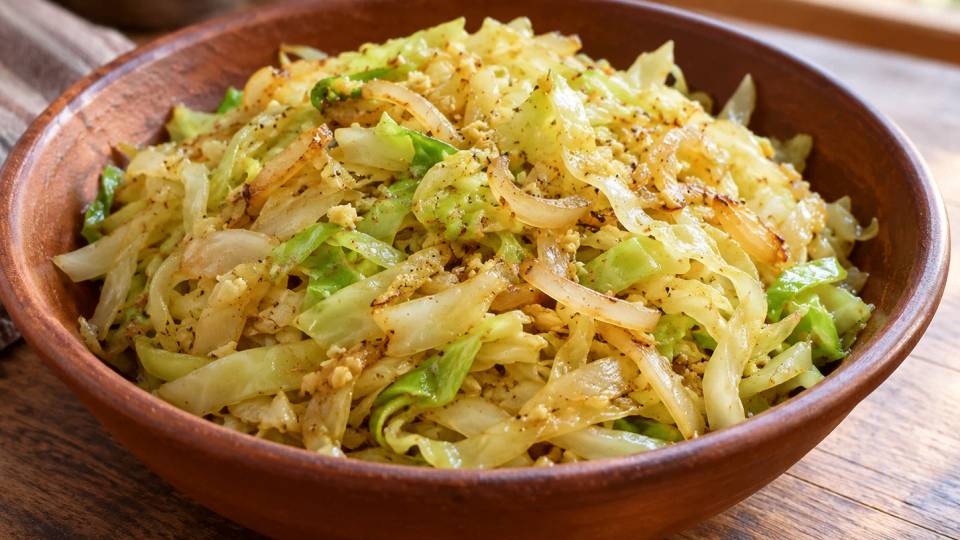
Ingredients
- 800 g prepared white or pale green cabbage
- 150 g onion
- 2 garlic cloves
- 10 g fresh ginger
- 2 tablespoons oil, 30 ml
- 30 ml water, only if necessary
- 1/2 teaspoon salt initially
- 1 pinch black pepper
- 1 tablespoon lemon juice, optional
Preparation
Remove damaged outer leaves and the hard core. Separate, wash, drain and thoroughly dry the leaves. Slice five to eight millimetres wide, making thick ribs finer. Clean and drain rather than leaving the cabbage soaking throughout preparation.
Slice the onion, chop garlic and grate ginger. Measure seasoning and water. Choose a wide pan where onion can spread in a thin layer; keep the lid ready so cooking is not prolonged while searching for equipment.
Heat oil over medium heat. Soften onion for five to six minutes, stirring occasionally, until lightly golden, not dark. Add garlic and ginger for one minute. Reduce the heat if garlic browns rapidly.
Add half the cabbage and lift gently with two spoons. As it shrinks, add the rest, salt and pepper. Cook three minutes, turning the bottom leaves upwards without pressing them flat.
Check the base: if cabbage has released water, do not add the reserved 30 ml. If dry and the ribs remain stiff, add that small amount and cover over low heat for three to four minutes. Extra water would turn this into boiled cabbage.
Uncover, increase heat slightly and cook four to six minutes with broad movements. Taste both rib and leaf: they should be tender with some structure. Fine shreds may finish sooner; firm cabbage may need longer. Texture determines completion.
Switch off when free liquid has almost evaporated. Taste before adjusting salt. Add optional lemon juice off the heat, starting with a little. Serve promptly without trapping steam under the lid for a long time; lift with tongs or a broad spoon.
Introduction
This meat-free vegetable vegetable side dish contains neither tomato nor coconut milk. Brief covered cooking softens the leaves; uncovered finishing evaporates moisture. Choose firm white or pale green cabbage, weighing after removing damaged leaves and the hard core. Slice thick ribs more finely so leaves and ribs cook together. Use a wide lidded pan because cabbage releases water and shrinks. For twice the quantity, cook two batches rather than overfilling. Measured oil gives a light sheen, not deep-frying.
Weigh the edible parts unless the ingredient list says otherwise. Prepare clean utensils and a stable board, use potable water and keep perishable ingredients chilled until needed. For another number of diners, scale ingredients by the portion ratio, not cooking time: crowded pans and trays behave differently. Work in batches when needed. Taste with a clean utensil at serving temperature, never returning food touched by the mouth. Adjust one element at a time. Optional garnishes and side dishes are separate; explain changes that affect allergens and nutrition.
Cut vegetables according to cooking resistance and add slower ones before tender ones. Precooking, when specified, helps components finish together. Soften onion before quick-burning garlic. Reduce tomatoes before adding liquid for concentrated flavour without excessive salt. A covered pan retains steam; a wide pan reduces faster. Add a little hot water if dry before tender, or uncover briefly if ready but watery. Lift fragile pieces gently and never scrape burnt deposits into the food. Taste a complete bite and add finishing acid or herbs at the stated time. Relish portions and full vegetable sides have different roles; rice or nsima remains separate.
Cultural context
This is a home-cooking version for meals in the Malawi collection. Its proportions and method define this preparation, not evidence of exclusive national origin, antiquity or ceremonial use. Describe household adaptations by the ingredient, seasoning, cooking or service that actually changes.
Tips
Cut evenly rather than relying on fierce heat.
Dry the washed leaves.
Add garlic after onion because it browns faster.
The small water addition is conditional.
Reheat in a wide pan.
Variations
Thick green cabbage needs finer slicing or a few extra minutes. Omit lemon for mildness. A whole chilli may be added then removed. Thin carrots added before cabbage form an explicit adaptation. Do not automatically add salty soy sauce to the stated seasoning.
Accompaniments
Serve visibly alongside plain rice and legumes or another dish. It contrasts with meat or fish sauce without needing to be mixed into the whole pot. Keep acidic tangy salad and chilli sauce separate so diners control acidity and heat.
Nutrition notes
Cabbage contributes fibre and plant diversity. No invented vitamin or calorie figures are given. Cool leftovers promptly in a shallow container and refrigerate within two hours. Use within three days and reheat once until hot throughout. Reheated cabbage will be softer; this does not justify room-temperature storage.