Tamarind drink
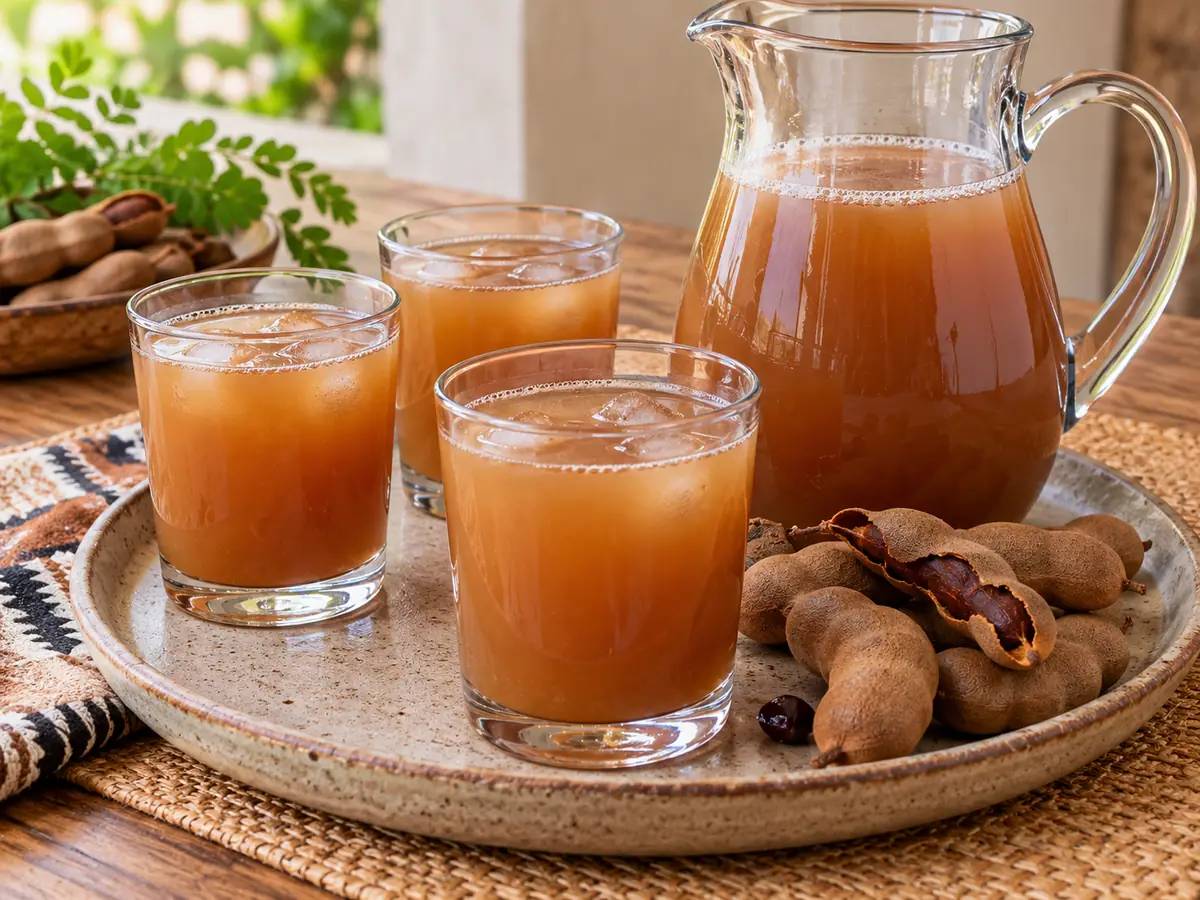
Tamarind drink — Prepared with shelled tamarind pulp, sugar, drinking water.
Ingredients
- 150 g — shelled tamarind pulp
- 50 g — sugar
- 1200 ml — drinking water
Preparation
Heat half the water and soak tamarind pulp for 20 minutes, working with a spoon.
Strain out seeds and fibres.
Gradually add remaining water and sugar.
Measure yield, cool quickly and refrigerate.
Consume within 24 hours; do not serve discarded seeds or fibres.
Introduction
This tamarind drink starts with 150 g of shelled pulp, 1,200 ml of drinking water and 50 g of sugar. Check whether the purchased pulp contains seeds or added sugar: a sweetened concentrate is not equivalent to the listed ingredient. Warm half the water, about 600 ml, and work the pulp into it with a spoon during the twenty-minute soaking period. Break up compact pieces rather than extending the heating indefinitely.
Set a sieve over a wide bowl and strain in small batches. Press gently to recover liquid and fine pulp, leaving seeds and coarse fibres behind. Scrape any usable pulp from the underside of the sieve. Do not force hard residues through the mesh. Add the reserved water and stir the bottom of the bowl to make the concentration even throughout the drink.
Add the sugar gradually and stir until dissolved. Tamarind should retain its tart character; taste before making an additional adjustment. Measure the final yield after straining, since discarded solids and losses affect the amount recovered. Divide into four comparable glasses. Chill before serving and remember that melting ice changes the dilution. The base recipe has no milk or mandatory spices. Cool promptly, refrigerate covered and consume within twenty-four hours as directed. The nutrition estimate applies to this formulation, with seeds and retained fibres excluded from service.
Cultural context
This is a home-cooking version for meals in the Malawi collection. Its proportions and method define this preparation, not evidence of exclusive national origin, antiquity or ceremonial use. Describe household adaptations by the ingredient, seasoning, cooking or service that actually changes.
Tips
Weigh ingredients, control heat and taste before the final salt adjustment. Keep raw and ready-to-eat foods separate.
Nutrition notes
Approximate values per serving, based on generic ingredient composition. Actual vitamins and minerals vary with products and cooking; no laboratory analysis or health claim is implied.