Papaya with lime
Ripe papaya pieces dressed with lime for a fresh dessert without added sugar.
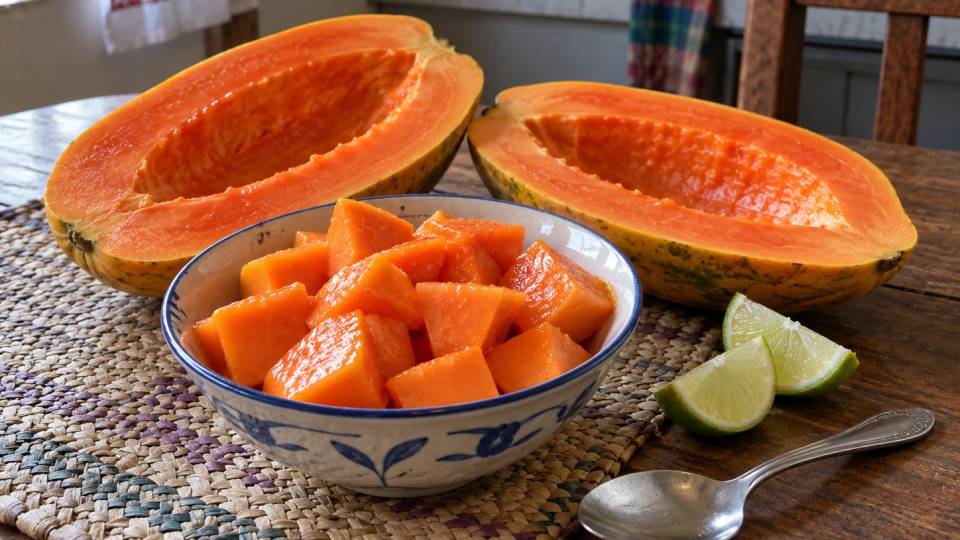
Ingredients
- 600 g ripe papaya flesh, without skin or seeds
- 15–20 ml lime juice
- 4 small lime wedges for serving, optional
- 4 small washed mint leaves, optional
Preparation
Choose a sound papaya without mould or leaking patches. It should yield slightly to gentle pressure without collapsing; colour alone varies by variety. Wash and dry the whole fruit and lime in drinking water. Use a stable board, sharp knife and clean spoon.
Halve papaya lengthways. Spoon out black seeds and membranes without removing excessive orange flesh. Check the cavity and discard abnormal parts. Keep waste away from ready-to-eat pieces. Seeds are not used in this recipe and are not a mandatory ingredient.
Peel the halves and weigh 600 g flesh. Cut into even cubes or slices. If using the skin as a serving shell, keep it clean, sufficiently firm and separate from waste; four small bowls are the simpler option.
Squeeze and strain out lime seeds. Add 15 ml juice first and lift the papaya gently with a spoon. Taste a complete bite. Increase only if needed, up to 20 ml. The objective is not uniform sharpness that hides the fruit’s sweetness.
Divide between four bowls and add optional mint. Serve immediately or refrigerate briefly until the nearby meal. Offer lime wedges separately. Dress the pieces without leaving them submerged in a large pool of juice.
Refrigerate unserved cut papaya in a clean closed box and use within twenty-four hours. For advance preparation keep flesh and juice separate and combine close to serving. Never return used plate leftovers to the reserve. Discard suspicious odours or changes rather than trying to repair them with extra lime.
Introduction
The key to this short ingredient list is sound ripe fruit, clean preparation and the right acidity. Green papaya stays too firm; damaged papaya is not made safe by lime. Choose flesh that is ripe yet firm enough to cut, and squeeze the lime just before use.
Use 600 g prepared flesh rather than a fixed fruit count. Add the juice gradually to enhance sweetness rather than overwhelm it. Lime neither disinfects nor preserves this dessert for long storage. Divide comparable portions rather than automatically serving half a large fruit per person; set aside clean excess before plating so it remains protected from utensils and temperature changes.
Cultural context
This is a home-cooking version for meals in the Malawi collection. Its proportions and method define this preparation, not evidence of exclusive national origin, antiquity or ceremonial use. Describe household adaptations by the ingredient, seasoning, cooking or service that actually changes.
Tips
A sharp knife gives clean edges without crushing.
Remove seeds gently in several passes.
Judge lime by tasting a bite, not by fruit size alone.
Mint is optional and can overpower the fruit if excessive.
Variations
A little finely grated lime zest can add aroma if the washed peel is suitable for food use; avoid the bitter white pith. Adding pineapple makes a different mixed salad. Sugar is not included and cannot correct the firmness or green flavour of genuinely unripe papaya.
Accompaniments
Serve a modest portion after rice, fish or vegetables, with an unsweetened drink. Cream is unnecessary. Keep reserve bowls refrigerated and replenish during shared meals: lime or a fruit shell does not replace cold storage.
Nutrition notes
Papaya supplies water, fibre and naturally present sugars. Pieces retain chewable texture unlike filtered juice. Vitamins vary with variety, ripeness and storage; no fixed values, detoxification or therapeutic digestive claims are made. Lime is used for flavour balance.