Rice pudding
White rice cooked in water then pasteurised milk with a little sugar.
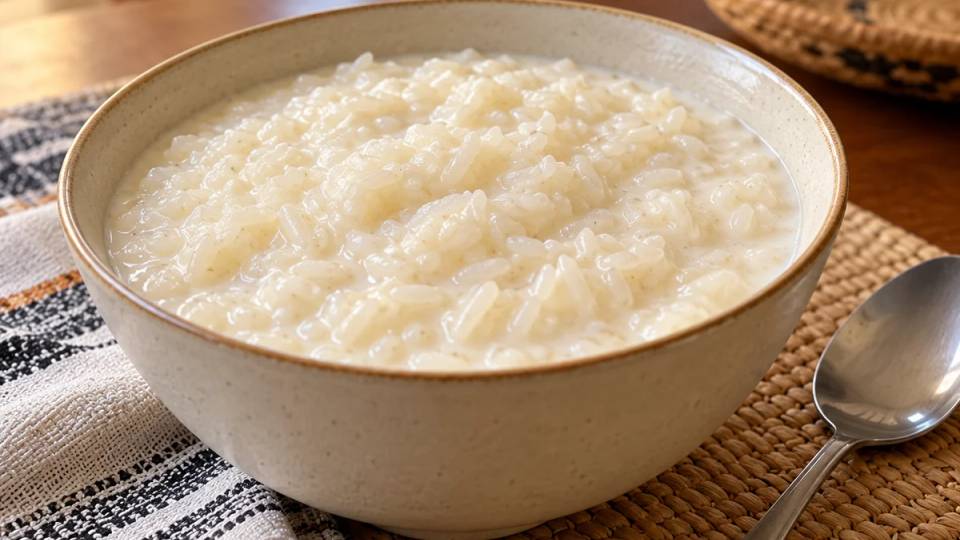
Ingredients
- 200 g dry white rice
- 500 ml drinking water
- 700 ml pasteurised milk
- 30 g sugar
Preparation
⚖️ Weigh the ingredients for 4 servings and prepare the utensils.
🍚 Rinse the rice, then cook it in the measured water over low heat for 12–15 minutes.
✅ Test with a fork; continue cooking if the centre is still firm.
🥛 Add milk and sugar, then cook gently for another 15–20 minutes, stirring.
🥄 Uncover for a few minutes and reduce the liquid to the desired texture without catching.
⏳ Turn off the heat and rest for 5 minutes before serving.
🍽️ Divide into 4 servings and serve warm, with sides separately.
Introduction
Rice pudding
Cook the cereal properly before judging sweetness. Flour is dispersed in cold liquid before heating, while rice needs its own grain-cooking stage. Use a thick-based pan and stir the corners after adding milk, keeping heat gentle. Add a little hot water if thickening before fully cooked. Starch thickens further on cooling, so do not over-reduce a hot mixture to imitate its final cold texture. Use pasteurised milk or declare a plant-drink substitution and its allergens. Cool in small containers and refrigerate. Rice preparations should cool quickly, ideally within one hour, and be refrigerated and eaten within 24 hours.
Cook rice in water before adding milk, then stir gently along the base to prevent catching. If thick before grains soften, add a little hot water and keep cooking. Resting thickens it further, so leave slightly looser for chilled service. Cool small portions quickly, ideally within one hour, refrigerate and eat within 24 hours. Cinnamon or vanilla is an optional declared variation, not required here.
Weigh the edible parts unless the ingredient list says otherwise. Prepare clean utensils and a stable board, use potable water and keep perishable ingredients chilled until needed. For another number of diners, scale ingredients by the portion ratio, not cooking time: crowded pans and trays behave differently. Work in batches when needed. Taste with a clean utensil at serving temperature, never returning food touched by the mouth. Adjust one element at a time. Optional garnishes and side dishes are separate; explain changes that affect allergens and nutrition.
Cultural context
This is a home-cooking version for meals in the Malawi collection. Its proportions and method define this preparation, not evidence of exclusive national origin, antiquity or ceremonial use. Describe household adaptations by the ingredient, seasoning, cooking or service that actually changes.
Tips
⚖️ Keep to the weights and serving count.
💧 Adjust liquid in small additions.
🔥 Lower the heat if the base starts to catch.
🥄 Check texture before removing from the heat.
🍽️ Prepare sides before serving.
Planning
⚖️ Weights refer to the condition stated in the list. Reserve any water needed for mixing before heating the rest. Total time includes the stated rests; extend cooking if the food remains firm.
Serving
🍽️ Serve in 4 portions; offer extra sides separately to preserve texture and let everyone compose their meal.
Storage
🧊 Cool moist preparations promptly in shallow containers, then refrigerate. Reheat only the required portion until piping hot. Store cooled roasted peanuts in a clean dry container.
Variations
🥜 Adjust sugar to taste and the natural sweetness of the main ingredient. Adding milk, peanuts or fruit creates a variant and changes nutrient values.
Accompaniments
🥣 Serve for breakfast or as a snack, with water or tea. Fruit or milk added at serving changes the nutritional composition.
Nutrition notes
🔎 Vitamins and minerals are qualitative ingredient-based indications, not measurements of the finished dish. Amounts vary with variety, cooking and draining. Extra sides are excluded. Any energy and macro values retained from the earlier dossier are estimates not recalculated here.