Onion relish
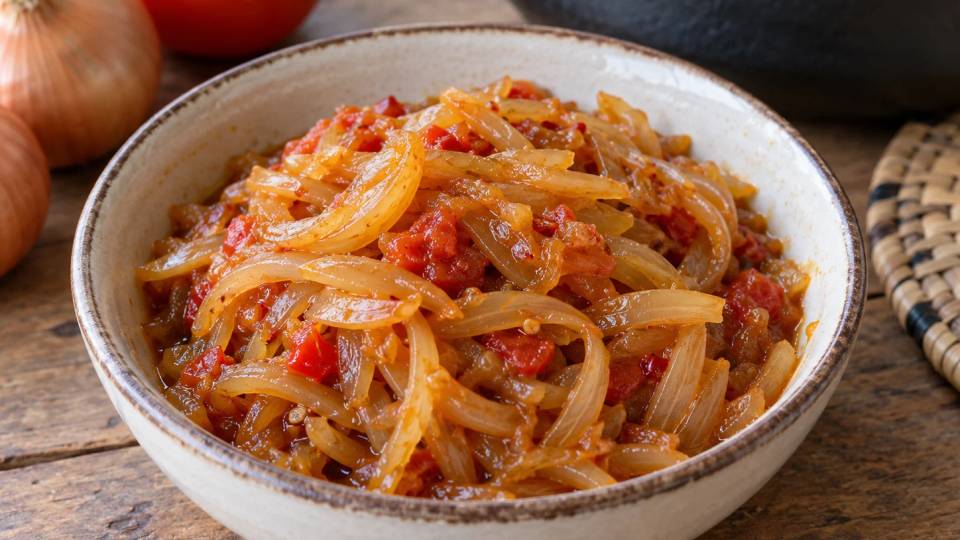
Soft onion relish supplies a modest side topping.
Ingredients
- 700 g peeled onions
- 200 g chopped tomatoes
- 20 ml vegetable oil
- 100 ml potable water, adjust
- 15 ml lemon juice
- 2 g salt
- Pepper and chilli, optional
Preparation
Slice onions evenly and prepare tomatoes.
Heat oil over medium-low heat, add onions and cook 10 minutes, stirring without dark browning.
Add tomatoes and water, partly cover and simmer 20–25 minutes until very soft, adding a little water if needed.
Uncover and reduce 5–10 minutes until moist, not watery. Add salt and optional pepper or chilli.
Remove from heat and add lemon. Serve small portions; cool leftovers promptly and refrigerate for use within 2 days.
Introduction
Soft onion relish supplies a modest side topping. Gentle moist cooking softens the slices and final reduction concentrates juices without added sugar. This is neither crisp onion rings nor very sweet onion jam. Stir the base and finish with lemon.
Cut vegetables according to cooking resistance and add slower ones before tender ones. Precooking, when specified, helps components finish together. Soften onion before quick-burning garlic. Reduce tomatoes before adding liquid for concentrated flavour without excessive salt. A covered pan retains steam; a wide pan reduces faster. Add a little hot water if dry before tender, or uncover briefly if ready but watery. Lift fragile pieces gently and never scrape burnt deposits into the food. Taste a complete bite and add finishing acid or herbs at the stated time. Relish portions and full vegetable sides have different roles; rice or nsima remains separate.
Weigh the edible parts unless the ingredient list says otherwise. Prepare clean utensils and a stable board, use potable water and keep perishable ingredients chilled until needed. For another number of diners, scale ingredients by the portion ratio, not cooking time: crowded pans and trays behave differently. Work in batches when needed. Taste with a clean utensil at serving temperature, never returning food touched by the mouth. Adjust one element at a time. Optional garnishes and side dishes are separate; explain changes that affect allergens and nutrition.
Cultural context
This is a home-cooking version for meals in the Malawi collection. Its proportions and method define this preparation, not evidence of exclusive national origin, antiquity or ceremonial use. Describe household adaptations by the ingredient, seasoning, cooking or service that actually changes.
Tips
Respect the stated starting condition and quantities.
Check actual texture, not just time.
Measure seasoning and keep optional additions separate.
Variations
First establish the base texture, then adjust one seasoning at a time. Another main-ingredient variety may need different liquid or timing and should be identified as a change.
Accompaniments
Serve according to the dish’s role and appetite. Optional sauces, drinks, rice, nsima and other sides are not automatically included. Offer contrasting textures and separate optional chilli.
Nutrition notes
Figures are estimates per portion of this preparation only. Yield, edible weight, variety and cooking or filtration losses change them. Added foods are separate. Vitamins and minerals vary with ingredients and do not imply medical prevention or treatment.