Cabbage salad
🥬 Finely shredded raw white cabbage and grated carrot with lemon and oil. No mayonnaise or raw egg; a crisp side for four people.
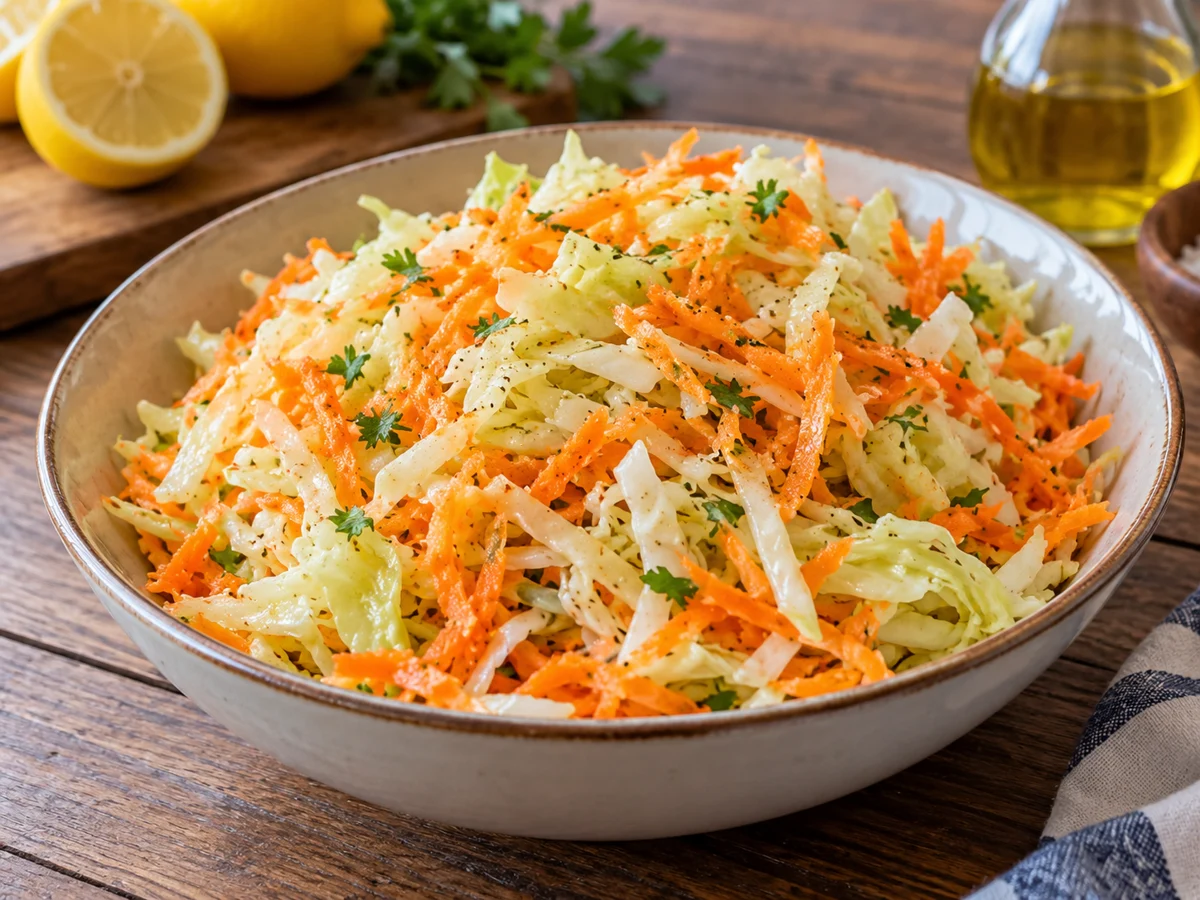
Ingredients
- 500 g white cabbage leaves, trimmed weight without core
- 150 g peeled carrot
- 30 ml lemon juice
- 20 ml vegetable oil
- 2 g salt, adjusted to taste
- 1/4 teaspoon black pepper
- 5 g washed chopped parsley, optional
Preparation
Remove damaged outer cabbage leaves. Wash usable leaves with drinking water, drain and dry well; use a clean board and knife.
Remove the core, weigh 500 g leaves and finely shred into even strips, removing hard rib pieces.
Wash and peel carrot, weigh 150 g and grate with a clean grater into a large bowl.
Add cabbage and combine with clean utensils without compressing heavily.
Mix lemon juice, oil, salt and pepper separately until evenly combined.
Dress the vegetables, toss for one minute and rest in the refrigerator for five to ten minutes.
Taste and adjust only if needed. Add optional parsley and divide into four small side portions.
Serve chilled. Refrigerate leftovers immediately in a clean container and use within twenty-four hours; lemon does not replace refrigeration.
Introduction
👩🏾🍳 Weigh usable cabbage leaves after trimming. Drying prevents a watery dressing, and thin strips soften slightly during the short chilled rest while staying crisp. This is not a fermented preparation.
Weigh the edible parts unless the ingredient list says otherwise. Prepare clean utensils and a stable board, use potable water and keep perishable ingredients chilled until needed. For another number of diners, scale ingredients by the portion ratio, not cooking time: crowded pans and trays behave differently. Work in batches when needed. Taste with a clean utensil at serving temperature, never returning food touched by the mouth. Adjust one element at a time. Optional garnishes and side dishes are separate; explain changes that affect allergens and nutrition.
For uncooked food, wash whole produce with potable water before cutting, even if the skin is discarded. Use clean boards, bowls and washed herbs, separate from raw animal foods. Cut evenly and fold fragile pieces gently. Salt and acid change texture and draw water, so keep dressing separate until near serving when appropriate. Taste a complete bite before adding more acid or salt. Lemon and vinegar do not replace washing or refrigeration and this is not a shelf-stable preservation method. Keep covered and chilled, renew small serving bowls and never return plate leftovers to the reserve.
Cultural context
This is a home-cooking version for meals in the Malawi collection. Its proportions and method define this preparation, not evidence of exclusive national origin, antiquity or ceremonial use. Describe household adaptations by the ingredient, seasoning, cooking or service that actually changes.
Tips
🔪 Shred evenly and remove hard rib fragments.
❄️ Keep clean and chilled; acidity alone does not make raw vegetables safe to store warm.
Variations
🔄 Finely sliced onion or an adjusted amount of edible vinegar may be used in another version. Mayonnaise changes ingredients, allergens and texture; it is not part of this lemon dressing.
Accompaniments
🍽️ Offer with grilled chicken, tilapia, lentils or rice. Use clean serving utensils kept separate from raw meat. Bring out only the amount needed and keep the rest refrigerated.
Nutrition notes
🌱 Cabbage and carrot provide fibre and micronutrients, while oil adds fat. Portion and ingredients affect nutrition. No detox or therapeutic benefit is promised; raw vegetables may require individual adaptation.