Rice with fish
White rice and stew, with measured quantities and cooking instructions for both parts of the complete meal.
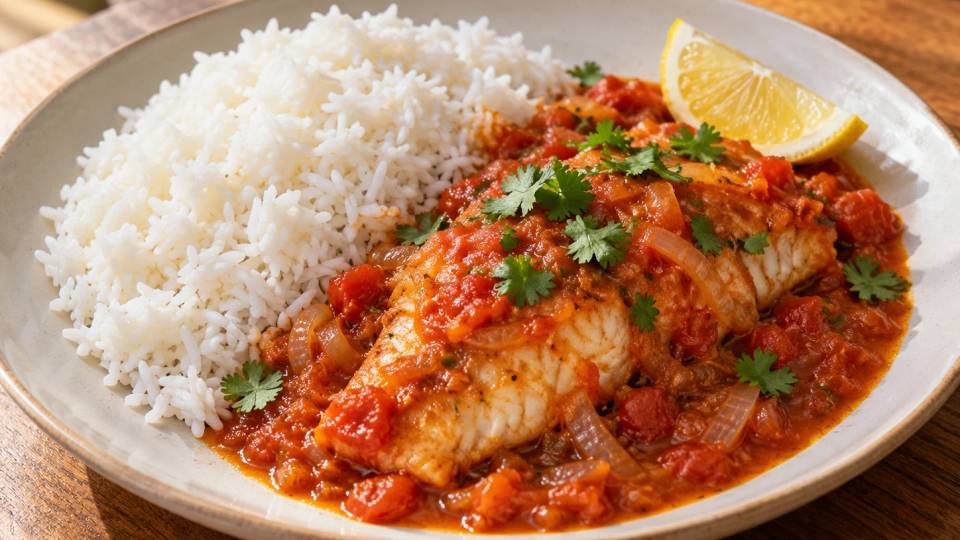
Ingredients
- 🐟 800 g chambo steaks or thick fillets
- 🍅 6 ripe crushed tomatoes or 600 g canned tomatoes
- 🧅 3 sliced onions, 3 cloves garlic, and 25 g ginger
- 🌶️ 1 to 2 chilies, 1 optional bell pepper, pepper and salt
- 🫗 3 tablespoons oil, 250 ml water or low-salt fish stock
- 🍋 Juice of one lemon and fresh coriander, parsley or other fresh leaves
- 375 g dry white long-grain rice
- 750 ml additional water for rice, adjust to pack instructions
Preparation
1️⃣ Lightly salt and pepper the fish, then let it rest in the refrigerator while preparing.
2️⃣ Heat the oil, sauté onion, garlic, and ginger for 8 minutes without burning.
3️⃣ Add tomato, bell pepper, and chili; reduce for 12 to 15 minutes until the sauce is thick and shiny.
4️⃣ Pour in hot water, bring to a simmer, then place the chambo pieces in the sauce.
5️⃣ Cover halfway and simmer for 10 to 12 minutes, basting without roughly turning the fish.
Check 63 °C in the thickest fish part. Add lemon and washed herbs off the heat and adjust salt without breaking pieces.
About 25 minutes before the stew is ready, rinse and drain the rice. Put it in a pan with the measured rice water, following its pack if different. This water is additional to the stew water.
Bring to the boil, cover and cook on very low heat for about 12–15 minutes or as the pack directs, until absorbed and cooked. Remove and rest covered for 10 minutes.
Fluff with a fork, divide between plates with the thoroughly cooked stew and serve promptly. Extra greens are optional; check each component for doneness.
Introduction
This is a complete plate: rice is cooked separately and served with the stew described below. Rice quantities and cooking are included, rather than merely suggested as a side. Allow 75 g dry white long-grain rice per adult portion as a starting point, adjusting for appetite. Brown or parboiled rice needs its own pack instructions.
Rinse and drain the rice. The measured water below is a starting point; follow the pack if the variety requires less. Bring to the boil, cover and cook over low heat without constantly lifting the lid. Rest covered so moisture redistributes and the cooked grains remain separate. Start rice during the final half-hour of the stew, checking each component rather than shortening meat, fish or bean cooking to fit a timetable.
The nutrition estimate includes the stated rice. Additional greens are optional, while bread and nsima are neither included nor necessary. For leftovers, spread rice promptly in a shallow container, cool quickly, ideally within one hour, refrigerate and eat within 24 hours. Reheat only once until steaming hot throughout. Reheating does not automatically make badly stored rice safe.
🍲 Chambo stew, a sauce that brings people together. Chambo stew is a fish stew where the flesh of Lake Malawi rests in a tomato and onion sauce. The method seems simple, but it requires two steps: reducing the aromatics before adding the fish, then simmering gently without breaking it. This patience transforms fresh tomatoes, an onion, garlic, ginger, and a chili into a rich sauce that accompanies the starch. The dish is presented here as a homemade preparation: it can be more liquid in one home, redder and more concentrated in another, with or without bell pepper. The recipe therefore does not impose an orthodoxy; it provides guidelines for taste, safety, and texture. 🐟
🌊 Lake, fishing, and culinary memory. Lake Malawi is not just a backdrop: it is a space for work, transport, trade, and memory. Fish connects riparian villages to markets, and preservation techniques allow cooking even when fresh fish is scarce. A tomato stew can accommodate a fresh chambo, an available tilapia, or smoked fish added later. Tomatoes and chili have a history of global circulation, but Malawian families have integrated them into local practices: gently sautéed onion, reduced sauce, neutral starch, and sharing around a pot. This appropriation is a legitimate culinary history, not a contradiction. 🌍
🏠 Daily meal and hospitality. The stew is suitable for a weeknight because the sauce can be prepared before the fish. It becomes more generous for a visit, a celebration, or a Sunday meal by increasing the vegetables and side dish. A well-organized pot avoids overcooking the pieces: the sauce is placed in the center, the fish is added at the end, and everyone receives enough juice. In families, the person cooking tastes, adjusts, and teaches the younger ones to recognize a reduced tomato or ready fish. Hospitality is also expressed by a mild sauce served with a small bowl of chili, so guests can choose their intensity. 🤝
🕊️ Cultural context and household diversity. Chambo stew is not a national ritual. It can appear on a Christian, Muslim, or family table without automatically carrying the meaning of a ceremony. Holidays, fasts, or visits change the quantities and accompaniments; individual beliefs determine the presence of fish, broth, alcohol in drinks, or certain products. Announce ingredients and use a clean pot if a fish-free version needs to be prepared in parallel. Respecting religious practices, potential peanut allergies, and chili preferences is part of culinary etiquette. 🙏
🧑🏾🍳 Mastering a tomato-onion sauce. The first mistake is adding the fish before the sauce is ready. Sauté the onion long enough for it to become soft, then add garlic and ginger, which burn faster. The tomato must lose its raw water; when the oil slightly rises and the spoon leaves a trace, you can add liquid. A little hot water loosens the sauce without stopping the cooking. The fish should be dry, seasoned sparingly, and placed in a simmering sauce, never in an aggressive boil. Cover halfway, baste with a spoon, and do not stir with a spatula. Thick steaks hold their shape better; thin fillets are added very late. Lemon and herbs are added off the heat to preserve their aroma. 🔥
🗺️ Regional, seasonal, and accessible variations. In a version close to the lake, chambo is sometimes cooked with few spices to let its flavor shine. A market version adds garlic, mild curry, coriander, bell pepper, or a more pronounced chili. Green leaves can replace part of the tomato; peanuts can thicken a sauce, but must be announced to guests. Smoked or dried fish requires desalting and a shorter cooking time so as not to overpower the dish. A lighter version reduces oil and increases tomato, squash, or spinach. A family version uses canned tomatoes when the season is unfavorable. For the diaspora, tilapia, snapper, or another firm fish works, provided the cooking time is adjusted. 🌿
🍽️ Side dishes, drinks, and storage. Serve the stew with nsima so the dough soaks up the sauce, or with rice, cassava, sweet potato, and plantain. Cabbage, okra, pumpkin leaves, cucumber, avocado, or a lemon salad provide freshness and fiber. Water, tamarind juice, ginger, lemon, maheu, or light tea balance the heat. The stew sometimes gains flavor after a short rest, but the fish should not be left at room temperature. Refrigerate in a shallow container within two hours, consume within two days, and reheat over low heat until the sauce is steaming; avoid repeated handling that breaks the flesh.
💪 Nutrition and conclusion. A portion with rice or nsima provides approximately 535 kcal, 36 g protein, 68 g carbohydrates, 14 g fat, 8 g fiber, 570 mg sodium, and 1.42 g salt. Fish provides protein, vitamin B12, phosphorus, and selenium; tomatoes and leaves provide vitamins A and C, folate, potassium, and fiber. These figures are estimates: oil, starch quantity, salt from smoked fish, and piece size alter them. The dish remains balanced when a portion of sauce and fish is accompanied by vegetables and a reasonable base. In conclusion, chambo stew is a recipe of patience: reduce, simmer, baste, and share. It preserves the memory of the lake without confining families to a single version. Mudya bwino! — bon appétit in Chichewa. ✨
Cultural context
🇲🇼 A versatile stew from Malawian tables, chambo stew connects lake fish, market tomatoes, starches, and sharing. Ingredients and religious context vary by household.
Tips
🧅 Sauté the onion without burning it.
🍅 Reduce the tomato before the fish.
🐟 Choose thick steaks.
🥄 Baste rather than stir.
🍋 Add lemon and herbs off the heat.
Serving
Rice is already included. Add optional cooked greens or clean salad without automatically adding nsima or bread. Serve chilli separately.
Storage
Cool rice quickly, ideally within one hour, refrigerate and eat within 24 hours. Reheat only once until hot throughout.
Variations
🌿 Chambo, tilapia or firm fish; fresh or canned tomato; addition of bell pepper, leaves, peanuts, coconut, mild curry or chili depending on the region.
Nutrition notes
Estimates per plate include the stated 75 g dry rice per person, excluding optional greens, nsima and bread. Sauce, edible meat, retained oil and salt change the result. Rice mainly provides carbohydrate; the stew adds its protein and vegetables. These are not laboratory measurements.