Rice with beans
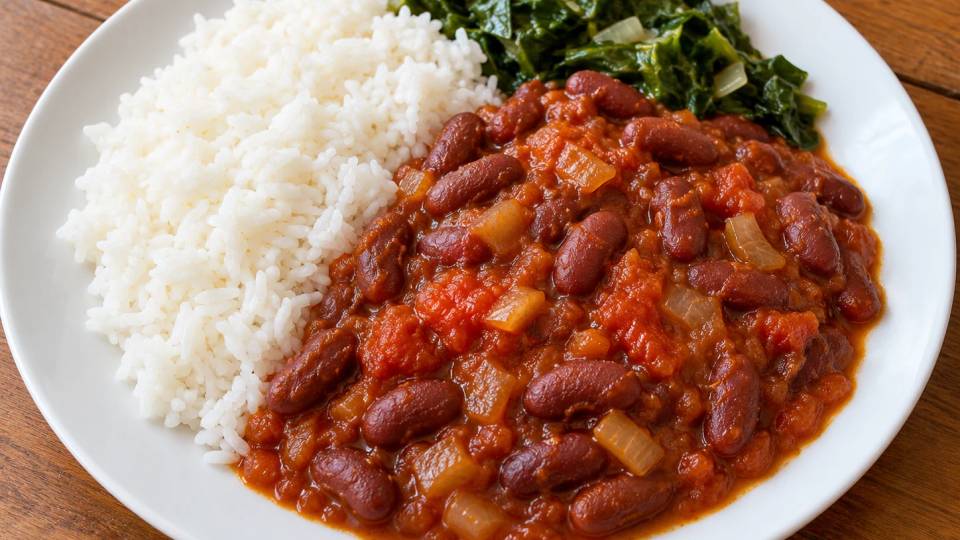
White rice and stew, with measured quantities and cooking instructions for both parts of the complete meal.
Ingredients
- 🫘 300 g sorted dried beans
- 🍅 4 ripe crushed tomatoes
- 🧅 2 large onions, thinly sliced
- 🧄 3 cloves garlic, crushed
- 🫚 2 cm ginger, grated
- 🫗 3 tablespoons oil
- 🌶️ Chili optional
- 🧂 1 teaspoon salt, to taste
- 💧 1.2 l hot water
- 🌿 Coriander or curry leaves optional
- 300 g dry white long-grain rice
- 600 ml additional water for rice, adjust to pack instructions
Preparation
1️⃣ Soak beans for eight hours, rinse, and drain.
2️⃣ Cover with fresh water, bring to a boil, then cook for 45 to 60 minutes until tender; skim and reserve 300 ml of their water.
3️⃣ Sauté onion in oil over medium heat, then add garlic and ginger.
4️⃣ Add tomatoes and chili; reduce for fifteen minutes until the sauce is thick.
5️⃣ Stir in the beans and their water, cover, and simmer for another 15 minutes.
Taste the stew and adjust salt. Keep hot while rice finishes; wash optional finishing herbs.
About 25 minutes before the stew is ready, rinse and drain the rice. Put it in a pan with the measured rice water, following its pack if different. This water is additional to the stew water.
Bring to the boil, cover and cook on very low heat for about 12–15 minutes or as the pack directs, until absorbed and cooked. Remove and rest covered for 10 minutes.
Fluff with a fork, divide between plates with the thoroughly cooked stew and serve promptly. Extra greens are optional; check each component for doneness.
Introduction
This is a complete plate: rice is cooked separately and served with the stew described below. Rice quantities and cooking are included, rather than merely suggested as a side. Allow 75 g dry white long-grain rice per adult portion as a starting point, adjusting for appetite. Brown or parboiled rice needs its own pack instructions.
Rinse and drain the rice. The measured water below is a starting point; follow the pack if the variety requires less. Bring to the boil, cover and cook over low heat without constantly lifting the lid. Rest covered so moisture redistributes and the cooked grains remain separate. Start rice during the final half-hour of the stew, checking each component rather than shortening meat, fish or bean cooking to fit a timetable.
The nutrition estimate includes the stated rice. Additional greens are optional, while bread and nsima are neither included nor necessary. For leftovers, spread rice promptly in a shallow container, cool quickly, ideally within one hour, refrigerate and eat within 24 hours. Reheat only once until steaming hot throughout. Reheating does not automatically make badly stored rice safe.
🫘 Nyemba, a pot of patience and sharing. The word nyemba refers to beans in several languages of the region, with variations in pronunciation and preparation depending on the communities. In Malawi, beans can become a ndiwo, which is a saucy side dish that complements nsima, or constitute a complete vegetarian dish with rice. This recipe offers a generous homemade version: very tender beans, a carefully reduced tomato and onion base, then a gentle cooking that binds everything together. 🏠
📜 History and cultural context. Legumes play an important role in family farming because they are filling, can be stored dry, and provide protein without requiring meat. They are integrated into rain, harvest, market, and work calendars. Beans can be grown near corn, bought in small quantities, or exchanged between neighbors. The dish therefore also tells the story of the household economy: soaking overnight saves fuel, cooking a large pot feeds several people, and keeping a portion allows leftovers to be transformed into the next day's meal. Nsima provides familiar energy; nyemba brings color, sauce, fiber, and substance. 🌾
🤝 Social and religious life. A plate of nyemba can appear during an ordinary meal, after field work, during a visit, or around a community table. It is not automatically a ceremonial dish. Christian, Muslim, and families following local customs each choose their accompaniments and fasting periods. To welcome guests, keep chili separate, announce the ingredients, and offer a version without animal broth. Generosity is measured as much by the possibility of serving seconds as by the strength of the spices. 🕊️
🧑🏾🍳 Detailed technique. Sort the beans and discard any damaged ones. Soaking shortens cooking time and helps identify skins that detach. Initial cooking without tomato is preferable: acidity can harden the skin if added too early. Do not salt heavily at the beginning; taste when the beans are already tender. Meanwhile, sauté the onion without burning it. Add garlic and ginger when the onion is translucent, then let the tomato lose its raw water. A shiny, thick sauce adheres better to the beans. Keep some of the cooking water: it contains starch and gives a velvety texture without flour. 🔥
🗺️ Regional and family variations. Some households add carrots, squash, green leaves, eggplant, or tender corn. Near the lake, a little dried fish can flavor the pot; elsewhere, peanuts or a strictly vegetarian version are preferred. Red, white, speckled, or black-eyed beans change the cooking time. A spoon of peanut butter gives a denser sauce, while a squeeze of lemon at the end brightens it. Sunflower oil is neutral; clear palm oil adds color and flavor. In the diaspora, use a pressure cooker according to its instructions, but always finish the sauce uncovered. 🌶️
🍽️ Serving, nutrition, and conclusion. Serve nyemba hot with a ball of nsima, rice, sweet potato, or cassava, then add tomato, cucumber, avocado, or lightly blanched greens. Water, light tea, ginger infusion, baobab juice, or lightly sweetened lemonade balance the sauce. For a portion of stew without starch, count approximately 360 kcal, 19 g protein, 55 g carbohydrates, 8 g fat, 15 g fiber, 430 mg sodium, and 1.1 g salt. Beans provide plant protein, folate, iron, magnesium, and potassium; tomato adds vitamin C and lycopene. These figures vary depending on the oil and salt. Cool within two hours and consume within three days. Each spoonful reminds us that Malawian cuisine knows how to transform a simple harvest into a complete meal. Sangalalani ndi chakudya chanu! — bon appétit in Chichewa. ✨
🌱 The success of Nyemba relies on simple steps: soaking, cooking without rushing, reducing the tomato, and letting the beans absorb the sauce. The cook observes the texture rather than a rigid clock, as varieties and age of beans change. They taste before adding salt, offer chili separately, and adjust the amount of water to the accompaniment. The pot can be mild for children, spicier for adults, or enriched with vegetables to use what's available at the market. Served with nsima, the stew becomes a shared meal where everyone takes a portion of sauce and beans. This flexibility is a strength: it avoids waste and allows an ancient recipe to remain alive in a modern kitchen. 👩🏾🍳🫘 Nyemba, a pot of patience and sharing. The word nyemba refers to beans in several languages of the region, with variations in pronunciation and preparation depending on the communities. In Malawi, beans can become a ndiwo, which is a saucy side dish that complements nsima, or constitute a complete vegetarian dish with rice. This recipe offers a generous homemade version: very tender beans, a carefully reduced tomato and onion base, then a gentle cooking that binds everything together. 🏠
🌱 The success of Nyemba relies on simple steps: soaking, cooking without rushing, reducing the tomato, and letting the beans absorb the sauce. The cook observes the texture rather than a rigid clock, as varieties and age of beans change. They taste before adding salt, offer chili separately, and adjust the amount of water to the accompaniment. The pot can be mild for children, spicier for adults, or enriched with vegetables to use what's available at the market. Served with nsima, the stew becomes a shared meal where everyone takes a portion of sauce and beans. This flexibility is a strength: it avoids waste and allows an ancient recipe to remain alive in a modern kitchen. 👩🏾🍳
Cultural context
🇲🇼 Nyemba is a family legume stew, adapted to seasons, harvests, and Christian, Muslim, or local practices; it is not automatically ritualistic.
Tips
🫘 Do not salt heavily before the beans are tender.
🍅 Reduce the tomato for a long time.
💧 Keep the starchy bean water.
🌶️ Serve chili separately.
🇲🇼 Sangalalani ndi chakudya chanu!
Serving
Rice is already included. Add optional cooked greens or clean salad without automatically adding nsima or bread. Serve chilli separately.
Storage
Cool rice quickly, ideally within one hour, refrigerate and eat within 24 hours. Reheat only once until hot throughout.
Variations
🌿 Add squash, green leaves, eggplant, corn, peanuts, or dried fish depending on availability; replace oil according to preference.
Nutrition notes
Estimates per plate include the stated 75 g dry rice per person, excluding optional greens, nsima and bread. Sauce, edible meat, retained oil and salt change the result. Rice mainly provides carbohydrate; the stew adds its protein and vegetables. These are not laboratory measurements.