Peanut biscuits
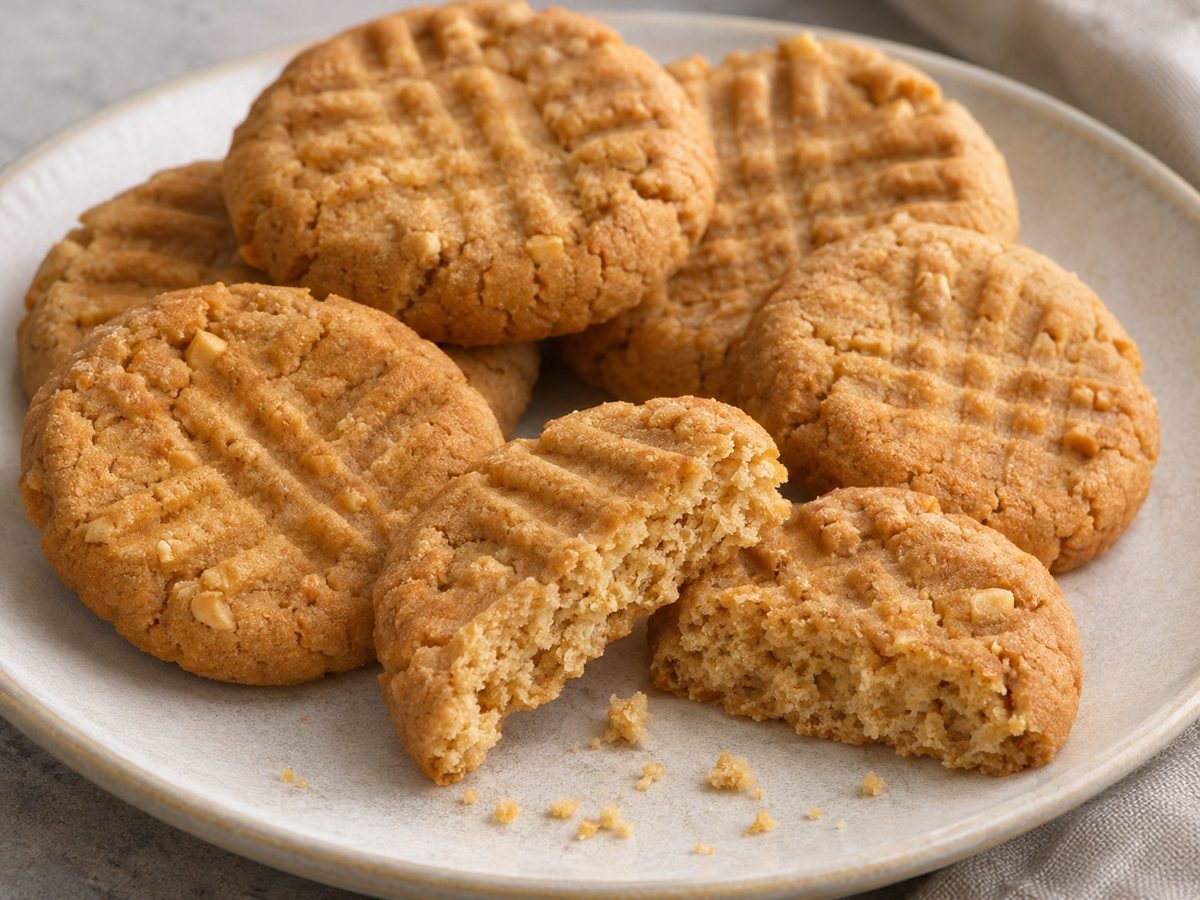
Plain peanut paste gives these biscuits a clear flavor and crumbly texture. Lightly mark the small discs with a fork before baking. They emerge fragile, then firm as they cool. Tops should be golden rather than dark brown because peanut paste and sugar color quickly.
Ingredients
- 120 g pure unsweetened peanut paste
- 70 g softened unsalted butter
- 80 g fine brown sugar
- 1 medium egg
- 150 g wheat flour
- 3 g baking powder
- 1 small pinch of salt, omitted if peanut paste is already salted
Preparation
Mix softened butter and sugar with a spoon until even. Butter should be soft, not melted. Stir peanut-paste jar thoroughly before weighing 120 g.
Mix in peanut paste, then egg until evenly distributed. In another bowl combine flour, baking powder and optional salt.
Add dry ingredients to the first mixture. Work only until no dry flour remains. Cover and refrigerate 30 minutes for easier shaping.
Preheat oven to 170 °C. Line tray with baking paper. Divide dough into about 20 comparable portions and briefly roll into balls.
Space out on tray, then lightly flatten with a fork into discs about 1 cm thick. Make two crossed marks without completely crushing dough.
Bake about 12–15 minutes. Edges should be golden and center set but still slightly soft. Rest 5 minutes on tray before carefully moving to a rack.
Cool completely before boxing. Open a cooled biscuit to check cooked, crumbly texture without wet dough. Serve small quantities.
Introduction
Plain peanut paste gives these biscuits a clear flavor and crumbly texture. Lightly mark the small discs with a fork before baking. They emerge fragile, then firm as they cool. Tops should be golden rather than dark brown because peanut paste and sugar color quickly.
This contemporary variation extends peanut uses in the Senegalese collection. It differs from sauces, sombi guerté and bouye shortbread through its flavoring ingredient and dough. It claims no exclusively national origin for peanut biscuits. The simple basic formulation contains no chocolate, icing or added nut pieces.
Cultural context
At a glance Makes about 20 small biscuits. Preparation 20 minutes. Chilling 30 minutes. Baking about 12–15 minutes at 170 °C in a conventional oven, in one or two batches according to tray size. Cooling at least 20 minutes. Equipment: scales, bowl, spoon, fork and tray. Allergens: peanuts, wheat, milk and egg. Use pure unsweetened food-grade peanut paste with its oil stirred in before weighing.
Choosing peanut paste Available pastes differ in composition. Some already contain sugar, salt, other fats or pieces. This recipe uses pure smooth paste. Read the label before measuring. If oil has separated on top, stir the whole jar with a clean spoon before weighing; taking only the oily top unbalances dough.
Very thick dry paste at the bottom also gives different texture. Stirring reunites components without needless heating. Discard a rancid or spoiled jar. Biscuits must not conceal an ingredient whose flavor is no longer sound. Clearly declare peanuts as the main allergen even if biscuits look like plain shortbread.
Working butter and flour Softened butter mixes with sugar without forming a puddle. Melted butter would make wetter dough and biscuits more likely to spread. Let it soften, then mix with a spoon. No prolonged beating to a pale foam is necessary. The desired texture is short and crumbly, not an airy cake.
Add flour last. Stop once dry traces disappear. Prolonged kneading changes texture and can make firmer biscuits. Weigh the small amount of baking powder; do not automatically add a whole sachet. Three grams is sufficient as a starting point here. Salt is very restrained and depends on the peanut product.
Shaping after resting Cold makes dividing easier and limits immediate spreading. Dough should remain workable rather than an icy block difficult to portion. After a longer refrigerator stay, briefly soften before making balls. Work quickly to avoid warming excessively between hands. Equal weights give more even baking.
Flatten with a fork without pressing through to paper. Crossed marks distinguish the surface and reduce center thickness. Very thick discs can stay underbaked while edges brown. Very thin ones dry quickly and become brittle. Keep about one centimeter and check the first batch before baking another.
Reading doneness Hot biscuits are softer than cooled ones. Waiting for complete firmness in the oven risks drying them. Watch golden edges and a set center, then leave five minutes on the tray to make moving easier. Support underneath with a thin spatula; immediately picking up by hand can break them.
A cooled-biscuit test helps with ovens that color rapidly. The crumb should be cooked without wet dough but remain crumbly. If underneath is too dark, put the tray slightly higher or reduce heat a little for the next batch. Do not automatically extend baking because a biscuit is still soft on removal.
Serving and storage Serve plain with a drink chosen for the meal. No accompaniment is included. Label a shared box as containing peanuts, wheat, milk and egg. Use clean utensils and do not present these as equivalent to an allergen-free version.
Once completely cool, store in a clean dry box away from heat and moisture, aiming to eat within 5–7 days. Do not close over hot biscuits, which would cause condensation. Discard abnormal-smelling or spoiled products. Raw dough contains egg and flour and must not be tasted.
Sources Collection reference for peanuts: https://www.recettesafricaines.com/recettes/12068 An original contemporary biscuit formulation without exclusive traditional attribution.