Guava compote
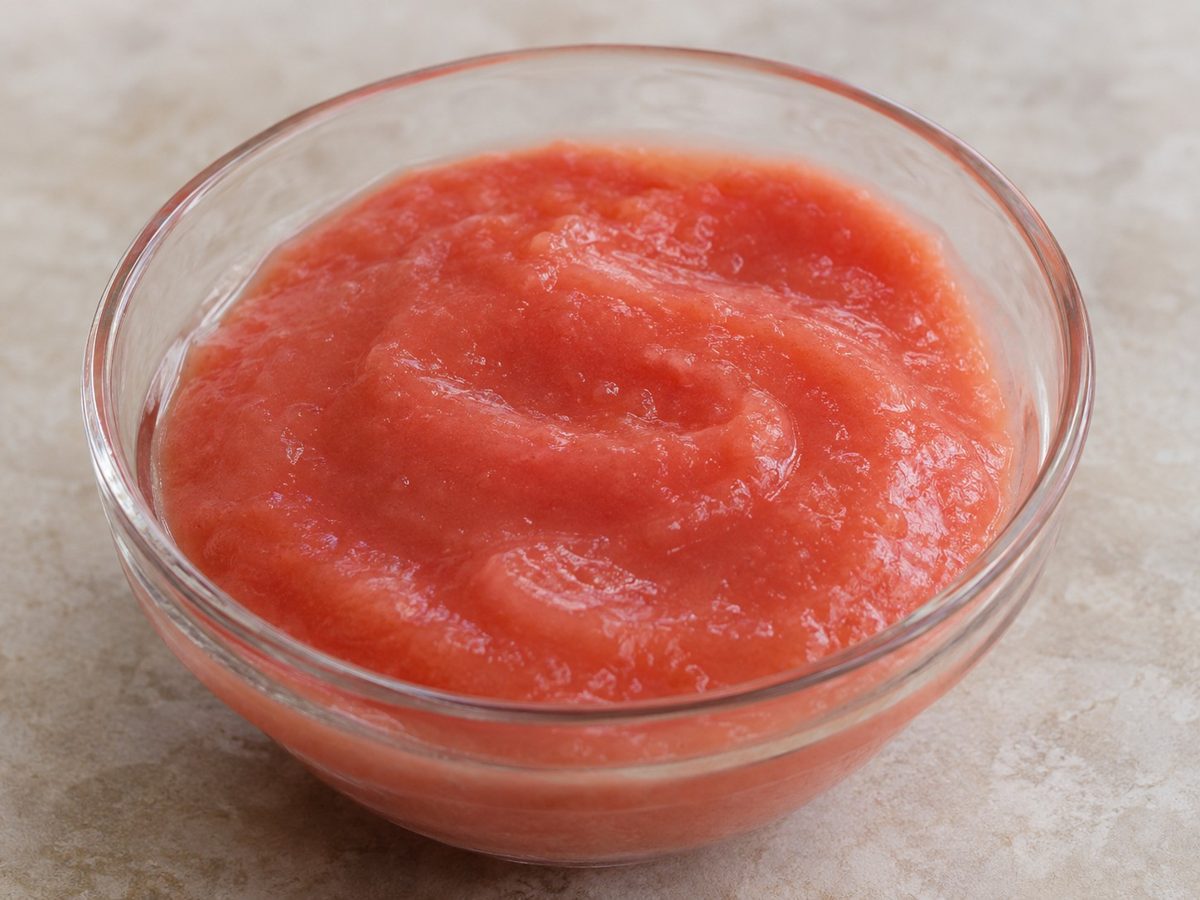
Ripe guava cooks gently with a little water, then its pulp is strained to remove hard seeds. The result is thick but soft on the spoon, pink or cream according to variety. Adjust sugar after straining, when the pulp's actual flavor is easier to judge. This is compote, not jam, and is not intended for room-temperature jar storage.
Ingredients
- 900 g sound ripe guavas, pink-fleshed for the illustrated version
- 180 ml drinking water initially
- 40 g fine sugar initially
- Up to 20 g extra sugar, optional after tasting
- 10 ml lime juice, optional
- A little extra hot water if cooking requires it
Preparation
Wash fruit under drinking water and dry. Remove hard ends and damaged parts. Cut into pieces without trying to extract every seed raw.
Put in saucepan with 180 ml water. Partly cover and heat gently. Cook about 20–25 minutes, stirring occasionally, until flesh is soft enough to mash.
If the base dries before pieces soften, add a little hot water. Do not let sugar caramelize: it is not needed for this first cooking yet.
Pass the hot but safely handled preparation through the mill or sieve. Press with a spoon to recover flesh and retain seeds. Do not blend seeds in a blender beforehand.
Return strained pulp to saucepan. Add 40 g sugar and cook gently 5–10 minutes to compote consistency. Stir to prevent sticking.
Cool a small spoonful to taste. Add some reserved sugar and lime if desired. Distribute over low heat, then remove. Keep soft rather than seeking a jam set.
Transfer to clean shallow containers, cool quickly and refrigerate. Serve chilled in small dishes, alone or with an accompaniment declared separately.
Introduction
Ripe guava cooks gently with a little water, then its pulp is strained to remove hard seeds. The result is thick but soft on the spoon, pink or cream according to variety. Adjust sugar after straining, when the pulp's actual flavor is easier to judge. This is compote, not jam, and is not intended for room-temperature jar storage.
This contemporary preparation extends the guava use already present in drinks in the Senegalese collection. It receives no invented traditional name. The fruit is cooked in many countries and naturally varies in color. The illustrated version uses pink-fleshed guava. The method is the same with pale flesh, but the dessert will not thereby become pink.
Cultural context
At a glance Makes 6 small portions, depending on yield after seed removal. Preparation 25 minutes. Cooking about 25–35 minutes. Cool quickly, then refrigerate. Equipment: saucepan, knife, fine-grid food mill or sturdy sieve and spoon. No major allergen is deliberately added; check products used. The 900 g refers to whole fruit before trimming ends and discarded parts.
Choosing and preparing fruit Ripe guava should be fragrant and soft enough to cook without staying hard. Skin may be green or yellowish according to variety, so color alone cannot determine ripeness. Discard spoiled fruit with mold or abnormal odor. Cooking cannot make damaged fruit acceptable raw material.
Thin skin on sound guava can cook and pass through the mill. Remove very thick or tough skin beforehand, accepting lower yield. Nine hundred grams whole does not guarantee identical strained pulp weight: seeds, skin and trimming vary. For precise portions, weigh finished cooled compote before dividing.
Removing seeds without crushing Guava's numerous small seeds are hard. Grinding before straining may disperse difficult fragments and create unpleasant grittiness. Cooking instead softens surrounding pulp. A fine-grid food mill or sturdy sieve then separates flesh. Work in small quantities to avoid overloading the tool.
Press with a spoon and scrape the sieve underside to recover pulp. Do not force until seeds crush. If too thick to pass, add a small spoonful of extra hot water. Heavy dilution would require unnecessarily long reduction afterward. Keep fruit and remove hard material rather than aiming for clear juice.
Adjusting sweetness and consistency Measure sugar after initial cooking and straining to taste uniform pulp. Different ripeness needs different adjustment. Start with forty grams and cool a small amount before deciding on more. Lime is optional because some guavas already have pleasant acidity.
Compote stays soft. It can sit on a spoon without jelly firmness and thickens slightly more when cold. If too runny, reduce gently uncovered while stirring; if too compact, add a little hot water. Do not try to compensate for excessive thickness with lots of sugar. Each correction should address the observed problem.
Preparing and serving Make before the meal to allow cooling time. Small containers cool faster than a deep full saucepan. Do not leave for hours on the table before refrigerating. Once cold, stir gently to restore even texture and divide into dishes.
Plain yogurt can accompany guava, but adds milk and must be declared separately. A spoonful can also top pancakes or a grain dessert. These uses change the served portion, not the shared preparation's storage life. Use a clean spoon for every serving and never return leftovers from an eaten portion to the container.
Storage Keep at no more than 4 °C and eat within 48 hours after rapid cooling. This low-sugar formulation is not a jar-preserving process. Closing a hot jar does not make it cupboard-safe. To freeze small portions, do so soon after cooling in a suitable container, thaw in the refrigerator and consume without refreezing.
Sources Collection reference for guava: https://www.recettesafricaines.com/recettes/12090 An original contemporary strained compote formulation, distinct from preserving jam.