Fonio pancakes
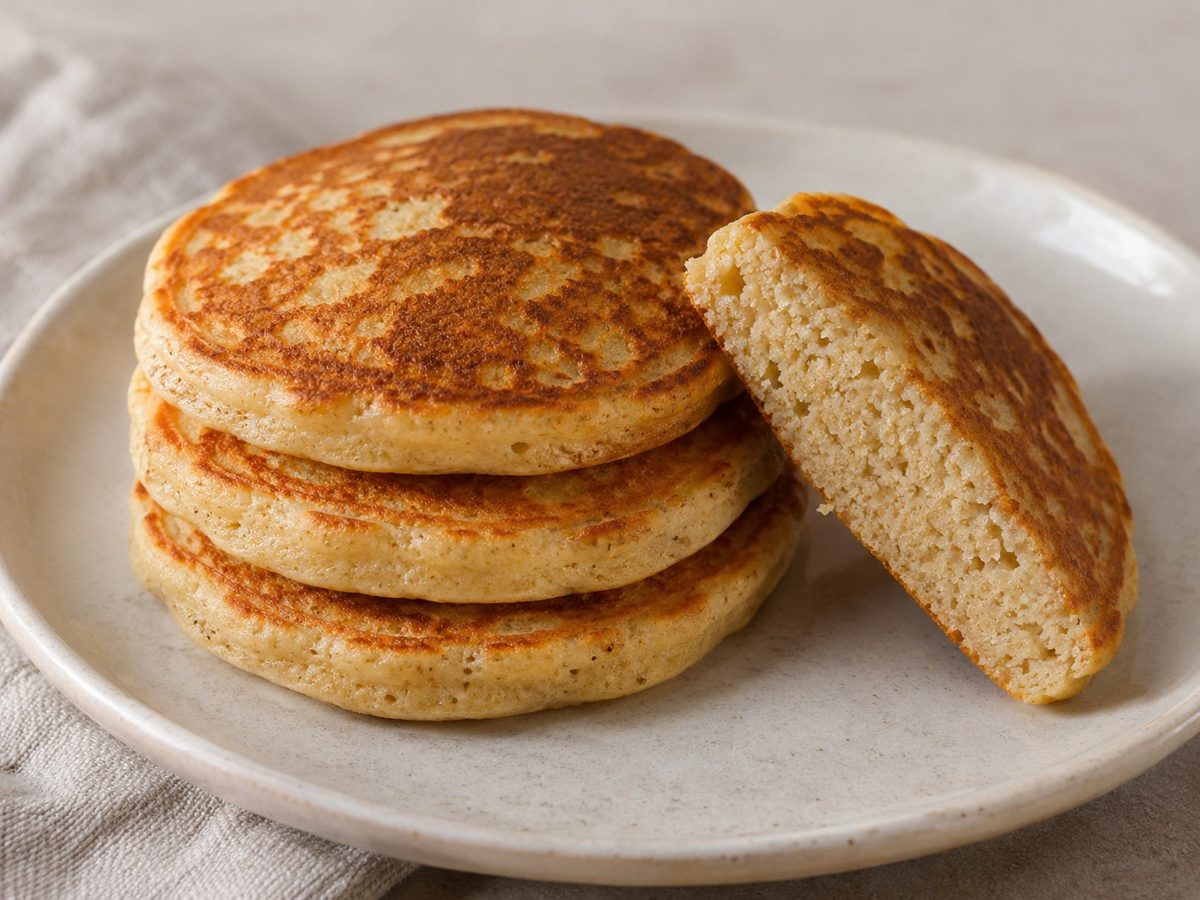
Fonio flour gives these small thick pancakes a fine crumb and subtle cereal aroma. Eggs and milk form the liquid base; baking powder adds a little lift. The batter is thicker than crêpe batter and is dropped in small discs onto a moderately heated pan. In the reference presentation, the pancakes are served plain.
Ingredients
- 180 g fine fonio flour
- 20 g cornstarch
- 6 g baking powder
- 20 g fine sugar
- 2 medium eggs
- 230 ml pasteurized milk initially
- Up to 30 ml extra milk if batter remains too thick after resting
- 20 ml neutral oil in the batter
- About 10 ml neutral oil to grease the pan
- 1 small pinch of salt
Preparation
In the first bowl mix fonio flour, starch, baking powder, sugar and salt. Break up small dry clumps with the whisk.
In the second bowl beat eggs with 230 ml milk and 20 ml oil. Gradually pour into dry ingredients, stirring until no flour traces remain.
Rest for 15 minutes. Batter should be thick but fall from the ladle in a broad ribbon. If a solid mass, add reserved milk gradually, no more than 30 ml.
Heat pan over medium heat and coat with a thin oil film. Drop a small batter portion into an 8–9 cm disc. Cook about 2–3 minutes until edges set and small surface bubbles appear.
Turn with a wide spatula and cook another 1–2 minutes. After brief cooling, open the first pancake: crumb must be cooked without wet batter at the center.
Adjust heat if the surface browns before the center cooks. Cook the rest in small batches, lightly greasing as needed. Keep similar disc sizes and thicknesses.
Serve hot or warm. Stack only a few at a time to limit condensation. Optional accompaniments are served separately and are outside the quantities.
Introduction
Fonio flour gives these small thick pancakes a fine crumb and subtle cereal aroma. Eggs and milk form the liquid base; baking powder adds a little lift. The batter is thicker than crêpe batter and is dropped in small discs onto a moderately heated pan. In the reference presentation, the pancakes are served plain.
This contemporary adaptation offers a different use of fonio from the whole grain already in the manuscript. Its flour and thickness distinguish it from millet crêpes. It does not claim pancakes have an exclusively Senegalese origin. The important distinction is the product: fine fonio flour is not precooked fonio grain, although both carry the same cereal's name.
Cultural context
At a glance Makes about 12 small pancakes, or 4 breakfast or snack portions. Preparation 15 minutes. Rest 15 minutes. Cooking about 20 minutes in batches. Equipment: scales, two bowls, whisk, ladle and suitable frying pan. Allergens: eggs and milk. Check baking powder composition and possible wheat traces in ingredients when relevant to the meal.
Choosing flour Use a fine grind for even batter. A granulated couscous product hydrates differently and would leave hard grains during brief cooking. Check the product name on the packet. Color can range from cream to beige without alone indicating quality. Discard rancid flour or flour exposed to abnormal moisture.
Fonio flour does not provide the same dough properties as wheat. Eggs and a little starch therefore help it hold together. Replacing either requires a new formulation. Absence of wheat from the list alone cannot guarantee suitability for every dietary constraint: ingredients and preparation conditions must also be checked.
Observing after resting Batter thickens as it hydrates. Wait the fifteen minutes before using adjustment milk. Batter very thin from the start spreads into a thin flat cake, without the intended crumb. Too-firm batter retains a central mound that cooks slowly. A broad, slow ribbon forms a disc without hard pressing with the ladle.
The eggs specified are medium. Very large eggs add more liquid, while small eggs can leave denser batter. Adjust gradually after resting rather than adding all the milk at once. Briefly stir before each batch if the bowl bottom seems thicker; do not whisk at length to make foam.
Cooking over moderate heat The first pancake is a guide. Color indicates pan heat, but inspect the center too. Bubbles and firm edges help turning. A large spatula supports the whole disc without folding it. If the surface is already very dark while batter remains liquid, lower heat before continuing.
Do not fill even a large pan until discs touch. Leave turning room without crushing them. Oil remains a thin film, not a frying bath. If it smokes, briefly remove the pan from heat and resume lower. Pancakes must cook slowly enough for eggs and flour to set in the center.
Serving and variations The basic version contains little sugar and is served plain. Fresh fruit, dairy or a little jam can be offered alongside, with ingredients and allergens declared. Do not automatically cover every pancake in syrup beforehand: it masks texture and soaks them during waiting. Everyone can choose an accompaniment.
For shared snacks make smaller discs while retaining moderate thickness. They cook faster and need a new check. Two pans help with larger groups if their heat is monitored separately. Long waiting in a hot oven dries the first pancakes; successive batches preserve the result better.
Storage Cool cooked pancakes quickly on a rack, then refrigerate within two hours. Keep at no more than 4 °C and eat within 24 hours. Reheat thoroughly in a low oven or briefly covered in a pan. Keep raw batter chilled and cook the same day; it contains raw eggs and must not be tasted. Baking powder also loses some effect during a long wait.
Sources Findi, examples of contemporary fonio uses: https://caa.sn/findi/ An original fonio-flour formulation, distinct from this source's whole-grain recipes.