Cassava croquettes
Fully cooked cassava is mashed, seasoned and shaped into small croquettes. A thin breadcrumb coating makes a golden shell around an ivory, soft center. Frying cooks the binder and colors the surface; it never replaces cassava's initial preparation. Parsley stays subtle and no cheese or meat filling is added.
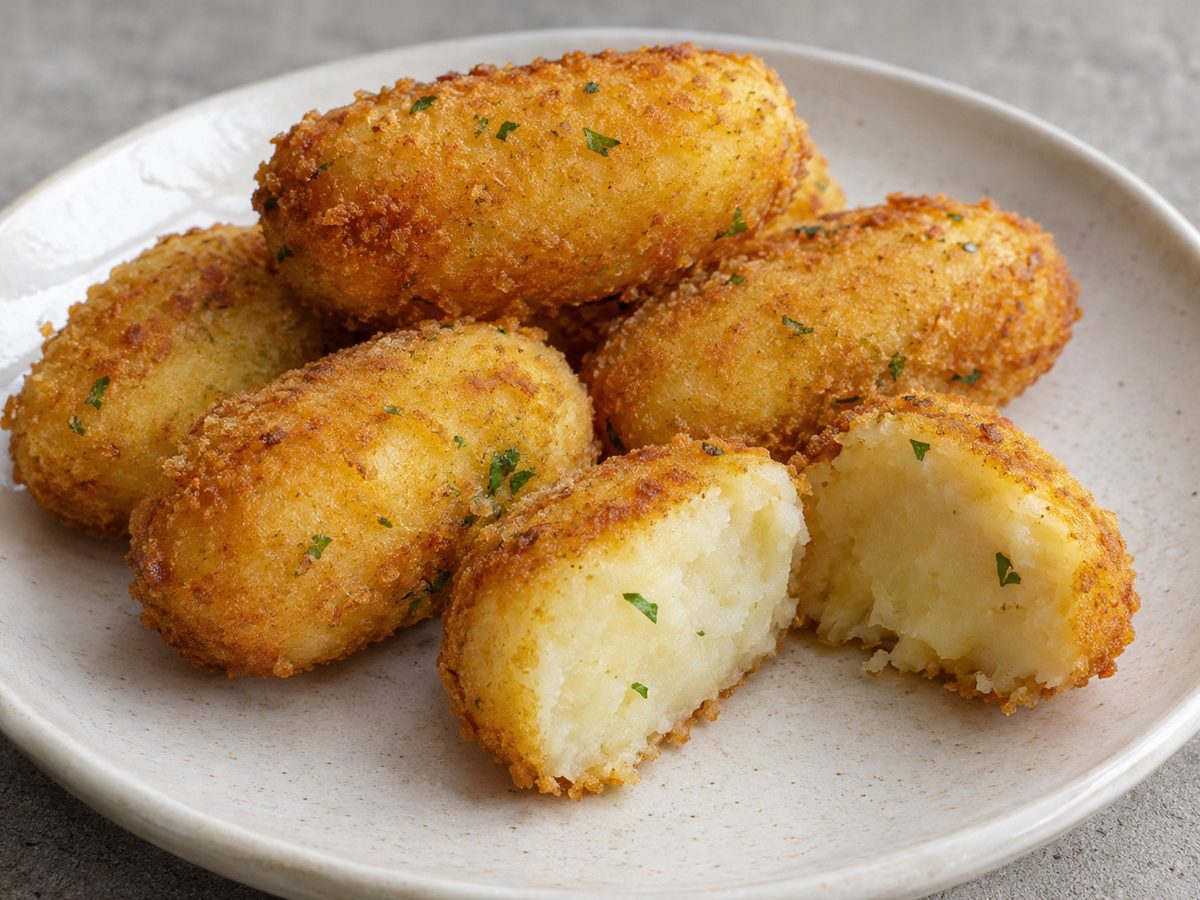
Ingredients
- 600 g food-grade sweet cassava fully cooked plain according to supplier, net drained weight
- 1 medium egg for the mixture
- 20 g cornstarch
- 10 g parsley, washed, dried and finely chopped
- 2 g salt initially, optional pepper
- 40 g wheat flour for coating
- 1 medium egg, beaten, for coating
- 100 g fine breadcrumbs
- About 1 liter suitable frying oil, according to vessel and safe fill level
Preparation
Check cassava is fully cooked according to the chosen product's instructions. Remove tough central fibers and any pieces that are not tender. Drain thoroughly and mash while still warm until even.
Cool mash until warm before adding mixture egg, starch, parsley, salt and pepper. Mix. It should be thick and shapeable without free liquid. Refrigerate 30 minutes.
Divide flour, beaten egg and crumbs among three separate plates. Shape about 16 small, evenly sized oval pieces no more than about 2.5 cm thick.
Dip each in flour, remove excess, then egg and crumbs. Place on a clean plate without stacking. Do not reuse coating leftovers that touched raw egg for another dish.
Heat oil to 170 °C in a saucepan no more than half full. First fry one croquette about 3–4 minutes, turning. Surface should be golden and center fully hot with set binder.
Open the test after brief cooling. If crust browns too fast, lower heat slightly and make following pieces thinner. Cook the rest in small batches, letting oil regain temperature.
Drain on a rack or absorbent paper. Serve hot without burning diners with a still-very-hot center. Offer any sauce separately with its ingredients declared.
Introduction
Fully cooked cassava is mashed, seasoned and shaped into small croquettes. A thin breadcrumb coating makes a golden shell around an ivory, soft center. Frying cooks the binder and colors the surface; it never replaces cassava's initial preparation. Parsley stays subtle and no cheese or meat filling is added.
This contemporary creation offers a small sharing dish around an ingredient used in many African cuisines. It claims no exclusively Senegalese origin. The manuscript starts with food-grade sweet cassava fully prepared and cooked according to its supplier's instructions. It gives no home-processing method for bitter cassava or roots of unknown origin.
Cultural context
At a glance Makes about 16 small croquettes, or 4 portions to supplement. Preparation 30 minutes. Refrigerated rest 30 minutes. Frying about 15–20 minutes in batches, excluding initial cassava cooking. Equipment: potato masher, three plates, deep saucepan and frying thermometer. Allergens: egg and wheat. Oil is a cooking bath and is not all consumed. Yield depends on each piece's actual weight.
Starting with the right cassava Cassava preparation depends on the product and prior processing. An unidentified fresh root cannot simply replace the same weight of ready-to-use mash. This recipe begins after appropriate cooking of identified food-grade sweet cassava. If buying a frozen product to cook, follow its full instructions before taking the six hundred drained grams. Never taste raw cassava to judge its quality.
Final croquette frying is too short to provide the entire treatment of an unprocessed root. Identified industrial or traditional preparations have their own methods. This limitation is part of the recipe, just like weighing after cooking. A product already containing salt, oil or another binder would also change the mixture. Choose a plain base and check its composition.
Making an even mixture Warm cassava mashes more easily than a cold compact mass. Remove tough fibers before mashing. Texture should be even without becoming liquid. A masher lets you see what remains to remove; a very powerful blender can make it sticky and harder to shape. Above all, do not add water to make blending easier.
Incorporate egg once mash is no longer piping hot. Starch helps hold it together but must not compensate for a waterlogged base. Thorough draining and refrigerated rest matter. If still impossible to shape, first check moisture and cooling. Lots of randomly added flour would create dense croquettes and change the formulation.
Coating without overloading The first flour layer should be thin. It helps egg adhere, but flour clumps leave a pasty layer beneath crumbs. Gently shake each piece before dipping into egg. Breadcrumbs then cover the entire surface without a very thick shell. Keeping one hand for dry ingredients and the other for egg makes work easier and limits sticky clumps on fingers.
Even thickness heats more uniformly. A large ball can develop dark crust while the center is still lukewarm. A fairly thin oval gives a good coating-to-mash ratio. Do not stack before cooking: wet surfaces may stick and tear when separated. Prepare the draining station before heating oil.
Controlling frying A thermometer avoids relying only on oil color. Small batches let temperature recover between rounds. Do not put croquettes covered in frost or water into the oil. Lower carefully away from you without dropping from a height. Remove crumbs browning at the bottom so they do not stick to later batches.
The test croquette checks both center and structure. Because the mixture contains egg, it must cook completely. The center can stay soft without being wet like raw batter. A long wait under a lid softens coating; serve successive small batches rather than holding everything hot and covered.
Storage Keep cooked croquettes refrigerated at no more than 4 °C after quick cooling and chilling within two hours. Eat within 24 hours and thoroughly reheat in the oven. Coating will differ from fresh frying. Prepare mixture the same day, keep refrigerated and do not taste raw. Discard contaminated egg and breadcrumb leftovers used during shaping.
Sources FAO, cassava preparation precautions: https://www.fao.org/4/x5425f/x5425f05.htm and https://www.fao.org/4/t0207f/T0207F0c.htm An original contemporary formulation using edible cassava already correctly prepared and cooked; no processing of bitter cassava is proposed.