Tamarind shrimp
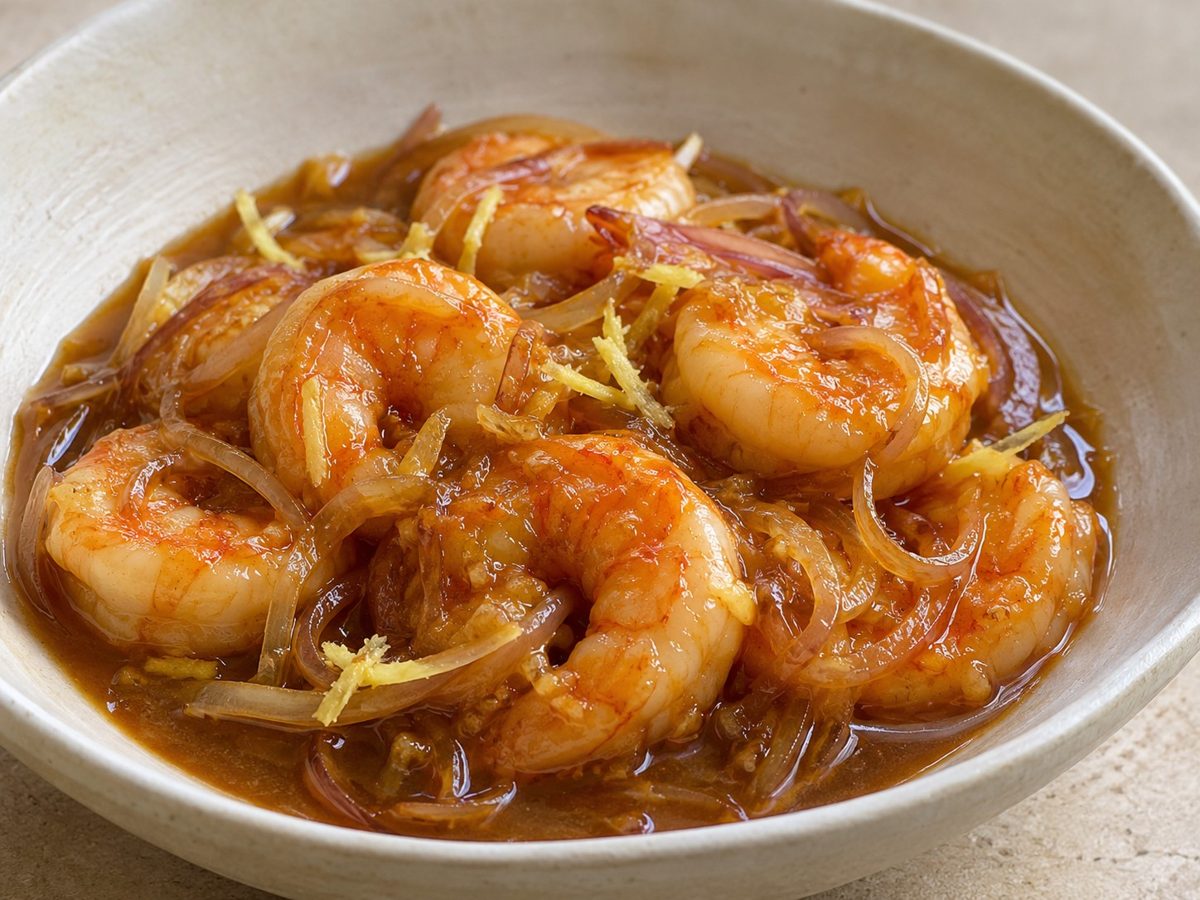
The shrimp are seared separately, then combined with a small amount of tamarind and onion sauce. The fruit supplies acidity; a little sugar rounds it out without creating a thick glaze. The flesh remains opaque, supple and recognizable. Ginger complements the sauce, while the absence of tomato leaves an amber-to-brown color, unlike the collection's red sauces.
Ingredients
- 700 g large raw shrimp, shelled and deveined, net weight
- 35 g plain food-grade tamarind pulp
- 200 ml very hot water for extraction
- Hot water to top strained extract up to 150 ml
- 200 g very finely sliced onion
- 1 garlic clove, chopped
- 8 g fresh ginger, peeled and finely grated
- 25 ml neutral oil, including 10 ml for sauce
- 10 g brown sugar, plus up to 5 g extra if desired
- Salt after tasting, pepper and optional chili
- Up to 50 ml extra hot water
Preparation
Soften tamarind pulp in 200 ml very hot water for 15 minutes. Loosen with a spoon, then press through the sieve. Discard fibers and seeds. Measure 150 ml extract, topping up with water if needed.
Heat 10 ml oil in the saucepan. Fry onion over medium heat for 7 minutes. Add garlic and ginger for 1 minute, then tamarind extract, sugar and pepper.
Simmer about 8–10 minutes until onion is tender and sauce supple. Add a spoonful of extra water if reducing too quickly. Taste and adjust salt very lightly. Keep warm without reducing further.
Check shrimp, remove shell remnants and pat dry. Heat remaining 15 ml oil in the frying pan. Cook in one layer, in two batches if necessary, about 2–3 minutes per side according to size.
Open a large piece: flesh must be opaque at the center, firm but not hard. Transfer ready shrimp to a clean plate while the rest finish cooking.
Pour hot sauce into the pan and return all shrimp. Gently coat for 1 minute. Add a little reserved sugar only if desired and after restoring a sufficiently fluid sauce.
Serve immediately on four plates with comparable quantities of shrimp and sauce. Offer chili separately. Prepare accompanying rice, fonio or vegetables apart.
Introduction
The shrimp are seared separately, then combined with a small amount of tamarind and onion sauce. The fruit supplies acidity; a little sugar rounds it out without creating a thick glaze. The flesh remains opaque, supple and recognizable. Ginger complements the sauce, while the absence of tomato leaves an amber-to-brown color, unlike the collection's red sauces.
This contemporary variation uses tamarind in a quick shellfish preparation. It is not cooked like tamarind chicken: the sauce must be ready before the shrimp arrive because they cannot withstand the same simmering. The difference in method is therefore explicit, beyond changing the main ingredient. No local name, ritual or specific terroir is attributed to this home creation.
Cultural context
At a glance Makes 4 portions with a separate accompaniment. Preparation 25 minutes, including fruit extraction. Cooking about 25 minutes. Equipment: bowl, fine sieve, small saucepan and large frying pan. Allergen: crustaceans. Weigh shrimp raw after shelling. Use plain tamarind pulp to strain, not a strong concentrate or ready-made sweet sauce.
Measuring tamarind Block pulp contains fruit matter, fibers and sometimes seeds. The stated thirty-five grams cannot be transferred directly to a smooth concentrate, which may be much stronger and contain sugar or salt. Identify the chosen product before starting. Measuring strained extract stabilizes the amount of liquid without guaranteeing absolutely identical acidity for every fruit.
Solom, or velvet tamarind, does not replace tamarind here. It is another fruit, already used differently in the collection. This sauce is built around ordinary tamarind. If using pods, remove the shell before weighing the pulp, then strain after extraction. Do not blend seeds to incorporate them: discard them with the fibers.
Prepare sauce before shellfish Onion must be tender before shrimp enter the sauce. Very fine slicing speeds cooking and distributes it without long crunchy strips. A saucepan allows independent adjustment of the sauce. If not yet cooked enough, continue with a little water; shrimp can stay refrigerated until the base is ready.
Add sugar moderately. An over-reduced sauce often seems stronger than it will after a little water. Adjust consistency first before deciding to sweeten further. The juices should surround shrimp without becoming sticky paste. A burnt base leaves bitterness that is difficult to correct and must not be scraped into the finished dish.
Cook according to the actual product The step timings concern raw shrimp. Already-cooked pink shrimp would need only gentle reheating in sauce; searing for the same time would toughen them. Check the product's state when buying. For frozen shrimp, follow the stated thawing method, then drain and dry. A water-filled pan cooks less evenly and dilutes sauce when components are combined.
Flesh must be opaque to the center. Outside color alone can mislead with naturally colored species. Check a large piece and remove smaller ones as soon as ready. A sufficiently wide pan lets you turn without piling. To double the recipe, plan several batches and keep sauce separate until everything is finished.
Serving and storage Serve a moderate amount of sauce over a plain grain or beside chosen vegetables. Tamarind already supplies acidity, so do not automatically add a lemon wedge. Prepare the serving dish before the final minute so shrimp do not keep cooking in the hot pan during a long wait. Chili remains an individual option.
Cool leftovers quickly in small portions and refrigerate within two hours, sooner in hot weather. Keep at no more than 4 °C and eat within 24 hours. Thoroughly reheat the portion needed with a little water if sauce has thickened. Texture will be firmer after reheating; preparing the closest possible quantity gives the best result.
Sources Collection references: tamarind, https://www.recettesafricaines.com/recettes/12044 ; shrimp, https://www.recettesafricaines.com/recettes/12062 An original contemporary formulation with sauce and shellfish cooked separately.