Stuffed squid
Small whole squid receive a filling of cooked rice, chopped tentacles, onion and parsley, then simmer gently in tomato sauce. Keep the filling soft and do not fill the mantle to the brim. Grains and small squid pieces remain noticeable when sliced, without added cheese or meat.
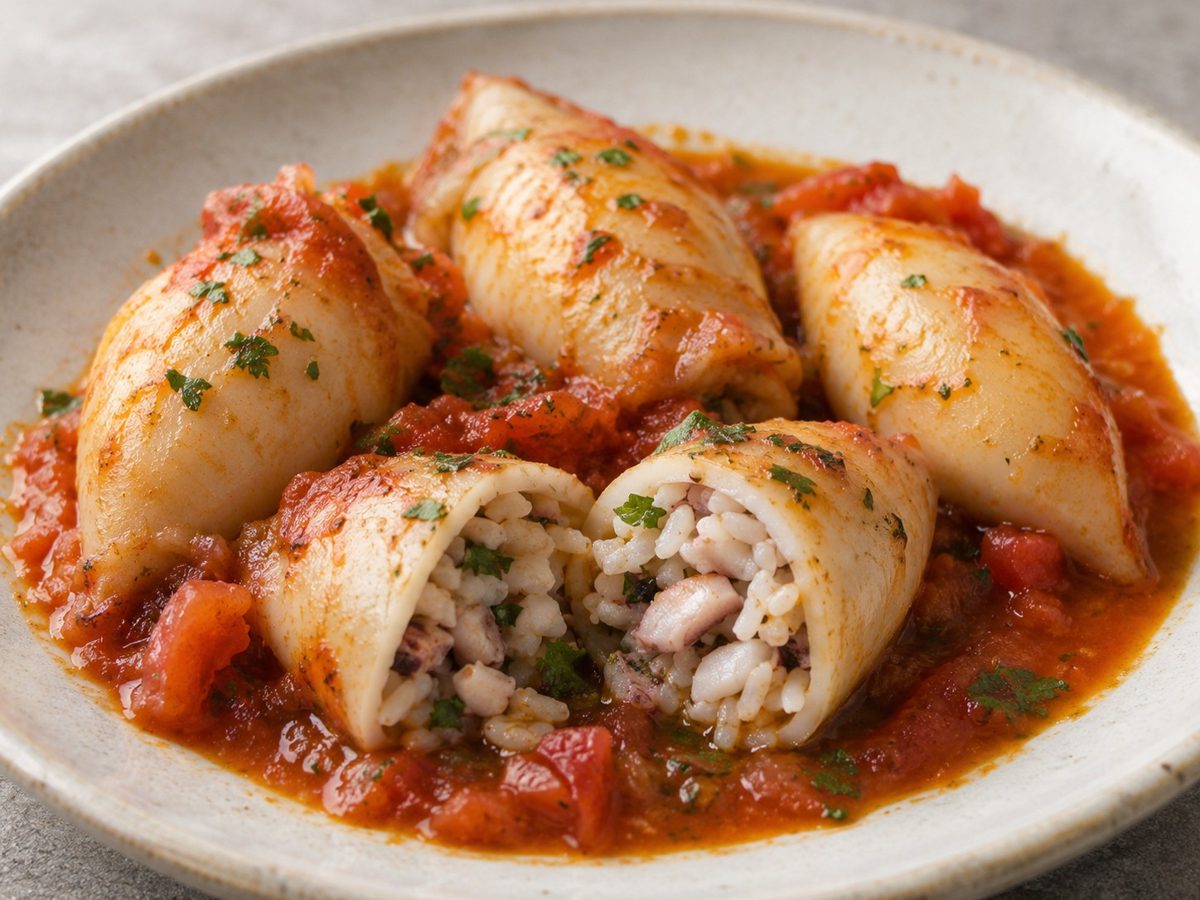
Ingredients
- 800 g small cleaned squid, mantles and tentacles, net weight
- 180 g plain fully cooked white rice
- 150 g onion for filling, finely chopped
- 150 g onion for sauce, sliced
- 400 g chopped tomatoes
- 20 g tomato paste
- 2 garlic cloves, chopped
- 30 ml neutral oil divided between filling and sauce
- 200 ml water for sauce
- 15 g chopped parsley
- 10 ml lemon juice
- 3 g salt to divide, pepper and optional chili
Preparation
Inspect mantles and remove any remaining transparent quill and debris. Separate tentacles and chop finely. Pat mantles dry and refrigerate.
Heat 10 ml oil in the small pan. Fry 150 g chopped onion for 6 minutes. Add half the garlic, then tentacles and cook another 4–5 minutes until opaque. Cool until warm, then mix with rice and parsley.
Heat remaining 20 ml oil in the sauté pan. Cook the other onion 7 minutes, add remaining garlic and paste, stir 2 minutes. Add tomatoes, 200 ml water, some salt and pepper. Simmer for 10 minutes.
Taste the filling, whose components are already cooked, and season with remaining salt as needed. Fill mantles about two-thirds without packing. Close each with a pick. Refrigerate any excess filling.
Place squid in hot sauce. Partly cover and simmer gently about 25–35 minutes, turning once carefully. Flesh should be tender and filling very hot at the center.
Check one piece. If mantle is firm, continue in short intervals with a little hot water. Remove ready squid if sauce still needs reducing for a few minutes.
Add lemon gradually off heat. Remove and count every pick before serving. Share squid and sauce; mention a possible closure device if any piece has not yet been checked.
Introduction
Small whole squid receive a filling of cooked rice, chopped tentacles, onion and parsley, then simmer gently in tomato sauce. Keep the filling soft and do not fill the mantle to the brim. Grains and small squid pieces remain noticeable when sliced, without added cheese or meat.
This contemporary adaptation belongs among the manuscript's seafood dishes. Shaping, stuffing and moist cooking distinguish it from squid sautéed with nokoss. It claims no exclusive Senegalese origin: stuffed squid is cooked in several world regions. This is a precise home combination placed alongside other coastal preparations without inventing a local tradition.
Cultural context
At a glance Makes 4 portions using about 8 small squid. Preparation 40 minutes if cleaned by the fishmonger. Cooking about 45 minutes, excluding precooking rice. Equipment: covered sauté pan, small frying pan, spoon and wooden picks to remove when serving. Allergen: mollusks. Rice must be fully cooked and quickly cooled if prepared ahead. Never put dry rice in the filling.
Preparing small squid Net weight includes usable mantles and tentacles. Uncleaned whole animals produce more waste and require different preparation time. Confirm condition when buying. Follow thawing instructions for frozen products and dry thoroughly. Surface water dilutes sauce and makes filling more slippery.
Choose similarly sized mantles. Very small ones are hard to fill without tearing; large ones alter cooking time and portions. A teaspoon deposits filling in small amounts. Do not push with a pointed handle that might pierce flesh. Cook a torn mantle separately in the sauce rather than forcing it closed.
A fully prepared filling Rice enters already cooked. It should not absorb juice like raw rice: available space would not allow uncontrolled swelling. Cook tentacles before assembly too, allowing tasting and seasoning. Finely chop onion so it distributes without large resistant points beneath the spoon.
Filling two-thirds full leaves room as the mantle contracts. Packing to the rim may force filling out or split the squid. Do not indiscriminately add leftover stuffing to every mantle. Reheat surplus thoroughly in a separate small container and serve alongside if desired. Aim for a tender envelope and visible filling, not a compact cylinder.
Managing simmering Sauce is hot and partly cooked before receiving squid. Keep a quiet simmer and turn with two spoons without piercing mantles. Vigorous boiling damages them and evaporates liquid too quickly. Check the bottom regularly. If sauce reduces before tenderness, top up with a little hot water and continue gently.
Time varies with thickness and product. Judge tenderness by cutting a piece, not merely the white surface color. The filling's center must also be thoroughly hot. Prepare accompaniments while simmering and avoid leaving finished pieces in boiling sauce. Remove them briefly while adjusting juices if necessary.
Serving and storage Wooden picks are cooking tools and must be removed. Count before and after removal to ensure none are forgotten. Opening a squid shows filling and facilitates smaller portions. Sauce stays scant enough to coat; another helping of rice in every plate is unnecessary.
Cool leftovers quickly, refrigerate within two hours and keep at no more than 4 °C. Eat within 24 hours, accounting for the age of cooked rice and seafood. Reheat thoroughly to the filling's center. Do not use rice with unknown cooling or storage history.
Sources Collection reference for squid: https://www.recettesafricaines.com/recettes/12082 An original contemporary formulation. This reference documents the ingredient in the collection, not a traditional origin for the stuffing.