Octopus with onions
Already-cooked octopus heats through in soft pan-cooked onions with garlic, parsley and a little lemon. The pieces retain their suckers and shape; the sauce stays scant and pale gold. Tenderness comes primarily from precooking the octopus, not leaving it long in the pan. This recipe therefore specifies plain, fully cooked octopus whose instructions allow reheating.
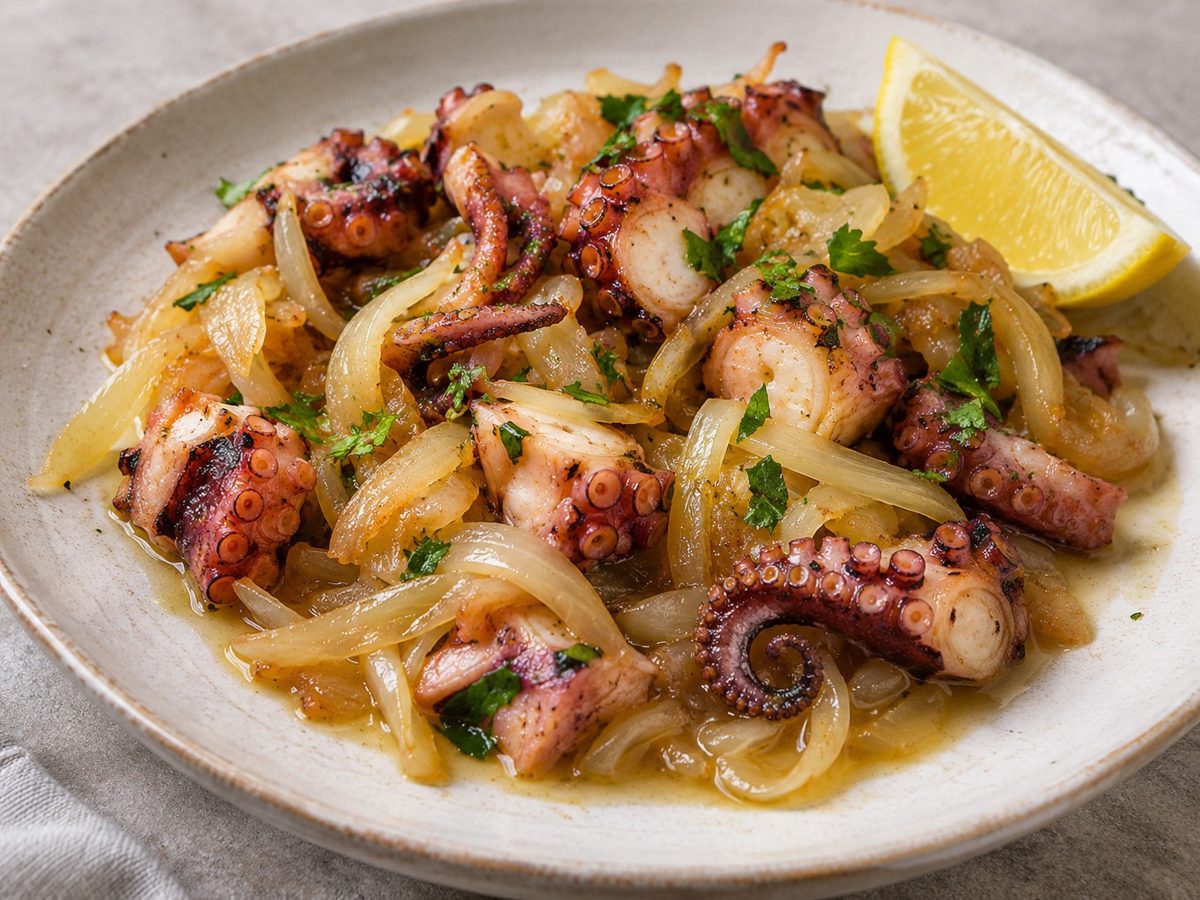
Ingredients
- 650 g plain fully cooked octopus, net drained weight
- 400 g sliced onions
- 2 garlic cloves, chopped
- 30 ml neutral oil
- 80 ml water, plus a little more if needed
- 15 ml lemon juice
- 15 g parsley, washed, dried and chopped
- Salt after tasting, pepper and optional chili
Preparation
Check the octopus label and after-opening shelf life. Drain, pat dry and cut tentacles into 3–4 cm pieces. Refrigerate while cooking onions.
Heat 20 ml oil in the pan. Fry onions over medium heat for 7 minutes without strong browning. Add 80 ml water, cover and cook about 10 minutes until tender.
Add garlic and cook for 1 minute. Uncover to evaporate free liquid. Reserve onions on a clean plate when soft and still slightly moist.
Add remaining 10 ml oil to the pan. Arrange octopus in one layer, in two batches if needed. Fry a few minutes, turning, until very hot at the center. Follow product reheating instructions too.
Return onions and combine gently for 1–2 minutes. If the base is dry, add a spoonful of water and loosen cooking juices without scraping any burnt areas.
Remove from heat and add parsley, then half the lemon. Taste a complete bite before salting: purchased octopus may be salty enough. Add reserved lemon as needed.
Share pieces between four portions, then add onions and juices. Serve immediately with chili separately.
Introduction
Already-cooked octopus heats through in soft pan-cooked onions with garlic, parsley and a little lemon. The pieces retain their suckers and shape; the sauce stays scant and pale gold. Tenderness comes primarily from precooking the octopus, not leaving it long in the pan. This recipe therefore specifies plain, fully cooked octopus whose instructions allow reheating.
Octopus appears in contemporary Senegalese cooking, notably in a different mixed salad on Aistou Cuisine. This onion version is an original home preparation without a particular regional attribution. It brings a texture different from fish and crustaceans to the manuscript's seafood chapter. It describes neither cleaning a whole octopus nor its initial cooking, which require their own timetable for the purchased product.
Cultural context
At a glance Makes 4 portions to supplement. Preparation 20 minutes. Cooking about 25 minutes. Equipment: wide sauté pan with lid, knife and spatula. Allergen: mollusks. Weigh octopus fully cooked and drained, without added sauce. A kilogram raw does not yield the same amount. Bread, rice or vegetables alongside are outside these quantities.
Choosing a suitable product Vacuum-packed cooked octopus may be plain or seasoned. This recipe uses plain. Oily marinade, paprika sauce or a very salty product would make another dish and alter quantities. Read ingredients and usage conditions before starting. “Precooked” does not always guarantee that simple reheating is enough; the instructions must clearly say so.
Texture also varies with the piece. Thick tentacles need even cutting and more time to heat at the center; small tips dry faster. Group similarly sized pieces and remove ready ones rather than waiting for identical browning across the pan. Some skin may loosen; this does not require rubbing or stripping every piece.
Softening onions Onion is a substantial accompaniment, not merely an aromatic start. Strips must be tender before octopus enters. Covered cooking with a little water softens them without much oil. Check a thick strip before uncovering. If still resistant, continue a few minutes with a spoonful of water rather than turning heat to maximum.
Once onions are ready, evaporate moderately. A slightly moist base coats pieces; abundant liquid makes the finish a water-based cooking stage. Conversely, dried onions stick and taste too strong. Color can remain pale gold. Sweetness comes mainly from complete cooking rather than very dark caramelization.
Reheating without toughening Octopus is already tender before entering the pan, so prolonged simmering with onions is not this method. Heat pieces in a sufficiently wide vessel, then briefly combine. Color on a few surfaces is enough. Still check the center: a hot surface can surround a large cold piece.
Do not apply these few-minute timings to raw octopus. It would need separate preparation and initial cooking followed by a tenderness check. Organize that change before the meal, not improvising when onions are ready. A precise recipe states the ingredient's condition because it changes the whole schedule.
Seasoning and serving Add lemon gradually after cooking. Adjust to existing salt and the amount of onion in each bite. Parsley adds fresh aroma, not a thick layer hiding pieces. Dry after washing to avoid adding cold water at the last moment. Pepper can be light; offer chili separately.
Present in a wide shallow dish. Serve octopus pieces before sharing onions, so early plates do not receive all the accompaniment and the last only tentacles. Plain rice or cooked vegetables can complete the meal. Extra sauce is unnecessary: onions and the small amount of juices already accompany the flesh.
Storage Prioritize purchased octopus instructions and after-opening shelf life. Cool leftovers quickly in small portions and refrigerate within two hours, sooner in hot weather. Keep at no more than 4 °C and eat within 24 hours, earlier if packaging requires. Thoroughly reheat only the needed portion. Avoid repeated cooling and reheating cycles, which also degrade texture.
Sources Aistou Cuisine, a contemporary example of octopus use: https://aistoucuisine.com/publications/salade-de-poulpe-pommes-de-terre-et-haricots-verts This onion preparation and proportions are original, separate from that salad.