Sweet potato cake
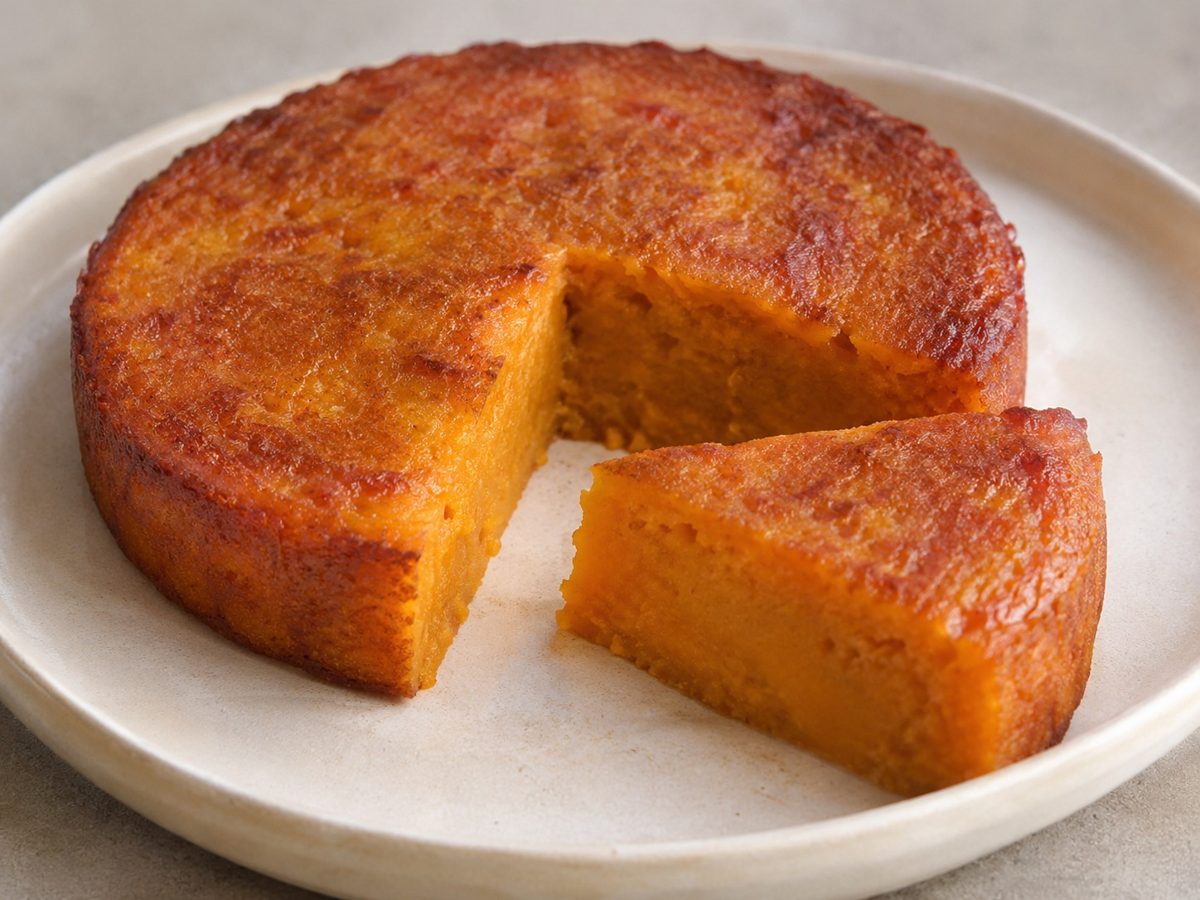
Cooked, mashed sweet potato forms the base of this low, meltingly soft cake. Eggs provide structure, a little flour stabilizes the slices and vanilla complements the tuber's sweetness. The top turns golden; the interior stays dense and moist, without large pieces. Serve small portions after cooling sufficiently for clean slicing.
Ingredients
- 600 g orange-fleshed sweet potato, peeled weight
- 3 medium eggs
- 80 g brown sugar
- 60 g melted unsalted butter, plus 5 g for the tin
- 50 g wheat flour
- 50 ml pasteurized whole milk
- 1 level teaspoon food-grade vanilla extract, about 5 ml
- 1 small pinch of salt
- Baking paper for the tin base
Preparation
Peel sweet potatoes and cut into 3 cm cubes. Steam about 20–25 minutes until a fork passes through easily. Let drain and release steam for a few minutes.
Preheat the oven to 170 °C. Grease the tin with the reserved 5 g butter and line the base with a paper disc. Melt the 60 g butter without browning.
Mash the still-warm sweet potatoes finely. Let the mash become comfortably warm to touch. It must not be very hot when eggs are added.
Mix eggs and sugar in the bowl without trying to whip a foam. Add mash, cooled melted butter, milk, vanilla and salt. Fold in sifted flour only until even.
Pour into the tin and smooth the surface. Bake about 45–55 minutes. The center should be set and the top golden; a fine knife emerges without raw batter but may carry a moist trace of cooked mash.
Remove and cool on a rack for at least 1 hour. Run a thin knife around the edge and unmold carefully once firm enough. Do not invert a still-hot cake.
Cut into eight small slices with a clean knife wiped between cuts. Serve plain. For later serving, refrigerate the cooled cake in a closed container.
Introduction
Cooked, mashed sweet potato forms the base of this low, meltingly soft cake. Eggs provide structure, a little flour stabilizes the slices and vanilla complements the tuber's sweetness. The top turns golden; the interior stays dense and moist, without large pieces. Serve small portions after cooling sufficiently for clean slicing.
This contemporary offering uses sweet potato in the Senegalese chapter without claiming an exclusive national origin. Sweet potato cakes exist in several cuisines, notably Réunion. The formulation below is independent, without rum or topping. Its main ingredient and baked-purée texture distinguish it from the collection's millet cake. It does not have a sponge cake's airy crumb and should not be judged by that standard.
Cultural context
At a glance Makes 8 small slices. Preparation 25 minutes. Steam sweet potatoes about 20–25 minutes, then bake the cake 45–55 minutes in a conventional oven at 170 °C. Cool at least 1 hour before slicing. Equipment: steamer, potato masher, mixing bowl and 20 cm round tin. Allergens: eggs, milk and wheat. Use orange-fleshed sweet potato for the illustrated color.
Making an even mash Steaming limits water entering the flesh. Boiled cubes drained insufficiently produce wetter mash and may require another formulation. The six hundred grams is peeled tuber weight before cooking, not six hundred grams of commercial purée that may be salted or diluted. Starting with the raw ingredient makes the stated stages more precise.
A fork must enter without resistance before mashing. Small still-firm cubes would leave hard pieces in the cake. Use a masher or strong fork; a blender is unnecessary. Remove visible thick fibers. Well-worked mash gives even slices without prolonged mixing once flour is added.
Understanding the intended texture With much sweet potato and little flour, this cake remains denser than a conventional loaf cake. Omitting baking powder is deliberate: eggs and baking provide most of the structure. The surface may rise slightly and settle while cooling without automatically indicating failure. Look for a set but soft center that slices pleasantly.
Sweet potato moisture varies. Very wet mash may lengthen baking; drier flesh produces a firmer result. Measure milk and do not add more to make the mixture as fluid as crêpe batter. It should spread into the tin with a spatula. If a later attempt differs, note variety and cooked yield before changing several ingredients.
Mixing in the right order Mash and butter must not be very hot when combined with eggs. Excessive heat can coagulate them unevenly and leave fragments. Letting components cool to warm for a few minutes is simpler than smoothing an already uneven mixture. Weigh or measure milk separately instead of pouring an uncertain amount from the bottle.
Add flour last and mix briefly, only until dry traces disappear, rather than beating for an airy crumb. Vanilla complements the tuber; it cannot disguise overbrowned butter or spoiled sweet potato. A small pinch of salt lifts flavor without tasting salty. Salted butter would require reconsidering this addition.
Tin and baking adjustments A twenty-centimeter tin makes a fairly low cake. A smaller one increases thickness and center cooking time; a larger tin gives a thin layer that dries faster. Keep this diameter to reproduce the result and start checking at forty-five minutes. If the top colors before the center sets, lay foil loosely over it and continue gently.
Interpret the knife test appropriately. A moist trace of cooked sweet potato is not necessarily raw batter. A liquid center or clearly flowing mixture does require more baking. Cooling subsequently firms slices but cannot replace sufficient cooking. Wait before unmolding: density and moisture make the first minutes particularly fragile.
Serving and storage Serve small plain slices without icing. Eat slightly chilled or after a short time out of the refrigerator. Any extra accompaniment such as yogurt should be separate and is outside the reference yield. Eight slices provide dessert after a meal; adjust afternoon-snack servings to appetite rather than treating the number as mandatory.
After quick cooling, refrigerate at no more than 4 °C and eat within 48 hours. Do not leave the cake at room temperature all day. Cut with a clean utensil and close the container again. Cold firms the texture but is no reason for extended reheating that would dry the edges.
Sources Réunion tourist office, an example of a separate sweet potato cake tradition: https://www.reunion.fr/decouvrez/gastronomie/recettes-creoles-reunionnaises/le-gateau-patate-douce-a-la-vanille-le-gout-de-la-reunion/ This is an original contemporary formulation for this collection, without rum or an exclusive Senegalese attribution.