Baobab flan
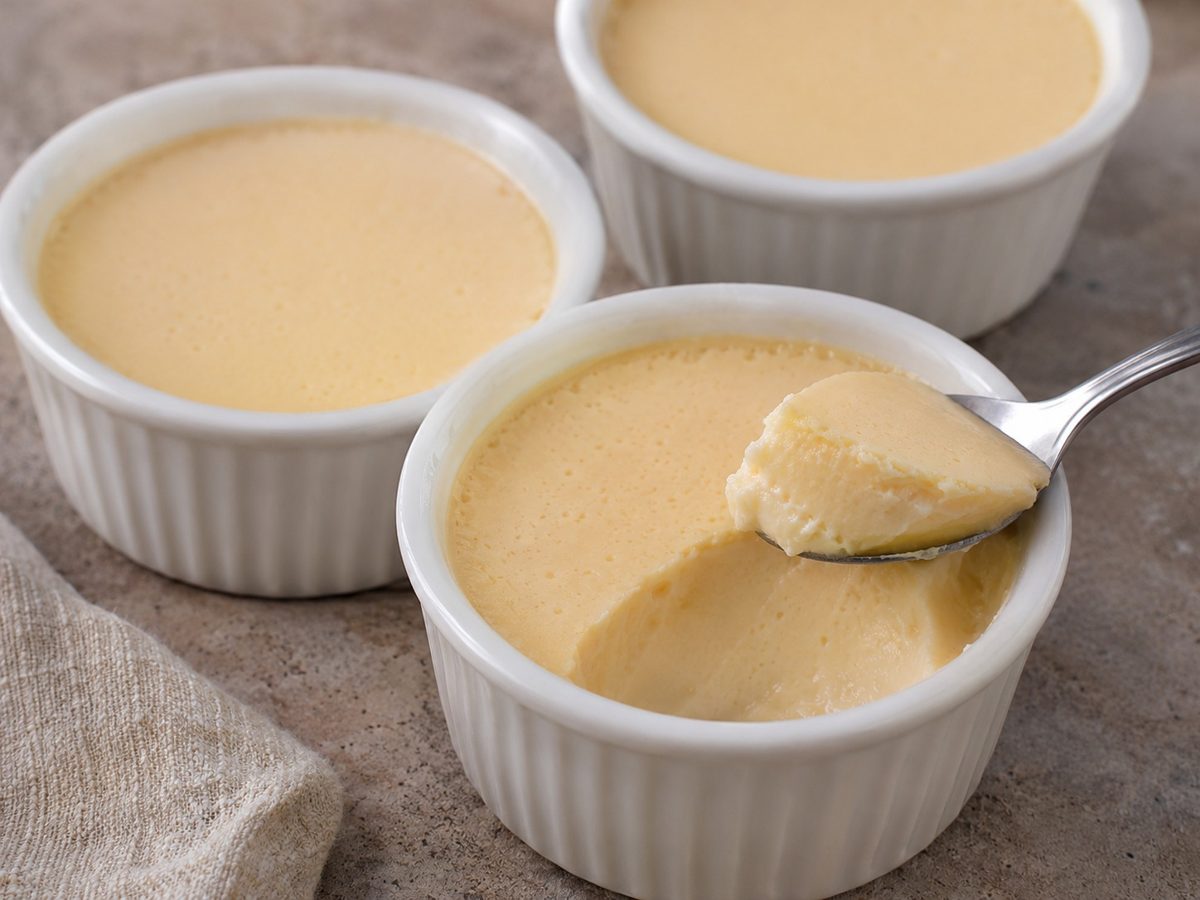
Bouye powder flavors a milk-and-egg custard gently baked in a water bath. Serve in its ramekin, set but tender. Its color stays ivory to pale beige, with neither caramel nor decorative powder on top. Baobab fruit's lightly tangy flavor comes through a restrained base without layers of flavorings.
Ingredients
- 500 ml pasteurized whole milk
- 3 medium eggs
- 60 g fine sugar
- 20 g plain food-grade bouye powder
- 1 small pinch vanilla powder, optional
- Hot water for the water bath, quantity suited to the dish
Preparation
Preheat oven to 150 °C. Place six ramekins in the large dish. Prepare hot bath water but do not pour yet.
Sift bouye powder into a bowl. Take 100 ml from the 500 ml milk and gradually mix into powder until as smooth as possible. Rest 5 minutes and stir again.
In a bowl gently whisk eggs and sugar without seeking foam. Add bouye mixture, remaining 400 ml milk and optional vanilla.
Pass through a fine sieve to catch lumps and egg strands. Divide among ramekins leaving space below the rim. Remove surface foam with a spoon if needed.
Set the dish on the oven rack, then pour hot water around ramekins halfway up. Bake about 35–45 minutes. Edges should be set and center slightly wobbly without free liquid movement.
Carefully remove ramekins from the bath. Quickly release intense heat on a suitable surface, then refrigerate within two hours at room temperature.
Chill at least 4 hours. Serve directly in ramekins. This dessert is not formulated to guarantee clean unmolding; a spoon is enough to enjoy its texture.
Introduction
Bouye powder flavors a milk-and-egg custard gently baked in a water bath. Serve in its ramekin, set but tender. Its color stays ivory to pale beige, with neither caramel nor decorative powder on top. Baobab fruit's lightly tangy flavor comes through a restrained base without layers of flavorings.
Bouye already features in drinks and desserts in the Senegalese collection. This contemporary flan differs from ngalakh, bouye French toast and shortbread. It does not replace their compositions or claim an ancient or exclusive baobab-flan tradition. A deliberately moderate dose flavors the custard without making it floury. This formulation remains a first draft to test in the kitchen before definitive publication.
Cultural context
At a glance Makes 6 ramekins of 120–150 ml. Preparation 20 minutes. Bake about 35–45 minutes in a water bath in a conventional oven at 150 °C. Cool quickly, then refrigerate at least 4 hours. Equipment: whisk, fine sieve, six ramekins and deep water-bath dish. Allergens: milk and eggs. Use plain food-grade baobab pulp powder without added sugar.
Choosing powder Bouye must be an identified food product made from powdered baobab pulp. An already-sweetened drink mix changes both flavor and actual fruit weight. Coarse fragments need more careful sifting. Read the label and close packaging to store dry after use. Powder must not have unusual moisture or spoilage.
Twenty grams suffices for this base. Doubling would change not only aroma but acidity and consistency. For a stronger version after testing, increase gradually and record results. For the first trial keep proportions and choose a product you like. Raw-material differences make observation more useful than a promise of identical texture in every case.
Dispersing without lumps Powder added directly to all the milk may float and form small dry balls. Mixing first with a portion of milk moistens it more evenly. Add liquid in stages, pressing clumps against the bowl. A short rest allows hydration before mixing with eggs.
Final straining is not meant to remove all the bouye. Use an ordinary fine mesh and help liquid through with a spoon without forcing large poorly dispersed clumps. If much powder remains, remix it with a little liquid taken from the preparation before straining again. Aim for an even base, not custard deprived of its main ingredient.
Cooking gently The water bath moderates heat around the ramekins. Water comes halfway up and must not enter the custards. Pouring once the dish sits on the oven rack avoids carrying a large vessel of hot water. Use a suitable kettle or jug and keep hands away from heating elements. When removing, lift ramekins individually if the whole dish is too heavy to move without splashing risk.
Heat makes eggs thicken the mixture. Excess heat can create little holes, graininess and separated liquid. Watch setting rather than waiting for a deeply golden surface. Wide shallow ramekins cook faster than narrow deep ones. Check a first custard around thirty-five minutes and extend in small increments if the center is still liquid.
Observing cooled flan The center should wobble slightly when the ramekin moves while already being set. Cold then firms texture. A liquid flan leaving the oven will not necessarily become right after four refrigerated hours. Conversely, baking until entirely firm may give an overly tight dessert after resting. Aim between these states.
Serving in the ramekin avoids weakening the custard through unmolding. A plain surface shows its consistency. A fine skin can stay if formed; it needs no caramel to hide it. Six small portions follow a meal, each with a clean spoon.
Storage Cover ramekins and refrigerate at no more than 4 °C; eat within 48 hours. Covering once strong steam stops limits condensation. Do not leave flans long on a warm buffet. Take out only servings needed. Freezing may change texture and cause water separation, so is not proposed here.
Sources Collection reference for bouye and desserts: https://www.recettesafricaines.com/recettes/256 An original contemporary flan; this reference documents the ingredient in the repertoire, not the flan method.