Bissap sorbet
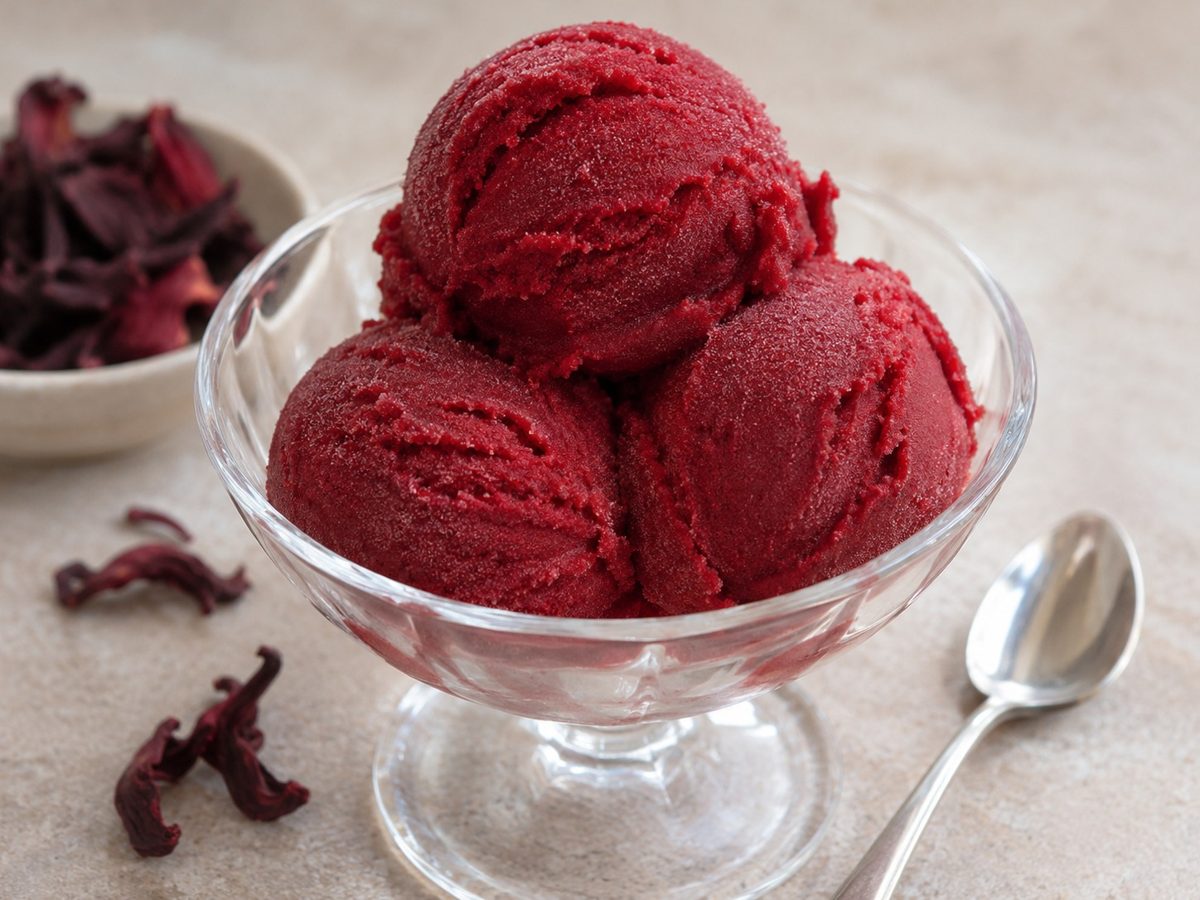
Here bissap moves from the glass to a ruby-red, tangy sorbet scented with a little ginger. Strained infusion forms a syrup base, then the chilled mixture is churned. This version contains neither milk nor egg. Serve small scoops on their own to reveal hibiscus flavor and natural color.
Ingredients
- 25 g food-grade dried red bissap calyces, Hibiscus sabdariffa
- 850 ml drinking water for infusion
- Additional drinking water to top strained infusion up to 750 ml
- 180 g white sugar
- 8 g fresh peeled ginger, thinly sliced
- Up to 10 ml lime juice, optional after tasting
Preparation
Prepare the ice-cream maker according to its instructions. If its bowl needs freezing, do so well ahead. Sort bissap to remove debris and rinse briefly in a fine sieve.
Boil 850 ml water. Remove from heat, add bissap and ginger, cover and infuse 15 minutes. Do not automatically extend steeping to darken the color.
Strain into a measuring container, pressing calyces moderately with a spoon. Measure 750 ml infusion, topping with water if needed. Keep any excess separately for another use soon.
Return 750 ml to the pan with 180 g sugar. Heat, stirring until completely dissolved, then remove from heat. No prolonged syrup reduction is needed.
Cool quickly in a suitable container, then refrigerate at least 4 hours. Taste cold and add lime only if balance requires. The base must be entirely cold before churning.
Pour into the machine without exceeding usable capacity. Churn as instructed until thick and soft. Immediately transfer to a clean box, close and firm about 2 hours in the freezer.
Remove briefly before serving if too firm to scoop. Form small scoops with a suitable spoon. Return the remainder immediately without allowing the whole box to melt.
Introduction
Here bissap moves from the glass to a ruby-red, tangy sorbet scented with a little ginger. Strained infusion forms a syrup base, then the chilled mixture is churned. This version contains neither milk nor egg. Serve small scoops on their own to reveal hibiscus flavor and natural color.
Bissap-inspired frozen desserts exist in contemporary cooking. La Tropicale Glacier offers hibiscus and ginger, while Cuisine Teranga publishes watermelon, bissap and mint granita. These examples document the move from drink to cold dessert but do not supply this formula. Our sorbet uses sugar syrup, a measured infusion and a household ice-cream maker. It claims neither to reproduce a commercial recipe nor to represent one unique traditional preparation.
Cultural context
At a glance Makes about 6 small portions. Active preparation 25 minutes. Infusion 15 minutes. Chill completely for at least 4 hours, then churn according to the machine and firm in the freezer about 2 hours. The bowl may need freezing beforehand. Equipment: saucepan, fine sieve, measuring container, ice-cream maker and freezer-safe box. No major allergen deliberately added; check products and equipment.
Using the right plant part Red bissap for drinks comes from food-grade dried calyces, not the green leaves used in some sauces. The packet must be identified for consumption and kept dry. Decorative flowers from gardens or bouquets are no substitute. Color alone cannot identify a plant for cooking.
Twenty-five grams gives a strong infusion without seeking maximum concentration. Batches vary in intensity and acidity. For future adjustment, record the product and change one parameter at a time. Greatly lengthening infusion and doubling bissap together would prevent knowing which change affected balance. Ginger is weighed peeled too: a whole large piece is not reproducible measurement.
Understanding sugar Sugar affects both taste and freezer texture. Removing much of it can produce a hard block even if the drink tastes pleasant. The proposed amount is a starting point for this formula, not a promise of industrial texture. Household machines, actual freezer temperature and storage time change the result.
Taste the cold base. Hot infusion does not give the same sweetness and acidity guide as the finished dessert. Lime remains optional because bissap is already distinctly acidic. Do not add it automatically to a very sharp base. A less-sweet version needs reformulation and checking rather than randomly removing sugar while promising identical softness.
Churning properly An insufficiently frozen bowl cannot set the mixture properly. Its motor may run without texture progressing; adding sugar in the bowl does not solve that problem. Follow machine preparation time and use a well-chilled base. Do not confuse total bowl volume with usable liquid capacity: stirring and freezing require space.
Freshly churned sorbet often resembles soft ice cream. Time in a box gives scooping firmness. A shallow container firms evenly. Smooth the surface lightly and close promptly. It may harden considerably overnight; a brief wait before scooping is normal, without letting the whole batch melt.
Without an ice-cream maker Freeze the base in a shallow dish and scrape regularly with a fork during freezing. This produces granita with more obvious crystals and should be described as such. It will not form the same scoops as the churned sorbet illustration. Preserve this process distinction rather than promising identical textures with different equipment.
Serving and storage Serve in small chilled bowls without toppings that impose another fruit. A spoon briefly dipped in lukewarm water helps scooping; wipe it to avoid adding water. For six diners, form portions successively and close the box between servings in a very hot kitchen.
Keep at −18 °C in a closed box and aim to eat within two weeks for texture. Do not refreeze genuinely melted sorbet. Remove only the required quantity and keep the rest frozen. Repeated opening and temperature changes encourage large crystals. Color and flavor do not replace an unbroken cold chain.
Sources La Tropicale Glacier, hibiscus and ginger creation: https://latropicaleglacier.com/produit/sorbet-hibiscus-gingembre/ Cuisine Teranga, a bissap frozen dessert example: https://cuisineteranga.wordpress.com/2020/06/01/granite-pasteque-bissap-et-menthe/ The formula and method above are original; professional processes are not reproduced.