Millet and cowpea patties
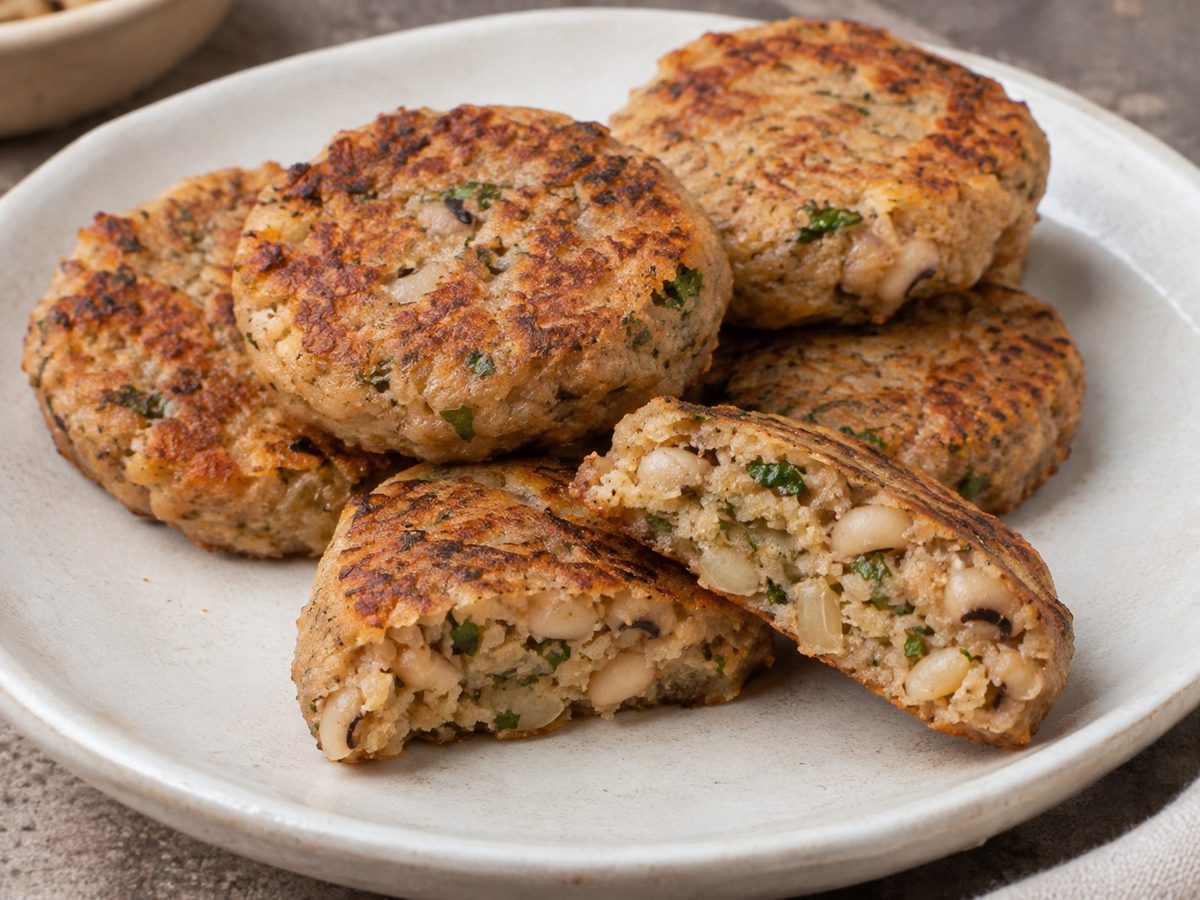
These patties combine cooked cowpeas, a little millet flour, egg, softened onion and parsley. They brown in a pan with a film of oil. The center stays soft while both sides form a thin crust. Some bean fragments remain visible when cut. Serve with vegetables or salad, without deep-frying.
Ingredients
- 500 g fully cooked, well-drained cowpeas
- 80 g fine millet flour
- 2 medium eggs
- 120 g finely chopped onion
- 1 garlic clove, finely chopped
- 15 g parsley, washed, dried and chopped
- 35 ml neutral oil total, including 10 ml for onion
- 20 ml water for cooking onion
- 3 g salt initially, adjusted to the beans
- Pepper and optional ground chili
- Up to 15 g additional millet flour only if batter remains too wet
Preparation
Drain cowpeas thoroughly and cool if freshly cooked. Blot visible moisture. Mash in the bowl finely enough to bind while retaining a few small fragments.
Heat 10 ml oil in the pan. Fry onion over medium heat 5 minutes. Add 20 ml water, cover and cook about 3 minutes more. Add garlic in the last minute, then cool until warm outside the pan.
Add eggs, 80 g flour, cooled onion, parsley, salt and pepper to cowpeas. Mix thoroughly. Cover and refrigerate 15 minutes to hydrate flour.
Shape a test patty about 7 cm across and 1 cm thick. If batter truly runs despite resting, add extra flour gradually without exceeding 15 g.
Clean pan if needed and heat some of the remaining 25 ml oil over medium heat. Cook test about 4 minutes per side. Turn only once the underside holds together.
Open test: center must be hot, set and free of wet egg mixture. Adjust thickness or heat if browning too quickly. Shape comparable portions and cook in batches, dividing remaining oil.
Serve hot or warm in a shallow layer on a platter, vegetables alongside. Cooked patties can wait briefly in a low oven, but prolonged waiting dries them.
Introduction
These patties combine cooked cowpeas, a little millet flour, egg, softened onion and parsley. They brown in a pan with a film of oil. The center stays soft while both sides form a thin crust. Some bean fragments remain visible when cut. Serve with vegetables or salad, without deep-frying.
Millet and cowpeas feature throughout the Senegalese collection. This recipe combines them in a contemporary way without assigning a traditional name. It differs from accaras, which use differently prepared beans and deep-frying; these patties use fully cooked beans and egg binding. Thick batter and a substantial legume content also distinguish them from millet crêpes.
Cultural context
At a glance Makes about 12 small patties, or 4 portions to supplement. Preparation 25 minutes. Refrigerated rest 15 minutes. Cooking about 35–40 minutes in batches, including onion. Equipment: bowl, potato masher or strong fork, scales, wide spatula and frying pan. Allergen: egg. Check millet flour for possible wheat traces when relevant. Weigh beans after cooking and draining.
Starting with cooked beans The five hundred grams is not dried cowpea weight. Beans must be tender throughout before mashing. If starting dried, allow soaking and cooking beforehand according to product and age. A few pan minutes cannot make still-firm legumes creamy; they would leave hard pieces and weaken patties.
Canned beans work after rinsing and thorough draining. Check salt before adding the full quantity. Remaining liquid is a main cause of overly soft batter. Drain in a sieve, then spread briefly on a plate rather than immediately adding lots of flour. This preserves bean flavor and avoids a thick cereal paste dominating.
Adjusting texture Millet flour gradually absorbs moisture. Refrigerated resting lets batter stabilize before correction. A portion should sit in a small mound and flatten with a spatula without running like crêpe batter. Slight stickiness is acceptable. Very lightly wet hands or use two spoons rather than adding a handful of flour to every piece.
Hand-mashing creates an uneven but bound mixture. Excessive blending makes smooth, sometimes stickier paste. If using a processor, pulse briefly and stop before a flowing purée. Retained fragments should be small and tender; large whole beans can disrupt edges. A flat shape cooks the center before surfaces darken too far.
Managing the pan Medium heat gives egg time to set and flour to cook. Too-hot pans brown the surface while leaving a wet center. If the test does this, lower heat and make thinner patties rather than extending time on an already-dark side. A wide spatula supports the entire patty when turning to prevent breaking.
Divide oil between batches. Thirty-five milliliters total includes ten already used for onion. A sticky pan complicates this method; choose suitable cookware and wait for the first crust before loosening. Avoid crowding. Space makes clean turning and even heat easier.
Serving and storage Tomato salad, cooked vegetables or a little sauce accompany these patties. Yield means three small pieces per person in a composed meal, not a prescribed portion. Adjust chili to diners. For smaller sharing pieces, reduce diameter while keeping moderate thickness and check a new test patty.
Cool cooked patties quickly, refrigerate within two hours and keep at no more than 4 °C. Eat within 48 hours. Reheat thoroughly in the oven or over moderate pan heat; they will be slightly firmer. Refrigerate raw mixture and cook the same day. It contains raw egg and must not be tasted before cooking.
Sources Collection references for cowpeas and millet: Ndambé, https://www.recettesafricaines.com/recettes/53 ; millet crêpes, https://www.recettesafricaines.com/recettes/12069 An original contemporary cooked-bean patty formulation, distinct from accaras.