Tamarind chicken
Tamarind gives chicken a brown, tangy sauce in a modest quantity. Lightly brown thigh pieces, then cook with onion, ginger and pulp extracted in hot water. A little sugar balances it without making a very sweet glaze. Sauce should coat meat while remaining loose enough for a grain served separately.
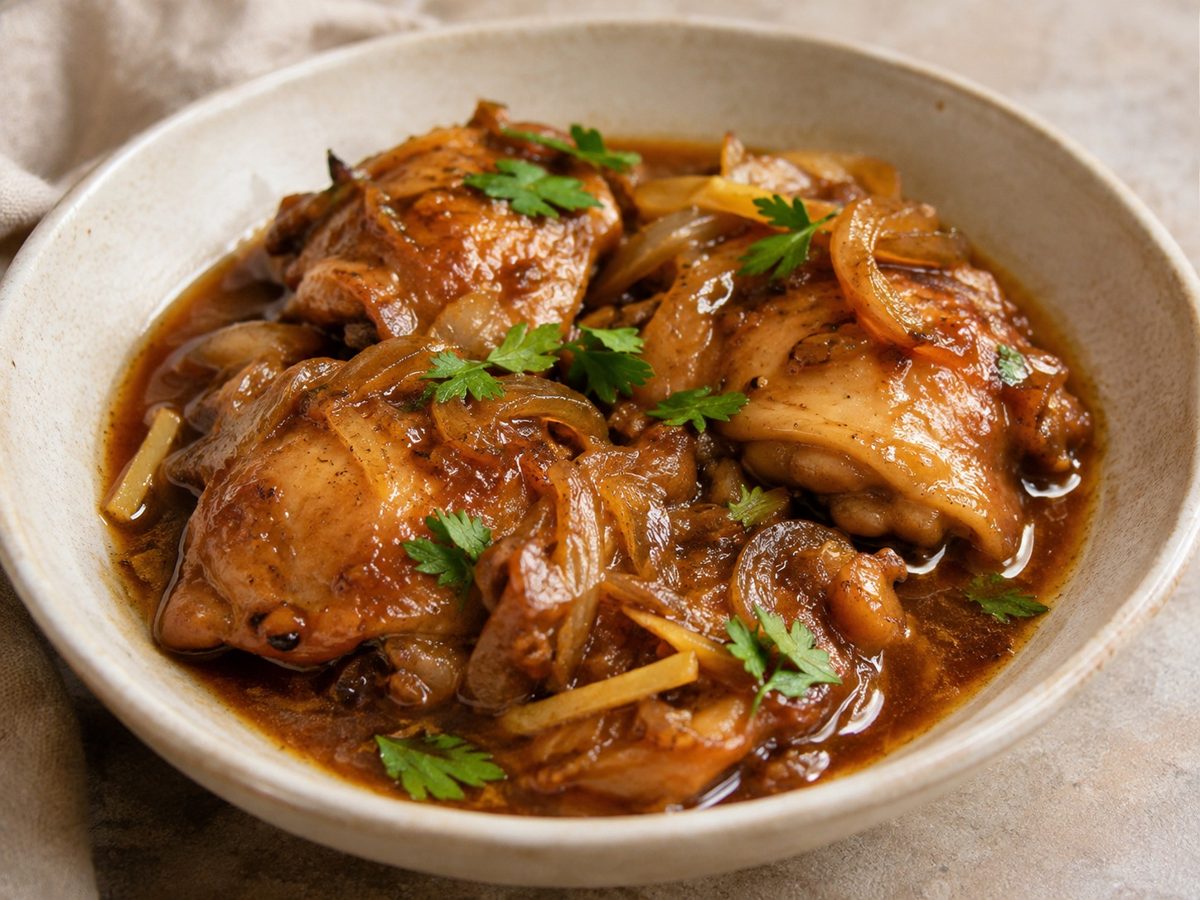
Ingredients
- 800 g boneless skinless chicken thighs, in large pieces
- 50 g plain food-grade tamarind pulp in a block
- 250 ml very hot water for extraction
- Extra hot water to top strained extract up to 200 ml
- 250 g sliced onions
- 2 garlic cloves, chopped
- 10 g fresh ginger, peeled and finely grated
- 25 ml neutral oil
- 10 g brown sugar initially, plus up to 10 g optional after tasting
- 3 g salt to divide
- Pepper, optional chili and 10 g parsley for serving
- Up to 100 ml extra hot water for sauce
Preparation
Put tamarind in a bowl with 250 ml very hot water. Soften for 15 minutes. Once safe to handle, loosen pulp with a spoon and press through a sieve. Discard fibers and seeds. Measure 200 ml extract, topping with water if needed.
Prepare onion, garlic and ginger. Pat chicken dry and season with some salt. Heat oil and brown meat about 6 minutes in two batches. Reserve on a separate plate; the center is not yet cooked.
Lower heat and fry onion in the same pan for 7 minutes. Add garlic and ginger and stir for 1 minute. If sticking, loosen with a spoonful of the extra water.
Pour in 200 ml tamarind extract, add 10 g sugar, pepper and remaining salt. Stir. Return chicken and its plate juices and cover.
Simmer gently 18–22 minutes, turning halfway. Add a little extra water if sauce reduces too early. Check a thick piece: chicken must reach 74 °C at the center.
If sauce is still watery, remove cooked chicken to a clean dish and reduce uncovered a few minutes. Taste with meat, then optionally add a little extra sugar and let dissolve.
Reunite meat and sauce for brief reheating. Scatter parsley when serving. Offer chili separately and accompany with grain or vegetables whose quantities are planned separately.
Introduction
Tamarind gives chicken a brown, tangy sauce in a modest quantity. Lightly brown thigh pieces, then cook with onion, ginger and pulp extracted in hot water. A little sugar balances it without making a very sweet glaze. Sauce should coat meat while remaining loose enough for a grain served separately.
This contemporary creation uses an ingredient already found in Senegalese drinks and as an acidic note in some sauces. It is not yassa: the main flavor is tamarind rather than lots of lemony onion. No undocumented regional or family name is assigned. It broadens the fruit's culinary uses with a precise, clear method using an identified food product.
Cultural context
At a glance Serves 4. Preparation 25 minutes including tamarind extraction. Cooking about 35 minutes. Equipment: bowl, fine sieve, covered sauté pan and tongs. No major allergen is deliberately added; check purchased products. Chicken weight excludes bone and skin. Use plain tamarind pulp with fibers and possibly seeds, not sweet sauce or very strong industrial concentrate.
Recognizing the product Tamarind comes as whole pods, pulp blocks, smooth paste, concentrated extract or ready-made sauce. This recipe uses a plain block to dilute and strain. A spoonful of concentrate cannot be replaced with fifty grams using identical steps; acidity can be much stronger. Read the label, especially for added salt or sugar.
Solom, sometimes called velvet tamarind, is another fruit and is not a substitute here. Pulp, aroma and extraction differ. With whole tamarind pods, obtain fifty grams after shell removal; fibers and seeds will remain in the sieve later. Measuring strained extract restores a comparable sauce volume despite these losses.
Building balanced sauce Extraction does not always produce identical acidity. Start with the stated sugar and wait until cooking ends before adding more. Evaporation can make sauce seem too sour when it mainly needs one or two spoonfuls of water. Restore a loose consistency first, then taste. Lots of sugar in an already-dry base creates thick sauce that sticks quickly.
Sufficiently cooked onion adds sweetness. It should not remain hard strips in reduced sauce. Seven initial minutes begin softening, then simmering continues. Ginger is restrained to complement tamarind without another dominant sharp heat. Grating requires care to avoid long fibrous threads in the sauce.
Choosing chicken cuts Thigh handles a short simmer better than thin breast strips. Keep large comparable pieces. Small cubes cook faster and may dry while adjusting sauce. Time is a guide; a thermometer checks a thick piece without automatically extending the whole pan.
Initial browning adds flavor but does not establish internal doneness. Use a clean dish once meat is cooked; wash before reusing any plate that held chicken still raw inside. Prepare accompaniments while simmering so meat does not wait in continually reducing sauce. A wide serving dish distributes pieces without piling them into a small bowl.
Serving and storage Plain rice, fonio or lightly seasoned vegetables let you taste sauce without piling on acidic flavors. Serve a moderate amount of juice first, allowing more. Brown color comes from pulp and cooking, requiring neither soy sauce nor caramel. Omitting these keeps a short ingredient list and salt easy to adjust.
Cool leftovers quickly in shallow containers and refrigerate within two hours, sooner in hot weather. Keep at no more than 4 °C and eat within 48 hours. Thoroughly reheat the required portion with a little water if sauce thickened. Avoid repeated reheating of the whole dish. Accompaniments have their own storage life and should be kept separately.
Sources Collection reference for tamarind: https://www.recettesafricaines.com/recettes/12044 An original contemporary chicken formulation. Poultry cooking temperature: https://www.foodsafety.gov/food-safety-charts/safe-minimum-internal-temperatures