Papaya salad
Ripe but firm papaya becomes a savory starter with peppers, a few thin red-onion strips and lime dressing. Orange flesh stays in cubes rather than becoming juice or purée. Parsley finishes the salad. Contrast comes from sweet fruit, crunchy pepper and measured acidity, without automatically adding sugar.
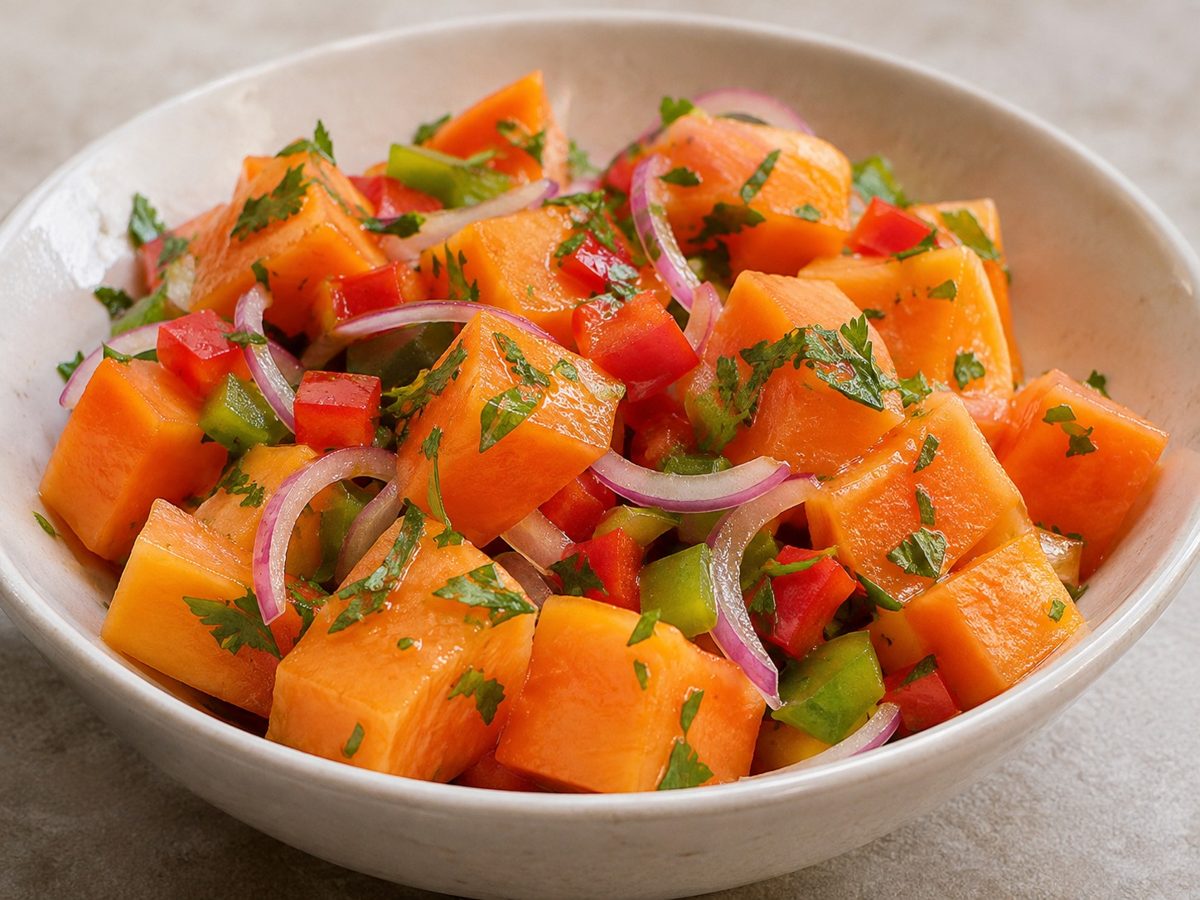
Ingredients
- 600 g ripe but firm papaya flesh, in 2 cm cubes
- 100 g deseeded red pepper, in small dice
- 100 g deseeded green pepper, in small dice
- 50 g red onion, in very thin strips
- 25 ml lime juice, adjusted to the fruit
- 20 ml mild olive oil or neutral oil
- 10 g parsley, washed, dried and chopped
- 2 g fine salt initially
- Pepper and optional fresh chili, finely chopped and offered separately
Preparation
Wash and dry whole papaya before placing on the board. Halve lengthways, remove all seeds with a spoon and peel. Weigh 600 g pulp and cut even cubes.
Wash peppers and remove stems, seeds and white membranes. Dry and dice 100 g of each color finely. Peel onion and prepare thin strips.
Taste a little onion. If very strong, briefly rinse in a sieve under cold drinking water, then drain and dry thoroughly. Leave no water at the bowl bottom.
In a small bowl dissolve salt in 15 ml lime juice. Add oil and a little pepper and mix with a fork. Reserve remaining 10 ml lime for adjustment.
Gently combine papaya, peppers and onion in the bowl. Pour dressing and lift with two broad spoons without crushing pieces against the sides.
Add parsley. Taste a mouthful containing fruit and vegetable, then adjust with reserved lime. Refrigerate for 10–15 minutes if desired.
Divide among four cool plates, with comparable pepper and onion in each. Serve promptly with chili separately so everyone chooses its intensity.
Introduction
Ripe but firm papaya becomes a savory starter with peppers, a few thin red-onion strips and lime dressing. Orange flesh stays in cubes rather than becoming juice or purée. Parsley finishes the salad. Contrast comes from sweet fruit, crunchy pepper and measured acidity, without automatically adding sugar.
Aïssatou Mbaye publishes a papaya salad on Aistou Cuisine. This is a reference in contemporary Senegalese cooking, without making the combination exclusively Senegalese heritage. Here pulp weight is fixed, all seeds are removed and waiting after dressing is brief to keep well-shaped pieces. Proportions and method are this manuscript's. No slimming or therapeutic property is attributed to fruit or seeds.
Cultural context
At a glance Makes 4 starters or side portions. Preparation 25 minutes. Optional refrigerated rest 10–15 minutes. No cooking. Equipment: knife, board, spoon, wide bowl and small bowl. No major allergen is deliberately added; check products. The 600 g papaya refers to pulp after removing skin, seeds and damaged areas. This is not shredded green papaya salad.
Choosing ripeness Very ripe papaya suits drinks or compote but its cubes break when mixed. Here flesh should yield to a knife while retaining clean edges. Skin color alone is insufficient because it varies. Request fruit ready to eat soon but firm enough to cut into pieces.
After opening, inspect texture and condition. Spoiled areas do not become acceptable through lime or refrigeration. If sound but softer than expected, cut larger pieces and mix minimally. If distinctly green and hard, choose a recipe suited to green papaya; directly replacing ripe flesh with the same weight of green fruit would change this recipe completely.
Cutting Papaya provides most of the volume. Cut peppers smaller to add crunch to every mouthful without large raw pieces dominating. Onion fineness matters equally. Thick rings concentrate flavor; thin strips spread and combine better with fruit. Cutting all three ingredients to equal sizes would not give the same balance.
Net weight allows different-sized fruit. Half a papaya may or may not suffice; fruit count is unreliable. Weigh after peeling and deseeding. Reserve sound remaining pulp separately for another use soon rather than automatically adding it and unbalancing dressing. The same applies to a large pepper greatly exceeding the specified hundred grams.
Adjusting dressing Start with some of the lime juice. Papaya can be sweet or more vegetal, and lime acidity varies. Judge a complete mouthful, not a sip of pure dressing. Salt should lift vegetables without making the fruit predominantly salty. If already bright, keep remaining lime for the table.
Mild oil binds seasoning without taking over. Very bitter or peppery olive oil can mask fruit; choose knowing its flavor. Weigh parsley after washing and drying. Wet leaves add water and stick to cubes. Chop chili into a separate dish so its heat is not imposed on the whole salad.
Organizing serving Prepare vegetables and dressing ahead in separate refrigerated containers. Cut papaya near mealtime, then assemble. Long maceration with salt and lime releases juices and rounds cube edges, giving a different, softer result. The short suggested rest mainly chills ingredients together.
This salad readily accompanies prepared fish or grilled food, which remain outside the quantities. A small plate suits a starter; for a multi-dish meal, divide into smaller portions beside other dishes. Stir gently before serving to include bottom juices. A separate strongly spiced sauce is unnecessary if preserving papaya's subtle aroma.
Storage Keep at no more than 4 °C and preferably eat the same day. Aim for no more than 24 hours for leftovers, accepting texture deterioration. Do not leave the bowl on the table long; serve some and keep the rest chilled during extended meals. Lime seasons but does not replace refrigeration. Discard any preparation whose condition or storage is doubtful.
Sources Aïssatou Mbaye, Salade de papaye, August 17, 2022: https://aistoucuisine.com/publications/salade-de-papaye The quantities, absence of seeds and detailed method form an original adaptation; no health claims from the source are repeated.