Baked sardines
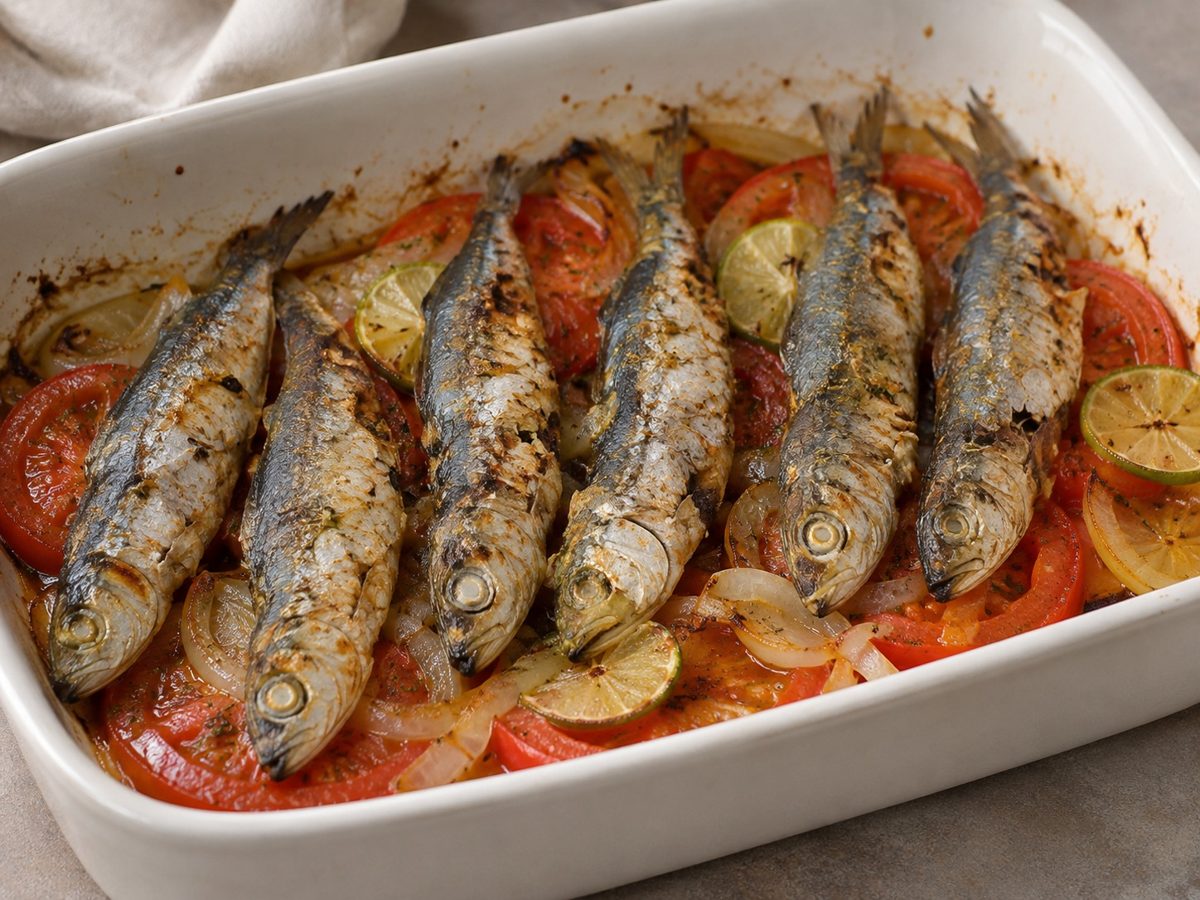
Sardines bake over a bed of tomato and onion softened beforehand. Their skin stays visible and vegetable juices are enough to accompany the flesh. Garlic and lime add flavor without a long marinade. This method cooks several fish together at home with easier monitoring than successive small batches of frying.
Ingredients
- 1 kg small fresh whole sardines, scaled and gutted
- 500 g tomatoes, in thick rounds
- 250 g onions, in thin rings
- 2 garlic cloves, chopped
- 30 ml neutral oil, including 20 ml for vegetables
- 60 ml water for the dish base
- 1 small washed lime, thinly sliced and deseeded
- 10 g parsley, washed and chopped
- 3 g salt to divide
- Pepper and optional chili
Preparation
Preheat oven to 200 °C. Check sardines are gutted and loose scales removed. Pat dry thoroughly and refrigerate while preparing vegetables.
Spread onion and tomatoes in the dish. Add garlic, 20 ml oil, water, about half the salt and pepper. Mix lightly and spread evenly.
Bake vegetables 20 minutes. Onions should begin softening and tomatoes releasing juice. If edges dry before the center softens, add one or two spoonfuls of hot water.
Place the dish on a heatproof surface. Lay sardines side by side without stacking. Brush with remaining 10 ml oil, salt lightly and place lime rounds between fish.
Bake about 15–20 minutes depending on size and thickness. Check the largest: flesh should be opaque at the center and separate from the backbone. A core-temperature guide of 63 °C helps check cooking.
Remove as soon as fish are cooked. Add parsley. Taste vegetable juices and adjust seasoning rather than blindly salting all the sardines.
Serve immediately, mentioning bones. Present fish, vegetables and juices together, with a small plate for discarded parts and chili separately.
Introduction
Sardines bake over a bed of tomato and onion softened beforehand. Their skin stays visible and vegetable juices are enough to accompany the flesh. Garlic and lime add flavor without a long marinade. This method cooks several fish together at home with easier monitoring than successive small batches of frying.
This is a contemporary fish preparation for the Senegalese chapter, without claiming a particular local name. It differs from grilled fish and firire through oven cooking, vegetables in the same dish and no deep-frying. Species matters: sardine, sardinella and mackerel are not interchangeable names. This version uses small sardines suited to fairly short cooking.
Cultural context
At a glance Serves 4. Preparation 25 minutes if the fishmonger prepares the fish. Total cooking about 35–40 minutes, including 20 minutes for vegetables. Conventional oven at 200 °C. Equipment: large shallow baking dish, tongs, knife and cooking thermometer if available. Allergen: fish. Weight refers to gutted whole sardines with heads and bones. Rice or bread alongside is excluded.
Choosing and preparing fish Explicitly request sardines prepared for cooking whole. Head-and-bone weight does not mean a kilogram of net flesh. Fish per person therefore depends on size: a portion may contain two or three small fish rather than one large. Choose comparable thicknesses and do not apply the same timetable to tiny sardines and large sardinella.
Plan the journey after buying. Transport chilled and cook promptly following the seller's advice. Longer cooking cannot restore freshness. Refrigerate while the oven heats and vegetables precook. Prepare clean serving utensils before baking fish so raw-fish tongs are not used to serve the finished dish.
Why precook vegetables Onion rings take longer than small sardines to soften. Putting everything in together risks dry fish and crunchy vegetables. The first twenty minutes give onions a head start and release tomato juices. Fish then enters an already-hot, moist base that limits drying underneath.
The base should not become soup. Use a wide enough dish and observe tomato juices before adding water. Very ripe tomatoes may produce extra liquid; reduce vegetables a few additional minutes before adding fish. If almost dry instead, add a little hot water at the side rather than pouring a large glass over the fish.
Controlling cooking An oven set to 200 °C does not give identical temperatures in every appliance. Start checking sardines after fifteen minutes. Gently part a large fish's flesh near the backbone. Golden surfaces may hide an undercooked center; ready flesh need not brown strongly. Aim for cooked, supple fish rather than dried skin for a darker photograph.
Use small thin lime rounds. A thick layer of wedges would cover skin and release more bitter membrane juices. Remove seeds before baking. Some rounds can remain in the dish without necessarily being eaten. Add parsley at the last moment for freshness complementing vegetables without masking fish.
At the table Present whole or lift fillets after cooking if required. Even then, check small bones and mention their possible presence. Carefully prepare separate portions for children or anyone who struggles to sort fish. Divide vegetables between plates rather than leaving them under the last fish served.
Plain rice can absorb juices; bread also works. Plan quantities according to the meal rather than implicitly adding them to this recipe's yield. Do not keep the dish long in the switched-off oven: residual heat continues cooking sardines and tightening their skin.
Storage Cool leftovers quickly in a shallow container and refrigerate within two hours, sooner in hot weather. Keep at no more than 4 °C and eat within 24 hours. Remove bones before reusing flesh. Gently but thoroughly reheat the portion needed with some vegetable juices. Discard improperly stored fish; reheating does not erase that problem.
Sources An original contemporary formulation, distinct from the collection's grilled fish and firire. Cooking guidance: FoodSafety.gov, https://www.foodsafety.gov/food-safety-charts/safe-minimum-internal-temperatures Seafood storage: https://www.ameli.fr/assure/sante/themes/alimentation/poisson-fruits-mer-autres-produits-mer/manger-du-poisson-connaitre-les-risques-immediats-et-les-prevenir