Sweet potatoes with peanut sauce
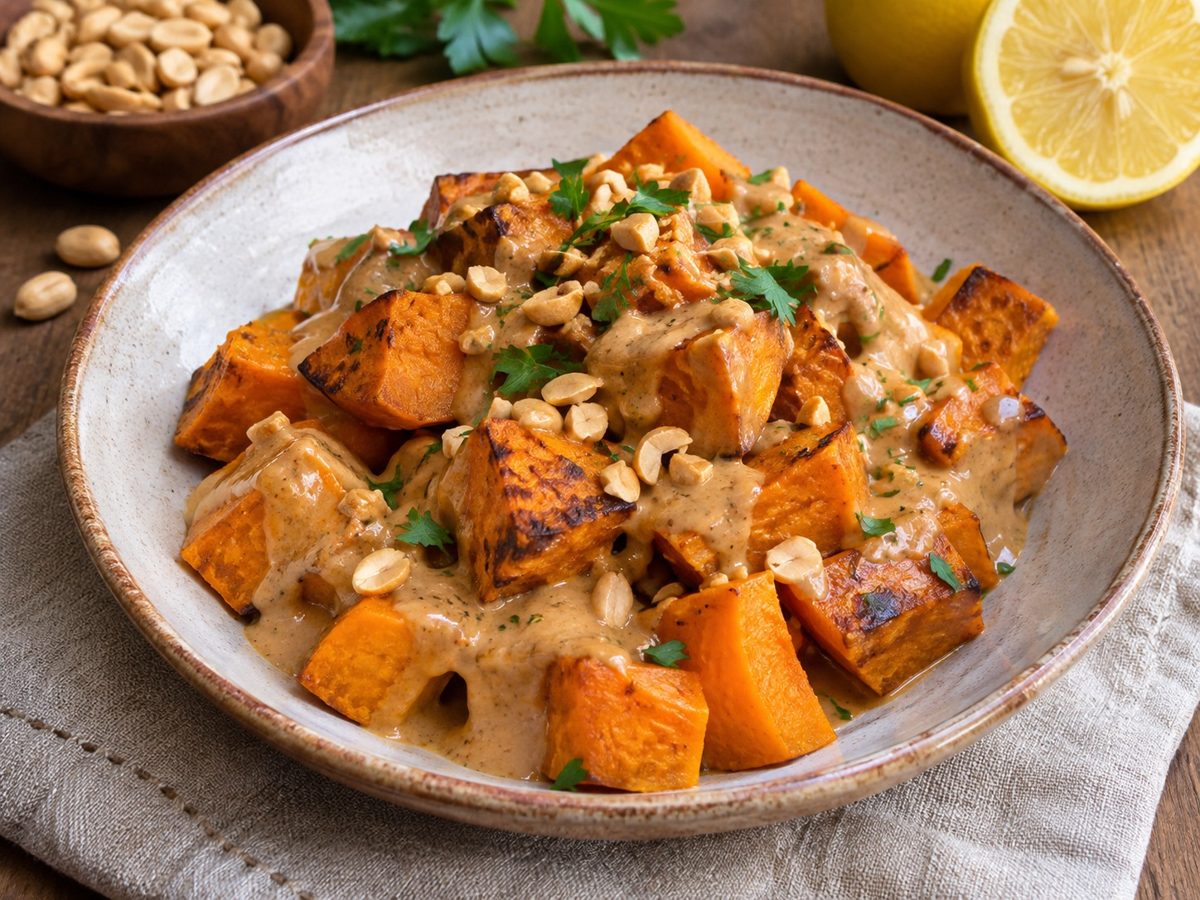
Sweet potato cubes roast in the oven before receiving a lightly lemony peanut sauce. Keeping the two separate preserves golden edges and a tender center instead of simmering every piece in a pot of sauce. A few crushed roasted peanuts add crunch when serving. This makes a generous plant-based side and can also join a meal of several separately chosen dishes.
Ingredients
- 800 g peeled sweet potatoes, in 3 cm cubes
- 25 ml neutral oil for sweet potatoes
- 100 g pure unsweetened peanut paste
- 180 ml hot water for sauce, plus a little more if needed
- 1 small garlic clove, very finely chopped
- 15 ml lemon juice, added gradually
- 20 g already-roasted unsalted peanuts, crushed
- 10 g parsley, washed and chopped
- 3 g salt divided between vegetables and sauce
- Pepper and optional chili
Preparation
Preheat oven to 210 °C. Prepare sweet potato cubes and pat dry if wet. Toss with oil, about two-thirds of the salt and a little pepper.
Spread in one layer on a paper-lined tray, leaving space between pieces. Roast about 30–40 minutes. Turn halfway and check several cubes: tender centers and some golden surfaces, without burnt edges.
Meanwhile put peanut paste in the saucepan off the heat. Gradually whisk in hot water until smooth. Add garlic and remaining planned salt, allowing for adjustment after tasting.
Heat gently and simmer about 5–7 minutes, stirring the bottom. Add a spoonful of hot water if too thick. Sauce should flow from a spoon and coat cubes without forming a compact mass.
Remove sauce from heat. Add half the lemon, taste and add more as needed. Chili is optional. Crush roasted peanuts and prepare parsley.
Plate roasted sweet potatoes. Pour some sauce over them and scatter peanuts and parsley. Offer remaining sauce separately and serve hot before steam softens all the golden surfaces.
Introduction
Sweet potato cubes roast in the oven before receiving a lightly lemony peanut sauce. Keeping the two separate preserves golden edges and a tender center instead of simmering every piece in a pot of sauce. A few crushed roasted peanuts add crunch when serving. This makes a generous plant-based side and can also join a meal of several separately chosen dishes.
This contemporary formulation brings together two common West African ingredients without assigning a traditional name. Peanut paste alone does not make it mafé: the method, sauce volume and serving style differ. Sweet potato remains visible under a measured topping. Make the sauce separately, pour only some over the pieces and offer the rest at the table.
Cultural context
At a glance Makes 4 side portions. Preparation 20 minutes. Roast sweet potatoes about 30–40 minutes in a conventional oven at 210 °C; make sauce meanwhile. Equipment: baking tray, baking paper and small saucepan. Allergen: peanuts. Use pure food-grade peanut paste without added sugar. No milk or dairy is needed.
Choosing sweet potatoes The stated weight is for peeled tubers, so buy slightly more. Varieties differ in color and texture: some flesh is drier, some moister. Use pieces that become tender in the oven while holding shape. Orange flesh gives the illustrated appearance, but color alone cannot determine cooking time.
Even cubes simplify checking. Three-centimeter pieces cook fairly evenly on a tray without drying too fast. Small isolated fragments brown faster: group them where easy to watch and remove if needed. One large firm piece is no reason to burn all the small ones. Test the center of a large cube with a knife tip or fork.
Roasting without crowding A single layer allows hot air to circulate. On an overloaded tray, sweet potatoes release water and mainly steam between the pieces. They remain edible but brown less. Use two trays or smaller batches if necessary. Distribute oil in a bowl before baking instead of pouring a lot onto a few already-placed cubes.
Turn halfway to expose other surfaces. Baking paper makes this easier without forcibly unsticking fragile flesh. Watch the finish because natural sweetness encourages browning. Blackened edges bring bitterness the sauce cannot erase. Aim for golden surfaces and a soft center, not a dark crust at the cost of dried flesh.
Making peanut sauce Pure paste may have an oil layer. Stir the jar before weighing one hundred grams so you do not take only dry solids or oil. Then whisk in water gradually. It may initially seem thicker before smoothing; continue with small additions. Adding lots at once makes lumps harder to break.
Cook sauce gently and watchfully. Peanut paste catches quickly if the bottom is not stirred. Use a pan suited to this small volume and a spoon reaching its corners. Add lemon afterward to adjust taste without repeated corrections. Fruit acidity varies; half the suggested quantity may balance the sweet potatoes.
Combining textures Keep sauce and potatoes separate until plating. Mixing all the cubes in the saucepan for a long time softens roasted edges and can break them. Pour a moderate amount over the dish and let diners add more. Add crushed peanuts last to stay crunchy. Parsley brings freshness without forming a thick herbal layer.
Rice is not essential to enjoy this preparation. It can join green vegetables, a legume or another dish chosen for the meal. Those additions are outside this recipe's quantities and yield. Sweetened sandwich spread or strongly seasoned commercial peanut sauce would change the result substantially and cannot automatically replace pure paste.
Storage Cool potatoes and sauce quickly in separate containers and refrigerate within two hours, sooner in very hot weather. Keep at no more than 4 °C and eat within 48 hours. Reheat pieces in the oven until evenly hot. Warm sauce gently with a little water because it firms when cold. Keep finishing peanuts in their dry container and add only when serving.
Editorial note An original contemporary formulation using roasting and a separate sauce, distinct from the collection's simmered mafés: https://www.recettesafricaines.com/recettes/52