Fish sandwich
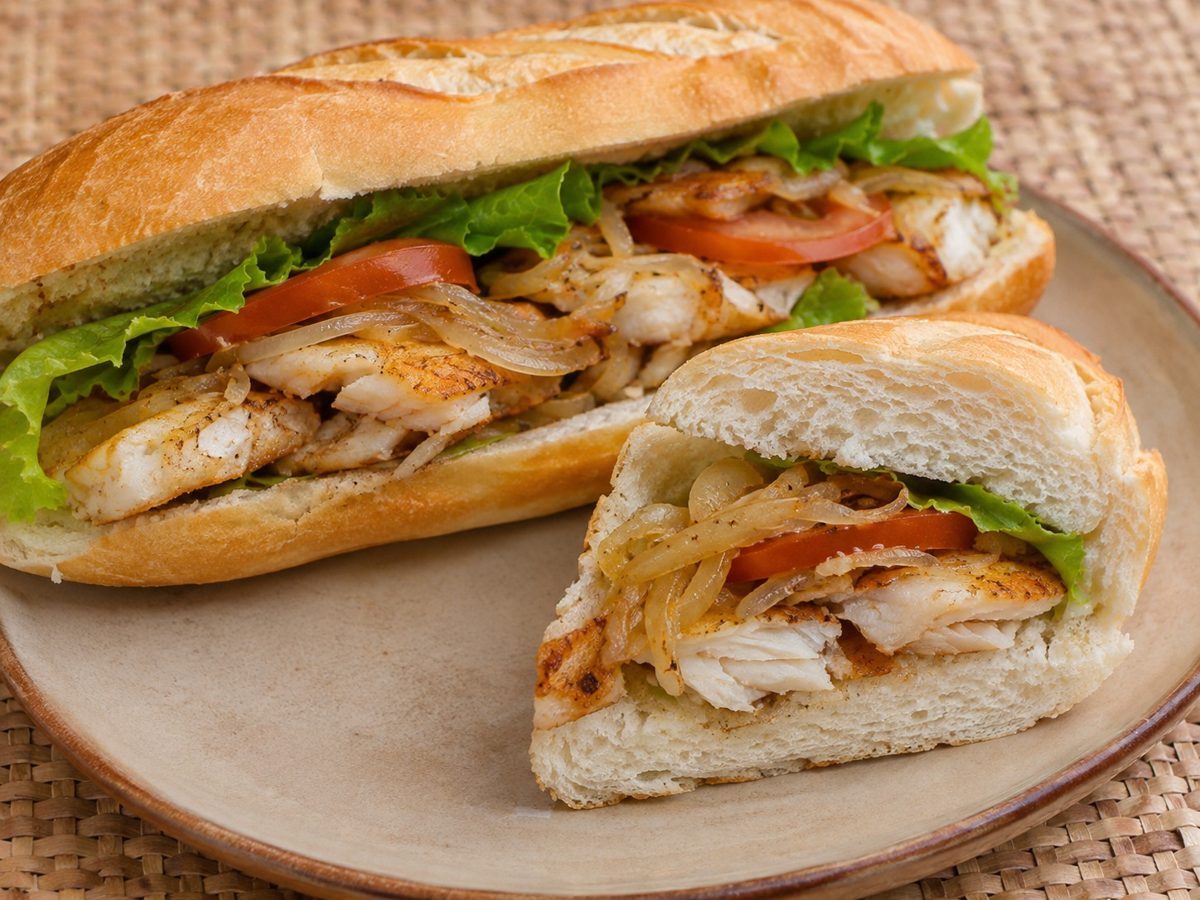
This fish bread is a hot sandwich: pan-cooked fish, soft onions and raw vegetables enter the bread at the last moment. Keep the fish in large flakes rather than a spread. Tomato and lettuce provide freshness; a little mustard adds bite without a thick layer of sauce. Bread should stay firm enough to hold while absorbing some onion juices.
Ingredients
- 600 g raw white fish fillets, skinless and boneless, in four even portions
- 4 small baguette-style rolls, about 90 g each
- 250 g finely sliced onions
- 240 g fresh tomatoes, washed and thinly sliced
- 80 g lettuce, sorted, washed and thoroughly dried
- 2 garlic cloves, chopped
- 30 ml neutral oil, 15 ml for onions and 15 ml for fish
- 50 ml water for cooking onions
- 20 g mustard for assembly
- 20 ml lemon juice, divided to taste
- 3 g salt to divide, pepper and optional chili
Preparation
Prepare raw vegetables, drain and refrigerate. Slice onions. Check fillets for remaining bones and pat dry. Keep ready-to-eat ingredients away from the board and utensils used for raw fish.
Heat 15 ml oil in a pan. Add onions and some salt. Cook over medium heat for 5 minutes, add 50 ml water and partly cover. Continue 10–12 minutes until soft.
Add one garlic clove to onions and cook another 2 minutes. Uncover to evaporate excess liquid. Season with a little pepper and lemon, then keep warm over very low heat.
Heat remaining 15 ml oil in the second pan. Lightly salt and pepper fish. Cook about 3–5 minutes per side according to thickness. Add the last garlic clove near the end so it does not burn.
Check the thickest portions at the center: flesh should be opaque and flake, with a core-temperature guide of 63 °C. Transfer to a clean dish. Separate into large flakes with two forks and check once more for bones.
Split rolls lengthways without separating completely. Briefly warm in the oven if desired. Divide mustard, then lettuce, tomato slices, hot fish and onions drained of any excess juice.
Add a few drops of remaining lemon to taste and optional chili. Close gently and serve immediately. Do not assemble long before eating: bread would absorb moisture from fish, onions and tomato.
Introduction
This fish bread is a hot sandwich: pan-cooked fish, soft onions and raw vegetables enter the bread at the last moment. Keep the fish in large flakes rather than a spread. Tomato and lettuce provide freshness; a little mustard adds bite without a thick layer of sauce. Bread should stay firm enough to hold while absorbing some onion juices.
This is a home formulation in the collection's family of filled breads. Unlike its tuna sandwich and pain ndambé, it uses raw fish fillets cooked in a pan, without mayonnaise or legumes. Fish choice can vary with availability but should be fairly firm white fillets, deboned. The sandwich name does not replace this useful shopping detail.
Cultural context
At a glance Makes 4 sandwiches. Preparation 25 minutes. Cooking about 25 minutes, preparing onions and fish simultaneously. Equipment: two frying pans, tongs, fork and bread knife. Allergens: fish, wheat and mustard. Four rolls weigh about 360 g altogether. Fries or other sides are outside the quantities.
Choosing fillets Fairly thick fillets turn more easily than very thin pieces. The quantity gives about one hundred and fifty grams raw fish per sandwich before cooking losses. Irregular pieces need different times: remove cooked portions as ready rather than waiting for the largest. Avoid overcrowding, which makes fish release water and brown poorly.
Judge cooking at the thickest point. A golden surface does not prove the center has reached the desired point. Lemon is mainly for serving; no hours-long acidic marinade is required. Pat fillets dry before adding to hot oil to improve pan contact and reduce splashing from a wet surface.
Balancing the filling Onions should be soft but their juices must not soak the bread. Evaporate excess water before assembly and lift strips with a spoon that leaves liquid behind. Some juice around fish is pleasant; a whole ladleful makes the sandwich difficult to hold. Similarly, thinly slice tomato and drain free juice before dividing.
Dry lettuce thoroughly. It provides freshness and partly separates bread from wet filling, without being a perfect moisture barrier: eat immediately. Measure mustard so it does not dominate. Brands vary greatly in strength; twenty grams across four breads is a starting point to adjust without adding another sauce.
Separating raw and cooked foods Prepare raw vegetables before handling raw fish or use separate surfaces. After handling fillets, wash hands, board and knife before touching bread or lettuce. Use a clean dish for cooked fish, not the one that held raw fillets. Planning this simple sequence avoids improvising cleanup when sandwiches need assembling.
Flake fish only after cooking. Visible fibers remain and final bones are easier to spot. Crushing all the flesh with a fork gives compact, spread-like filling. This sandwich instead retains several pieces that mingle with onions as eaten. Divide them fairly before adding the remaining vegetables.
Serving and storage Prepare plates and napkins before finishing pan cooking. Open bread and weigh mustard while onions cook, leaving just a few minutes for final assembly. Bread split too widely drops filling; keep one side attached to help close. For a smaller portion, halve an assembled sandwich rather than doubling bread count with the same fish quantity.
Eat assembled sandwiches immediately. For advance preparation, refrigerate raw vegetables, onions and fish separately in clean containers. Chill cooked components quickly, within two hours at room temperature, sooner in hot weather. For this preparation use cooked fish within 24 hours at no more than 4 °C and thoroughly reheat before hot assembly. Follow purchased fish instructions beforehand too.
Context and sources An original contemporary formulation distinct from the collection's tuna sandwich: https://www.recettesafricaines.com/recettes/12073 FoodSafety.gov, fish cooking guidance: https://www.foodsafety.gov/food-safety-charts/safe-minimum-internal-temperatures