Crab in tomato sauce
Crab meat joins an already-cooked onion, tomato and pepper sauce. It heats gently rather than simmering throughout the vegetables' cooking. This makes crab meat in sauce to eat with a spoon alongside rice or another grain. Unlike baked stuffed crab, it contains no bread, egg, milk or breadcrumb crust. A modest amount of red sauce carries the seafood flavor.
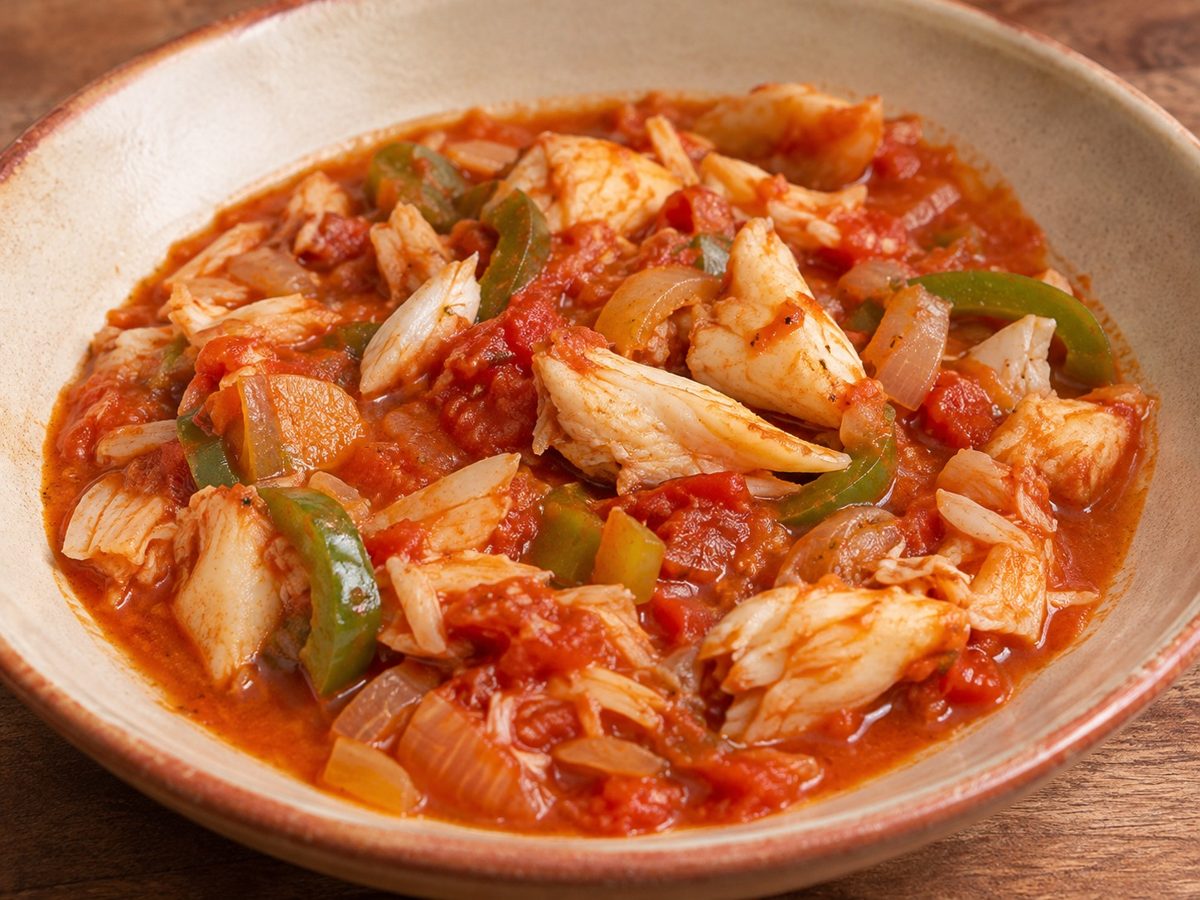
Ingredients
- 500 g plain cooked crab meat, refrigerated and drained
- 400 g chopped tomatoes
- 250 g sliced onions
- 150 g green pepper in small dice
- 25 g tomato paste
- 2 garlic cloves, chopped
- 30 ml neutral oil
- 150 ml hot water, adjusted slightly if needed
- 1 bay leaf
- 10 ml lemon juice, added gradually
- 10 g parsley, washed and chopped
- Pepper and optional chili
- Salt only after tasting, according to the crab used
Preparation
Inspect crab meat on a light-colored plate and remove shell fragments. Separate oversized clumps without shredding all the meat. Return to the refrigerator while preparing sauce.
Heat oil in the sauté pan. Fry onions and pepper over medium-low heat for 8 minutes, stirring regularly. Small pieces should start softening without heavy browning.
Add garlic and tomato paste. Stir for 2 minutes, then add chopped tomatoes, 150 ml water, bay, pepper and optional chili. Simmer about 15 minutes, partly uncovered.
Check onions and pepper are tender. If sauce is still very watery, cook a few more minutes before adding crab. If too thick, add a little hot water and stir.
Fold crab gently through the sauce. Cover and heat gently for about 5 minutes or until evenly hot. Do not boil vigorously or stir constantly.
Remove bay. Add parsley and half the lemon. Taste with crab, adjust salt if needed and add more lemon according to tomato acidity. Serve immediately, sharing the best pieces among portions.
Introduction
Crab meat joins an already-cooked onion, tomato and pepper sauce. It heats gently rather than simmering throughout the vegetables' cooking. This makes crab meat in sauce to eat with a spoon alongside rice or another grain. Unlike baked stuffed crab, it contains no bread, egg, milk or breadcrumb crust. A modest amount of red sauce carries the seafood flavor.
Crab features in coastal Casamance dining, but this particular sauce is a contemporary formulation for the collection. It neither reproduces a restaurant recipe nor claims an invented village origin. Use plain, already-cooked meat from a food supplier. The timetable depends on that cooked state and cannot be applied unchanged to whole raw crabs or sections still in their shells.
Cultural context
At a glance Makes 4 portions, supplemented according to the meal. Preparation 20 minutes. Cooking about 30 minutes. Equipment: wide sauté pan, spoon and light-colored plate for inspecting meat. Allergen: crustaceans. Crab weight is net cooked, drained meat. Rice or other accompaniments are not included in these quantities.
Choosing suitable meat Use plain, fully cooked meat. Crab with mayonnaise or a seasoned sandwich filling does not match the stated ingredients. Read the label and after-opening instructions. If extracting meat from whole cooked crabs, weigh after shelling and sorting. Whole shell-on animal weight does not directly provide the required five hundred grams net.
Canned meat is a possible adaptation. Drain thoroughly and account for saltiness. Small fragments blend into sauce more readily and need even less handling. Some large pieces make serving more visually distinct, but very long fibers are unnecessary. The main aim is sound, clearly identified meat stored according to its instructions.
Cook sauce before crab Onion and pepper need longer than merely reheating the meat, so they start alone. Regular small dice or thin strips make tenderness easy to check. If pepper remains firm, continue cooking the base before adding crab. This avoids unnecessarily keeping an already-cooked product in sauce while vegetables finish.
Chopped tomatoes supply varying amounts of juice. Sauce should coat the meat without floating it in abundant liquid. Reduce over moderate heat, passing the spoon along the bottom to prevent sticking. Blackened tomato paste does not acquire a good tomato flavor when water is added. Stir paste briefly, then loosen with the other ingredients.
Keeping pieces visible Crab meat breaks easily. Distribute through sauce with a few broad movements, then let covered heat work. Pressing against the pan wall quickly turns pieces into fine strands. That may suit another preparation but loses the contrast here between soft vegetables and recognizable meat. A gentle simmer is enough to combine everything.
The timing does not describe prolonged hot holding. Organize rice, plates and other elements before crab enters the pan. If the table is not ready, keep vegetable sauce separate and crab refrigerated, finishing near serving. Cooked food should not wait on the worktop throughout meal preparation.
Seasoning and accompaniments Decide salt at the end because crab saltiness varies. Add lemon in small amounts to avoid making already-acidic tomatoes too sharp. Taste meat with sauce rather than liquid alone. Add parsley last to preserve aroma; it should not cover the sea flavor. Chili may be separate or omitted without changing the method.
Plain rice receives this sauce well. Fonio or bread also work, with their quantities and possible allergens stated separately. No flour thickens the sauce: vegetables and measured reduction provide its body. Coconut milk, peanuts or cream would create a different formulation. None is needed to make pleasant, supple juices around the crab.
When serving, lift the largest pieces first and share fairly, then distribute remaining meat, vegetables and juices. One person should not receive all visible pieces while others get only flavored sauce. A wide dish rather than a deep bowl makes this easier and also preserves presentation.
Storage Prioritize the purchased crab's after-opening shelf life. Cool leftovers quickly in shallow portions, then refrigerate within two hours, sooner in very hot weather. Eat within 24 hours at no more than 4 °C, or earlier if product instructions require. Thoroughly reheat only what is needed and avoid repeatedly putting the whole pan back on the heat. Texture will be finer after reheating.
Context and sources Campement Way-Kassala in Cap Skirring offers crab preparations on its menu: https://www.way-kassala.fr/index.php?ct=tarifs This documents the ingredient in local dining; the tomato sauce and proportions above are original and not attributed to the restaurant.