Mutton soup
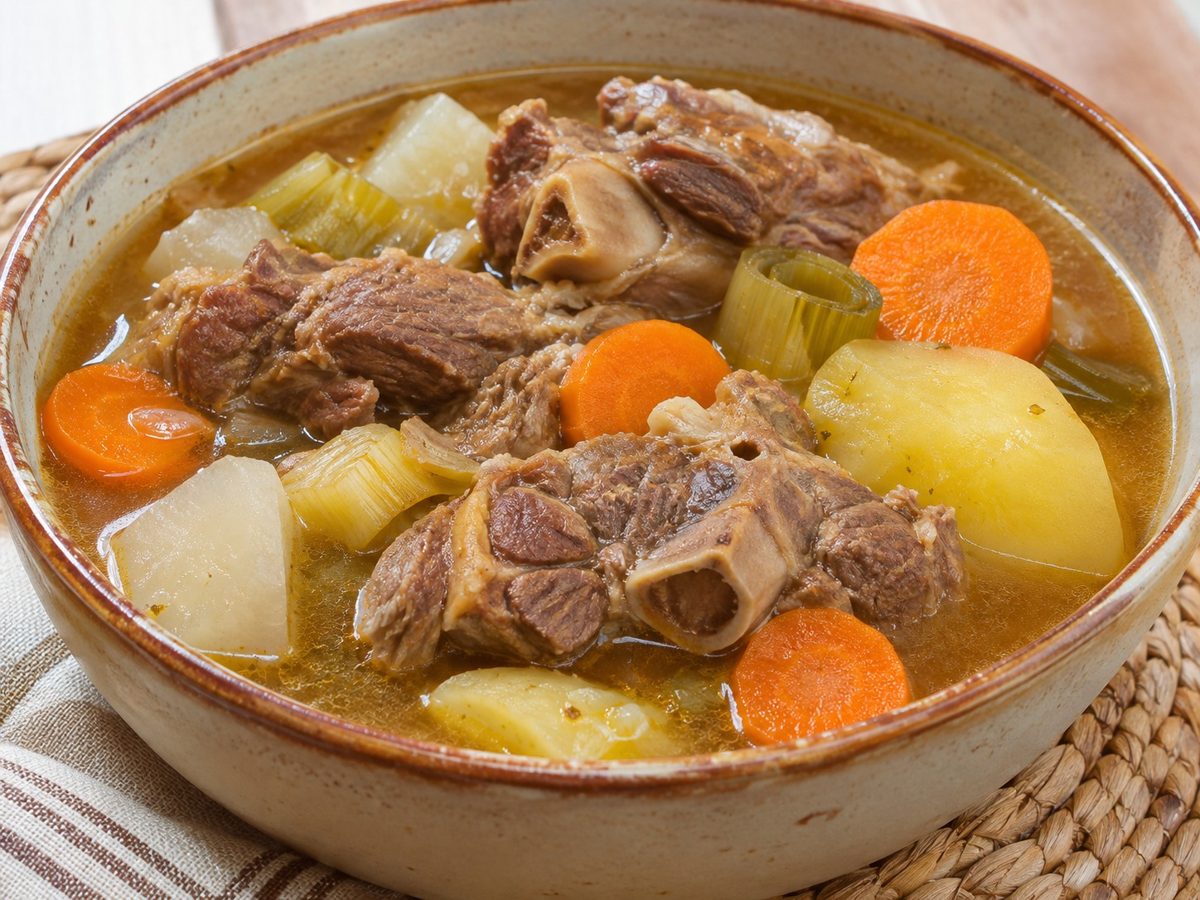
Clear broth and meltingly tender meat give this soup its character. Mutton neck simmers slowly with onion and garlic, then vegetables join according to their cooking times. Potato and turnip keep their shape, carrot adds sweetness and leek flavors the broth. Serve with spoon and fork because meat and vegetable pieces remain recognizable.
Ingredients
- 900 g bone-in mutton neck, in evenly sized pieces
- 300 g peeled potatoes, in large pieces
- 250 g peeled carrots, in thick rounds
- 200 g peeled turnip, in 3 cm cubes
- 150 g leek, thoroughly washed and cut into sections
- 200 g peeled onion, quartered
- 3 garlic cloves, lightly crushed
- 1 bay leaf
- 1.8 liters drinking water initially, plus hot water as needed
- 4 g salt initially, adjusted after cooking
- Pepper and optional chili
- A few lemon wedges for serving, optional
Preparation
Check neck pieces and remove small bone splinters left by cutting. Trim excess fat that comes away easily without trying to expose all the meat. Prepare onion and garlic.
Put neck in the pot and add 1.8 liters water. Bring gradually to a simmer. Skim foam rising during the first few minutes without removing all the liquid.
Add onion, garlic, bay, salt and pepper. Partly cover and simmer about 1 hour 20 minutes. Check regularly that liquid surrounds the pieces; add a little hot water if needed.
Check meat with a fork. It should start softening although not yet completely tender. If very firm, cook longer before adding vegetables. Then add carrots and turnip and cook for 15 minutes.
Add potatoes and leek. Continue 20–25 minutes until vegetables are tender and meat comes easily off bones. Remove already-cooked vegetables if the neck still needs longer.
Remove bay. Taste broth and adjust seasoning. Remove freely detached bones and divide meat among four bowls or deep plates. Add vegetables, then broth.
Serve hot with lemon and chili separately. Mention bones still attached to some pieces and provide a small plate for them. Supply the utensils needed so diners need not search for them after the soup arrives.
Introduction
Clear broth and meltingly tender meat give this soup its character. Mutton neck simmers slowly with onion and garlic, then vegetables join according to their cooking times. Potato and turnip keep their shape, carrot adds sweetness and leek flavors the broth. Serve with spoon and fork because meat and vegetable pieces remain recognizable.
Cuisine Teranga describes mutton soup under the names yell and koltché. Its published version includes several cuts and offal. This is a more focused home adaptation using only neck, without head, feet or tripe. It retains a long-simmered mutton broth, but the quantities and schedule suit the actual cut specified. No strengthening or therapeutic effect is claimed; its place in the meal depends on how it is served.
Cultural context
At a glance Serves 4. Preparation 25 minutes. Cooking about 2 hours to 2 hours 15 minutes, longer if the neck remains firm. Equipment: sufficiently large stockpot, skimmer, tongs and ladle. Meat weight includes bones; net yield varies with cutting. No major allergen is deliberately added to the basic formulation. Bread offered alongside is outside the quantities.
Choosing neck Neck requires moist, fairly long cooking. Its tissues soften during simmering, so it is not treated like a quickly grilled steak. Request regular pieces suited to a family stockpot. Very small cuts may leave more bone splinters, while large pieces need longer cooking checks. Bone-in weight specifies the purchase but does not imply identical net meat portions from every supplier.
Lamb could form another version with its own flavor and cooking time. Do not promise precisely identical timing for all animals and cuts. Tenderness is the key guide: a fork enters easily and the meat comes away without being torn forcibly. If not, continue gently while watching the broth level.
Keeping broth clear Gradual heating and a moderate simmer help you observe the surface. Remove initial foam with a skimmer. Vigorous boiling disperses more particles and loses water rapidly without usefully shortening the time needed to tenderize neck. Adjust heat for small steady bubbles rather than violent boiling.
The water quantity produces serving broth, not merely a base to reduce into sauce. A wide, loosely covered pot evaporates more than a narrow one; check what remains during cooking. Top up with measured hot water. Initial salt is moderate because liquid concentrates. Taste finally once meat and vegetables are cooked and the broth volume is right.
Adding vegetables at the right time Vegetables need not spend two hours in the pot just because the meat does. Add carrot and turnip when the neck starts softening, then potato and leek. This allows recognizable pieces in the broth. Cutting size affects timing: small dice cook faster and could disintegrate before serving.
If meat needs longer than expected, lift out already-tender vegetables with a skimmer and keep covered during the extension. Return to reheat at the end. This avoids choosing between tough meat and puréed vegetables. A few loose fragments in broth are pleasant; the aim is simply not to deliberately crush the entire garnish to hurry the finish.
Dividing portions Neck pieces contain different proportions of bone and flesh. For fair servings, do not rely only on piece count. Examine actual meat, remove loose bones and divide flesh as evenly as possible. Add vegetables and broth afterward. A ladle alone may not move a bone-in piece easily; clean tongs help.
Soup can be the center of a meal with a little bread or be served in smaller portions. Lemon is optional, squeezed into the bowl after tasting. Very strong chili sauce is not part of the formulation but can be offered individually without changing the whole pot. No stock cube is used, leaving mutton and vegetable flavor as the seasoning base.
Storage Do not cool a large full pot for hours. Quickly divide soup among small shallow containers and refrigerate within two hours, sooner in very hot weather. Keep at no more than 4 °C and eat within 48 hours. Fat may form a surface layer when cold; remove some before reheating if desired. Thoroughly reheat the portion needed until evenly hot at the center of meat and vegetables.
Sources Cuisine Teranga, Soupe Yell, Koltché, Soupe de mouton, May 6, 2020: https://cuisineteranga.wordpress.com/2020/05/06/soupe-de-mouton-yell/ The source documents mutton soup containing other cuts. These proportions and the use of neck alone are a separate adaptation.