Fouty with fonio
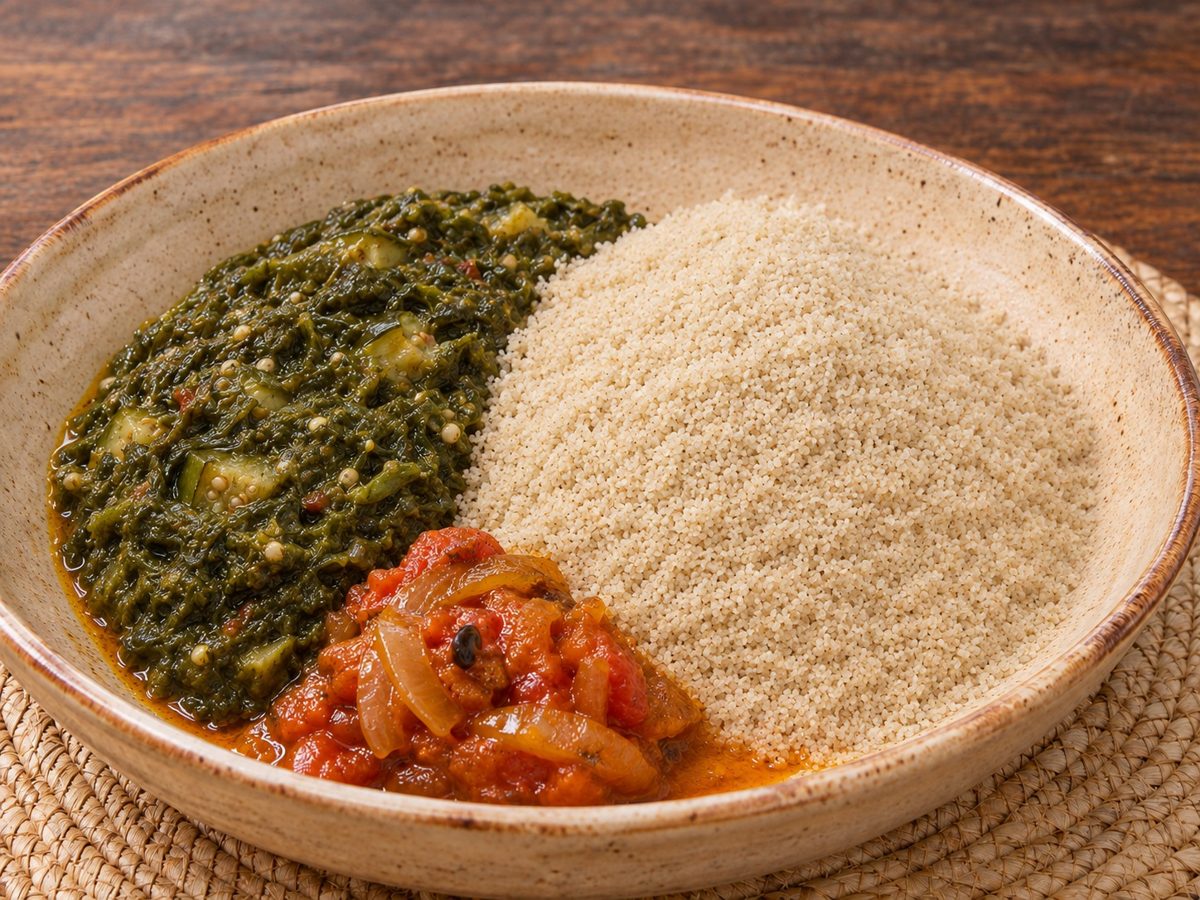
Here fonio is served with bissap leaves, okra and African eggplant, plus a small amount of tomato sauce with nététou. Cook the components separately and combine when serving. The grain stays fine and distinct, while leaves and okra provide a thickened texture and vegetal acidity. A little food-grade red palm oil finishes the dish without creating a large quantity of oily sauce.
Ingredients
- 280 g dry precooked fonio
- 350 g fresh edible bissap leaves, sorted and without thick stalks
- 200 g fresh okra
- 150 g edible African eggplant, diakhatou, cut into pieces
- 150 g chopped onion
- 150 g chopped tomatoes
- 20 g tomato paste
- 2 garlic cloves, chopped
- 5 g plain food-grade nététou, crumbled
- 15 ml neutral oil and 15 ml food-grade red palm oil
- 150 ml water for tomato sauce
- Drinking water for cooking vegetables and preparing fonio according to its packet
- Up to 15 ml lemon juice, adjusted after tasting
- 3 g salt to divide, pepper and optional chili
Preparation
Sort and wash bissap leaves. Wash okra, shorten stems and cut into large sections. Prepare diakhatou according to the product purchased and cut into evenly sized pieces. Read the fonio cooking instructions before organizing pans.
Cook okra and diakhatou in simmering water for about 12–18 minutes until tender. Drain, reserving a little liquid only if you want to loosen the mixture later. Mash with a fork.
In another pan of boiling water, cook bissap leaves for about 7–10 minutes or until tender. Drain, chop and beat with a spoon to make a soft mixture. Combine with mashed okra and diakhatou.
Heat neutral oil in the small sauté pan. Fry onion for 5 minutes, add garlic, nététou and tomato paste, and stir for 2 minutes. Add tomatoes and 150 ml water. Simmer about 12 minutes to make a small amount of sauce. Season lightly with salt and pepper.
Prepare precooked fonio according to its packaging, with water weighed separately from vegetable water. Fluff after the specified rest. It should be tender without becoming paste. Keep warm, covered, while finishing the other components.
Gently reheat leaves, okra and eggplant with one or two spoonfuls of liquid if needed. Taste before adding lemon, since the leaves already supply acidity. Divide the remaining salt according to the actual taste of the preparations.
Plate fonio with the green mixture beside or partly over it. Add a little nététou tomato sauce, then divide 15 ml red palm oil among the four portions. Offer remaining sauce and chili separately.
Introduction
Here fonio is served with bissap leaves, okra and African eggplant, plus a small amount of tomato sauce with nététou. Cook the components separately and combine when serving. The grain stays fine and distinct, while leaves and okra provide a thickened texture and vegetal acidity. A little food-grade red palm oil finishes the dish without creating a large quantity of oily sauce.
Cuisine Teranga publishes a version of fouty with fonio containing dried and fermented seafood. This formulation is an explicitly different plant-based adaptation, using neither guédj nor yet. This simplifies sourcing and salt adjustment while retaining bissap leaves, okra, fonio and aromatic sauce as the main elements. It does not define every recipe called fouty, whose ingredients and accompaniments vary.
Cultural context
At a glance Serves 4. Preparation 30 minutes. Cooking about 35–45 minutes with several vessels used simultaneously. Equipment: saucepan for vegetables, small sauté pan, colander and the equipment required by your purchased fonio. No major allergen is deliberately added in this adaptation; check labels. Bissap leaves are fresh edible Hibiscus sabdariffa leaves, not the dried red calyces used for drinks.
Understanding bissap leaves In culinary use, bissap can refer to different parts of the plant. This recipe needs fresh leaves. A bag of red calyces for infusion cannot replace them. Flavor and texture would differ, and the preparation could no longer make the same green accompaniment. Request a clearly identified food product and prepare soon after purchase.
Weigh after removing thick stalks. A stalk-heavy bunch yields fewer leaves than another of the same gross weight. Wash thoroughly, changing water if needed. After cooking, chop the leaves and work with a spoon; there is no need to blend until perfectly smooth. Some tender fibers may remain perceptible.
Binding with okra Okra gives the mixture a bound texture unlike sauce thickened with flour. Its quantity accompanies the leaves without obscuring them. Cook until tender before mashing. Still-firm sections would leave large pieces in a preparation that should spread over fonio. Diakhatou adds another vegetable flavor; declare its presence rather than silently replacing it with another eggplant.
If the drained mixture becomes very compact, add a little hot liquid by small spoonfuls. Stir and wait before adding more. Aim for a soft texture to accompany grain, not a very diluted green broth. Measure lemon only after this check. Depending on the leaves, their own acidity may already give sufficient brightness. Using all fifteen milliliters is therefore not obligatory.
Keeping fonio separate-grained Fonio's fineness requires following the actual product. Some precooked products rehydrate quickly; others need additional steaming. No single water quantity can suit every brand solely from the grain's name. Use suitable equipment and respect the stated rest before fluffing. Adding water before absorption finishes can create a wet mass that is hard to correct.
Serve tomato sauce separately to retain the texture contrast. Cook onions and nététou in a little neutral oil; add red palm oil as a measured finish. This lets everyone choose more or less sauce and avoids hiding the leaves under lots of tomato. The three components remain visible and can be tasted together in one spoonful.
Serving and storage Serve hot in deep plates or a wide dish. Portion grain first, then vegetables and sauce in comparable amounts. This plant-based version lacks the seafood condiments in some documented recipes; adding them would alter flavor, salt and allergens and require specific preparation. Do not add them at the last moment without knowing their usage instructions.
Cool the components quickly and separately, then refrigerate within two hours, sooner in very hot weather. Keep at no more than 4 °C and eat within 24 hours for this preparation. Thoroughly reheat fonio and vegetables, adding very little water if necessary. Wait until hot before judging texture. Reserving the oil finish and lemon for serving makes their quantities easier to adjust.
Sources Cuisine Teranga, Fouty Fonio, June 30, 2020: https://cuisineteranga.wordpress.com/2020/06/30/fouty-fonio/ This source documents the dish family. These proportions and the choice of an adaptation without seafood form a separate formulation for this collection.